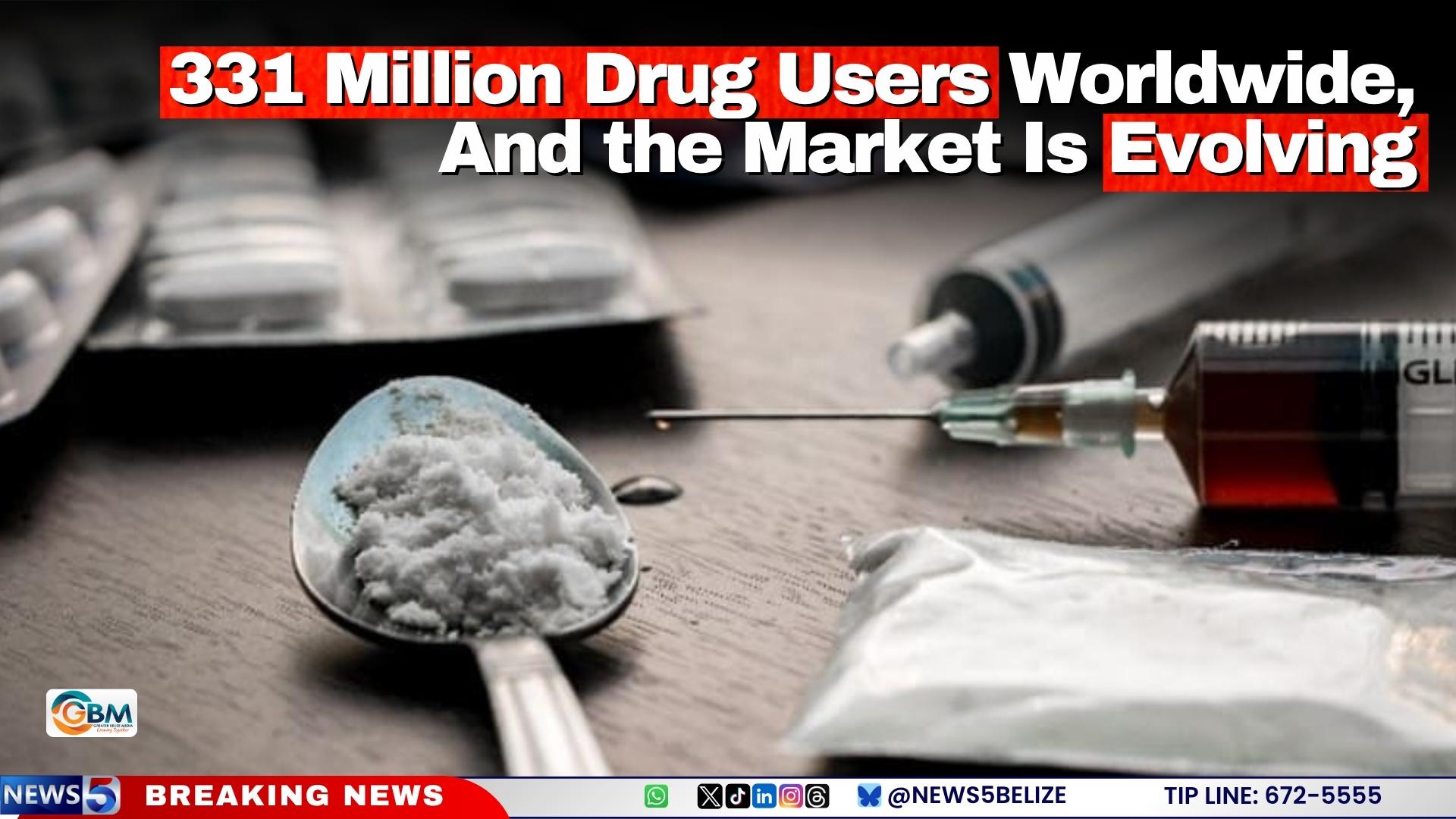
In its newly released 2026 World Drug Report, the United Nations Office on Drugs and Crime (UNODC) has sounded a urgent alarm over a staggering global surge in illegal drug use, alongside a rapidly evolving, tech-enabled illicit drug trade that is outpacing regulatory and law enforcement responses worldwide.
Based on 2024 data compiled for the report, an estimated 331 million people around the globe used an illegal substance – that marks a 34% increase over the past ten years, meaning one in every 16 people on Earth now engages in illegal drug use. Cannabis retains its position as the most consumed illicit drug, with a 40% decade-long jump bringing its global user count to 256 million. Cocaine use has also expanded by more than 33%, with roughly 25 million people using the drug worldwide today.
UNODC Executive Director Monica Juma emphasized the growing severity of the crisis, noting that the market is now flooded with an unprecedented wave of new, often more potent and dangerous drug variants. “Millions of premature deaths and healthy years of life are needlessly lost to drug use. Beyond the public health toll, drug trafficking networks are actively distorting national and regional economies,” Juma stated. “The need to prioritize shutting down transnational organized crime groups involved in the drug trade has never been more urgent.”
The report details how the global illicit drug trade has fundamentally reinvented its operations to evade authorities. Seizure data from 2024 shows five times more unique drug types are being intercepted than in the pre-2000 era, with 755 new psychoactive substances currently circulating in global markets – 118 of which were identified for the first time in the latest reporting cycle. Traffickers continuously engineer new synthetic formulations to exploit regulatory loopholes and avoid traditional detection methods.
The most transformative shift documented in the report is the integration of mainstream digital technology into drug trafficking operations. In 2024 surveys, 19% of European respondents reported purchasing illicit drugs via mainstream social media platforms – a figure that surpasses dark web purchases by 4 percentage points, with the trend particularly pronounced among younger consumers.
Against this concerning overall trend, the report identifies an emerging countertrend in several high-income nations: adolescent use of cannabis, alcohol, and tobacco is declining, while more young people now perceive cannabis as a harmful substance. This marks a significant reversal of decades-long trends, which the report attributes to multiple factors: the proliferation of new consumer products, the rising popularity of vaping, and shifts in social behavior brought on by increased screen time for social media and gaming, as well as reduced in-person peer interaction after hours. These changes appear to be quietly displacing traditional drug-using behaviors among younger generations in these countries.
The report also highlights a stark gender gap in patterns of drug use across the globe. Overall, men are roughly three times more likely to use illegal drugs than women, with men more likely to start use at an earlier age, driven largely by peer pressure and sensation-seeking tendencies. For women, however, the patterns are far more concerning: women progress to drug dependence much faster than men, a phenomenon researchers term the “telescoping effect,” and many women turn to drug use as a form of self-medication for unaddressed mental health conditions or chronic pain. Among women who use drugs, ecstasy is the most common substance of choice, followed by amphetamines.
For small Central American nation Belize, the report places it within the Americas region, which is home to an estimated 105 million illegal drug users total. As trafficking networks restructure their routes and seek out new unpenetrated markets, small nations like Belize face growing pressure and cannot remain insulated from the negative impacts of the expanding global drug trade, the report notes.
To address the rapidly shifting dynamics of the global drug crisis, the UNODC report calls for urgent coordinated action: stronger law enforcement deterrence, expanded cross-border intelligence sharing, joint transnational operations against criminal networks, and increased sustained investment in prevention programs and evidence-based addiction treatment. As the illicit drug trade continues to innovate and expand, the open question remains: can global law enforcement, public health systems, and policymakers adapt quickly enough to counter the threat?