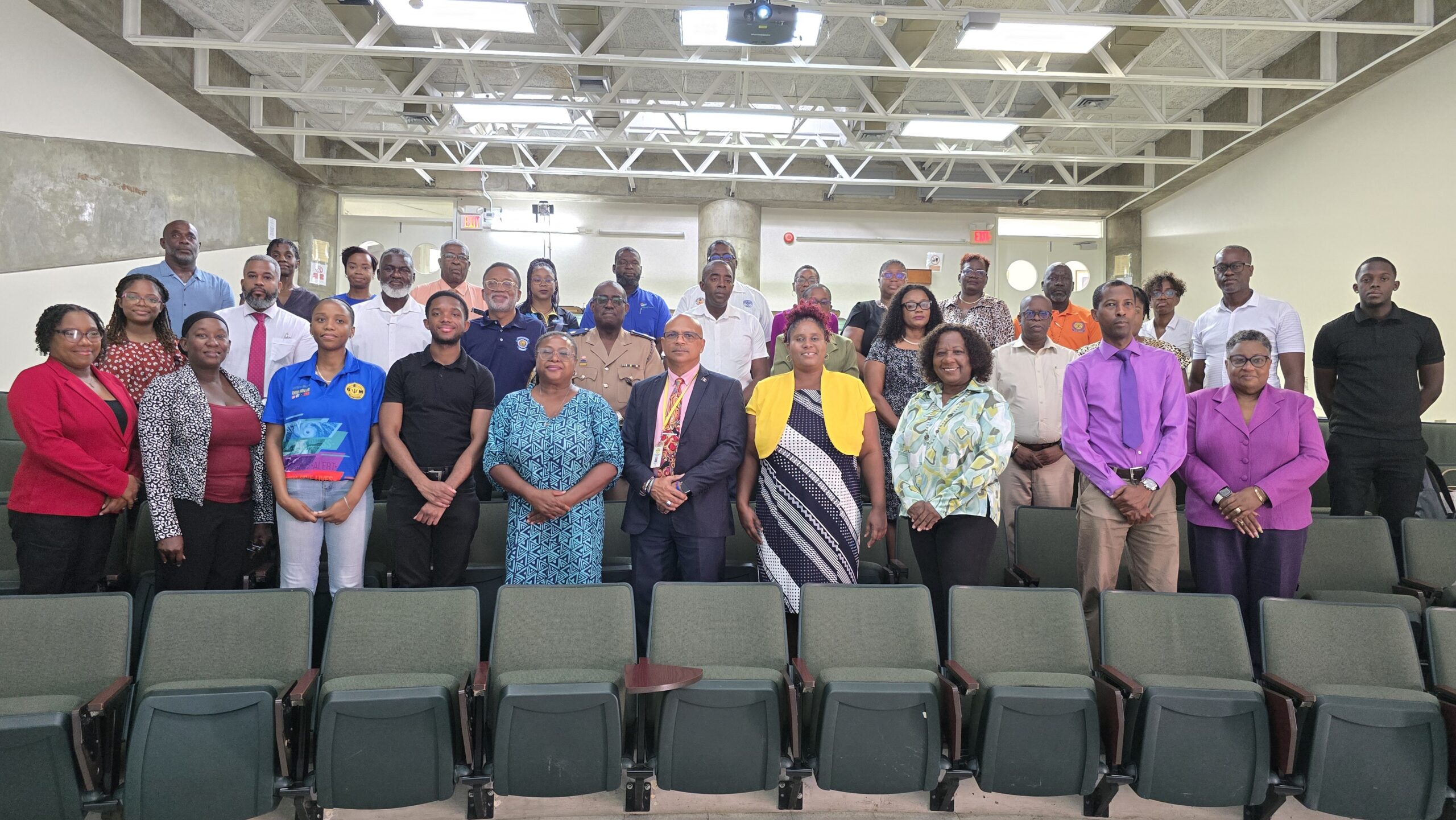
As climate change and global development drive more frequent, complex and unpredictable hazards across the globe, small island developing states like Barbados face disproportionately high risk — pushing the country’s emergency management officials to step up investment in civil servant training to boost national disaster response capacity. A two-day interactive workshop, hosted at the University of the West Indies Law Library, has brought together public officers from across government departments and statutory bodies to refine their understanding of the National Emergency Management System, strengthen cross-agency communication and coordination, and build hands-on emergency management skills.
Major Robert Harewood, Deputy Director of Barbados’ Department of Emergency Management (DEM), opened the workshop by emphasizing the urgent timing of this initiative, noting that rising hazard intensity is a shared global challenge. “Today, every country, institution and community around the world faces growing risks from a wide spectrum of disasters, ranging from natural events like hurricanes, floods, wildfires, droughts and earthquakes to technological accidents and public health emergencies,” Harewood explained. “No community is immune to the devastating impacts of these events.”
Citing joint analysis from the European Commission and regional climate experts, Harewood highlighted that the Caribbean ranks as the second most hazard-prone region globally. For small island developing states like Barbados, growing climate uncertainty, combined with rapid urbanization and increasingly interconnected national economies, has made disaster response coordination far more complex than in decades past. Recent global events, from the COVID-19 pandemic to the recent major earthquake off the coast of Venezuela, have underscored just how critical pre-crisis preparedness and cross-agency coordination are to saving lives.
“Preparedness and coordination save lives. Effective disaster management cannot be improvised in the middle of a crisis,” Harewood stressed. “It requires deliberate planning, ongoing training, cross-sector partnerships and a whole-of-government approach that is put in place long before an emergency ever occurs.”
Harewood went on to note that disaster management extends far beyond on-the-ground response during crises — it is a core legal, institutional and governance responsibility for all government branches. Under Barbados’ 2007 Emergency Management Act, the government established a national, inclusive emergency management framework built on a bottom-up approach that assigns clear roles to every public sector entity. Section 12 of Part Five of the legislation explicitly requires every permanent secretary and government department head to appoint a dedicated liaison officer to coordinate with the DEM, and mandate that each agency update and submit its emergency management plan to the DEM for review by April 1 every year.
No matter what core public service a government agency provides — from health care and education to transportation, public works, utility management or public safety — maintaining operational continuity during and after a disaster is foundational to national resilience, Harewood explained. This makes it essential for every agency to maintain up-to-date disaster contingency and business continuity plans that outline how the organization will sustain critical services, respond to the event and support recovery. “These plans help organizations anticipate risks, outline clear response procedures, identify available resources, clarify stakeholder responsibilities, and guarantee operational continuity when normal systems are disrupted,” Harewood said, adding that agencies with trained staff and regularly tested plans recover far faster and are able to provide more consistent support to affected communities.
Julia Rawlins-Bentham, a DEM Programme Officer, outlined that the workshop has a dual purpose: it orients newly appointed liaison officers to their roles, and refreshes the knowledge of experienced officers to ensure alignment with current national protocols. “This training is for everyone, whether you are new to the liaison role or have served in this position for years,” Rawlins-Bentham said. Over the two days, participants take part in a range of activities designed to build both theoretical knowledge and practical skills, including informational presentations on the DEM’s mandate, the structure of the National Emergency Management System, contingency planning best practices, and the core responsibilities of liaison officers.
Harewood emphasized that disaster management is a shared collective responsibility, not a task that falls solely to emergency services or the DEM. “It requires sustained commitment from every sector and every public institution across the country,” he said. By the conclusion of the workshop, participants are expected to leave with a clearer understanding of liaison officer roles and responsibilities, stronger communication and information sharing networks across stakeholder agencies, and the ability to support coordinated, effective emergency operations when disaster strikes.