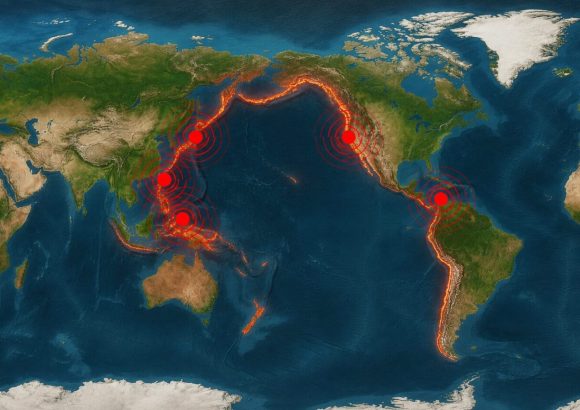
Over a single 24-hour window, an unusual cluster of significant seismic events unfolded across six continents, triggering widespread global attention and leaving one South American nation grappling with widespread destruction. The string of geological activity kicked off with a magnitude 5.2 tremor that shook parts of China, followed closely by a 5.6-magnitude quake in Northern California, United States, and a 4.6-magnitude seismic shift off the coast of Peru. Local emergency management teams in all three regions quickly conducted damage assessments, confirming that no critical infrastructure collapses or fatalities had occurred, despite widespread public unease.
The situation escalated dramatically when Venezuela was hit by back-to-back powerful earthquakes, registering 7.1 and 7.5 on the Richter scale within minutes of one another. The twin quakes leveled buildings, cracked critical road networks, and forced widespread evacuations across multiple affected Venezuelan states. The national government immediately declared a national emergency, activated all emergency response units, and issued a call for international search-and-rescue support and humanitarian aid. Ranking among the strongest seismic events recorded globally this year, the Venezuelan quakes quickly became the center of global concern over the unexpected surge in activity.
The wave of tremors did not end there. Hours after the Venezuelan disaster, a 6.9-magnitude earthquake struck southern Japan, leaving multiple people injured and damaging local transportation infrastructure. Two additional smaller quakes were also recorded in the Philippines and Papua New Guinea—both nations that sit squarely within the Pacific Ring of Fire, the geologically active horseshoe-shaped zone that circles the Pacific Ocean basin and is notorious for frequent tectonic activity.
Widespread speculation that the clustered quakes were linked by a global tectonic chain reaction quickly spread across social media platforms, but leading seismologists have moved to calm public fears. Experts explain that each of the six quakes occurred along completely separate fault lines and tectonic plates, separated by thousands of kilometers of ocean and landmass. While clusters of major earthquakes within short time windows do occur periodically, seismologists emphasize that such groupings do not automatically signal the start of a larger, global seismic event.
Beyond the immediate human and infrastructure damage, the recent cluster of quakes has reignited global discussion about the persistent natural hazard risks faced by communities along major tectonic boundaries. The Pacific Ring of Fire alone is responsible for roughly 90% of the world’s annual seismic activity and 75% of all active volcanoes on Earth. As affected nations continue to monitor for dangerous aftershocks and complete full damage assessments, the recent events stand as a stark reminder of how quickly geological forces can disrupt communities, and the ongoing need for robust disaster preparedness in high-risk regions.