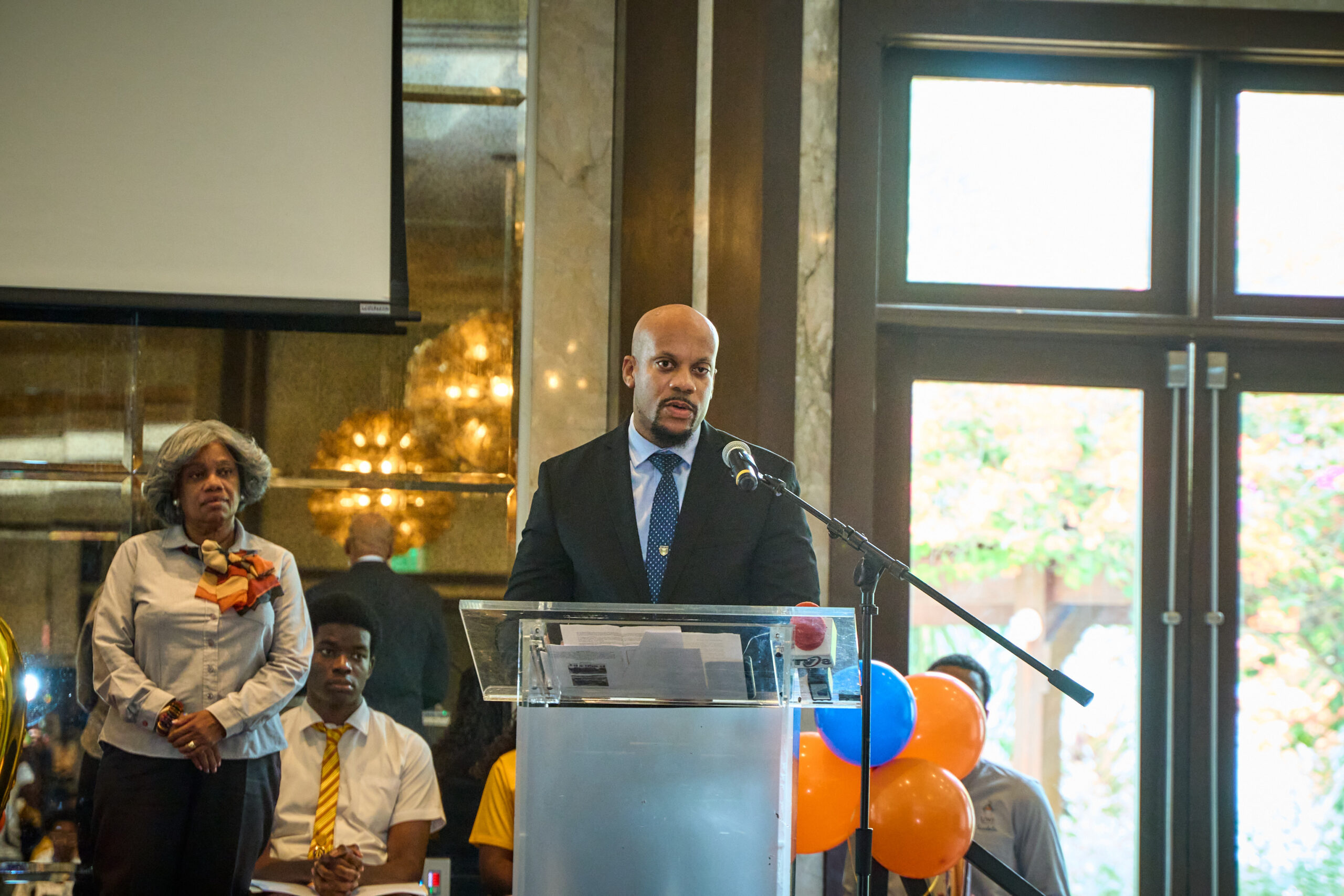
Barbados’ Technical Vocational Education and Training (TVET) Council has announced a major upgrade to the long-running Preparing Today for Tomorrow’s Challenges, Transforming Children’s Lives (PTFTC-TCL) initiative, announcing that all new participants enrolling in the programme starting this September will earn formal certification recognized under Caribbean Vocational Qualification (CVQ) regional standards. The announcement was made by Akil Thompson, the TVET Council’s technical officer for programme development, during the programme’s 10th anniversary recognition ceremony held at Sandals Royal Barbados, where Thompson addressed more than 300 attending students.
Prior to this policy shift, programme completers only received a general certificate of participation. Under the updated framework, all new enrollees will complete formal competency assessments aligned with both national and regional occupational and employability standards, in addition to building structured professional portfolios to document their learning, skill growth and ongoing professional development. Thompson emphasized that this alignment transforms the soft skills students gain in the programme — including personal branding, business etiquette and interpersonal communication — into a tangible, resume-ready credential that holds formal recognition across the Caribbean region.
CVQs are standardized credentials validated by the CARICOM regional bloc, designed to confirm that candidates demonstrate the skills and knowledge required to meet established regional occupational standards. One of the key benefits of regional CVQ recognition is its role in facilitating the free movement of skilled labor across CARICOM member states. Thompson explained that workers holding a valid CVQ can cut through much of the bureaucratic red tape and regulatory barriers that often slow professional relocation when pursuing job opportunities in other Caribbean countries.
The new certification falls under the TVET Council’s Core Skills qualification framework, which outlines six foundational competencies split into core and wider skill categories. The three core competencies include communication, application of numerical concepts, and information and communication technology (ICT) literacy. The three wider, transferable competencies are problem-solving, collaborative teamwork, and ongoing self-directed knowledge and skill development. Under the new framework, PTFTC-TCL participants will earn certification for specific competency levels: working with others at Levels 2 and 3, communication at Levels 1 and 2, and problem-solving at Levels 1 and 2.
Thompson noted that while the TVET sector commonly labels these foundational competencies as “employability skills,” their value extends far beyond helping graduates secure jobs. “These are skills for life,” he stated, underlining that the updated programme will not only boost participants’ employment prospects but also equip them with long-term tools for personal and professional success across all areas of life. The TVET Council has collaborated closely with PTFTC-TCL programme coordinators throughout the upgrade process to bring the initiative in line with regional standards, marking a significant milestone in the programme’s 10-year history of transforming children’s and young people’s outcomes in Barbados.