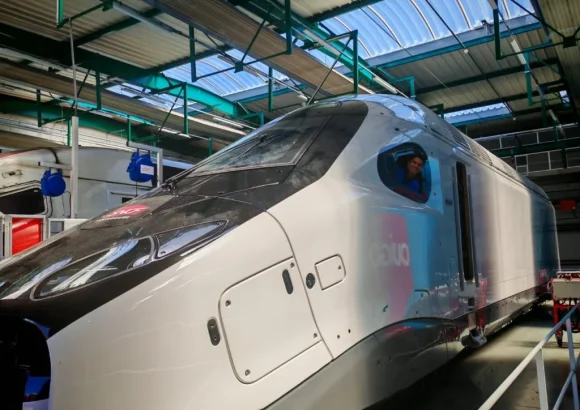
The largest urban infrastructure project in the Dominican Republic has hit a key construction milestone, with 13 out of 15 planned monorail trains for the new Santiago Monorail currently taking shape at Alstom’s production facility in Belfort, France. This assembly work brings the long-awaited transit system one major step closer to opening for passenger service.
Jhael Isa, executive director of the Dominican Republic’s Transport Infrastructure Institute (FITRAM), recently carried out an on-site technical inspection of the Belfort plant to examine the manufacturing and supply chain processes ahead of the trains’ scheduled shipment to Santiago. The first two Innovia 300 model monorail trains already reached the Dominican Republic earlier in 2024, giving local stakeholders an early look at the vehicles that will serve the new line. Each train is configured as a four-car consist with a total maximum capacity of 590 passengers, and it is built with a full suite of accessibility features to serve all riders, including dedicated wheelchair spaces, audible stop announcements, priority seating for disabled and elderly passengers, and real-time digital passenger information displays.
Designed to transform regional transit connectivity, the Santiago Monorail is projected to move up to 20,000 passengers per hour in each direction. Trains will operate at a top speed of 80 kilometers per hour, with scheduled headways as short as 90 seconds between vehicles to keep wait times low for riders. The assembly work at the Belfort facility is also a showcase for Alstom’s updated production capacity: the trains are being built on a newly launched assembly line, leveraging proprietary transit technology that Alstom gained through its 2021 acquisition of Bombardier Transportation.
The full monorail network is a 13-kilometer elevated rail corridor that will run between the Cienfuegos and Pekín districts of Santiago. It will include 14 passenger stations plus a central terminal that links directly to the city’s existing cable car transit network, creating an integrated multi-modal system for commuters and travelers across the metropolitan area. When the system enters full operation, it is expected to deliver widespread benefits for the city: it will serve more than 500,000 residents annually, cut down on household transportation costs, reduce crippling street traffic congestion across the city, boost local economic productivity, and lower the environmental impact of urban travel by shifting commuters from gasoline-powered private cars to electric public transit.
After more than four years of continuous construction work, FITRAM has announced that the entire Santiago Monorail project has reached an overall completion rate of 92.6%. Shipments of the remaining trains from Alstom’s French plant will begin later this year, as the project clears the final milestones ahead of its launch into commercial service.