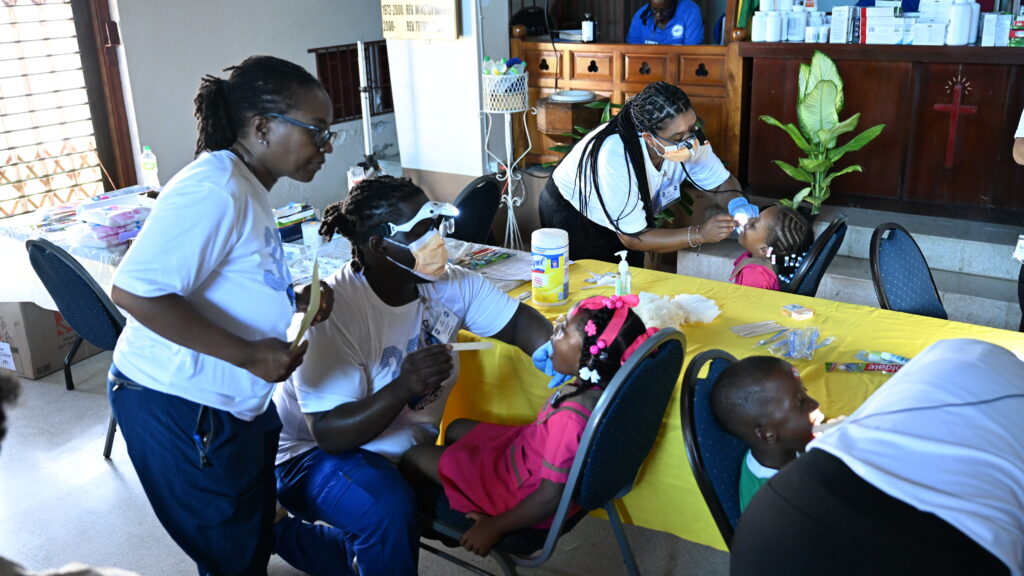
SAVANNA-LA-MAR, Westmoreland, Jamaica — A two-day medical and humanitarian outreach led by the Jamaica Nurses’ Association of Florida (JNAF) wrapped up on June 18 in this rural Jamaican parish, leaving nearly 1,000 low-income residents with access to critical care, free medication, and educational supplies they could not otherwise obtain. Organized as an official initiative under the 11th Biennial Jamaica Diaspora Conference, the mission brought together a cross-regional team of licensed physicians, registered nurses, dentists, and student volunteers from across the United States, all donating their time and skills to address unmet needs in a community still reeling from a recent natural disaster.
The outreach was launched specifically to help communities that suffered widespread damage from Hurricane Melissa, explained Dr. Beverlin Allen, JNAF’s immediate past president and the mission’s lead coordinator. Allen noted that volunteers traveled from as far as Florida, Atlanta, and other U.S. regions to set up pop-up clinics, bringing with them specialized medical equipment including EKG machines, a full stock of prescription and over-the-counter medications, and educational supplies for local students. A board-certified cardiologist from Miami also joined the team to provide on-site specialized consultations for patients with chronic heart conditions, eliminating the need for many low-income residents to travel long distances for care.
Beyond medical services, the mission integrated back-to-school support for local students. Clinicians offered free mandatory medical clearance exams required for school enrollment, and distributed new backpacks stocked with personal care and school supplies to hundreds of youth. On the first day of the outreach, the team operated out of Godfrey Stewart High School, where they provided care and documentation to nearly 200 students. The second day of the mission was held at the Savanna-la-Mar United Church, opening services to the broader community of all ages, from young children to elderly residents.
For JNAF, this type of cross-border outreach is nothing new: the organization has been running recurring medical missions across Jamaica for more than 20 years, rooted in its members’ commitment to supporting their home country. This year’s initiative was significantly expanded through partnerships with local and U.S.-based nonprofits, including American Friends of Jamaica, Miami Dade College, and the Rachel Dixon Memorial Fund.
Oswald Dixon, president of the Rachel Dixon Memorial Fund, said his organization has collaborated with JNAF for years, aligned by a shared core mission of advancing public health and educational access across Jamaica. “We are firm believers that health and education are the foundations of strong communities,” Dixon noted. Currently, the fund provides full scholarships to five Jamaican students pursuing higher education, and the organization is already preparing for its next outreach event scheduled for next month at Devon Primary School in Manchester Parish.
For local residents who benefited from the Westmoreland mission, the support came at a critical moment. Lionel Campbell, a longtime resident of Darling Street in Savanna-la-Mar, emphasized that Hurricane Melissa left long-term disruption to local healthcare services and economic stability, making the free care especially meaningful. “This mission didn’t just check my blood pressure—it filled a gap that has been left open since the storm,” Campbell said. Another beneficiary, Aldina Dunn of Big Bridge, echoed that sentiment, praising organizers for bringing critical resources directly into the community instead of requiring residents to travel to distant urban hospitals for care.
The event, documented by the Jamaica Information Service, marks another milestone in the ongoing partnership between Jamaican diaspora organizations in the United States and local communities on the island, demonstrating how transnational civic action can address immediate and long-standing public needs in vulnerable regions.