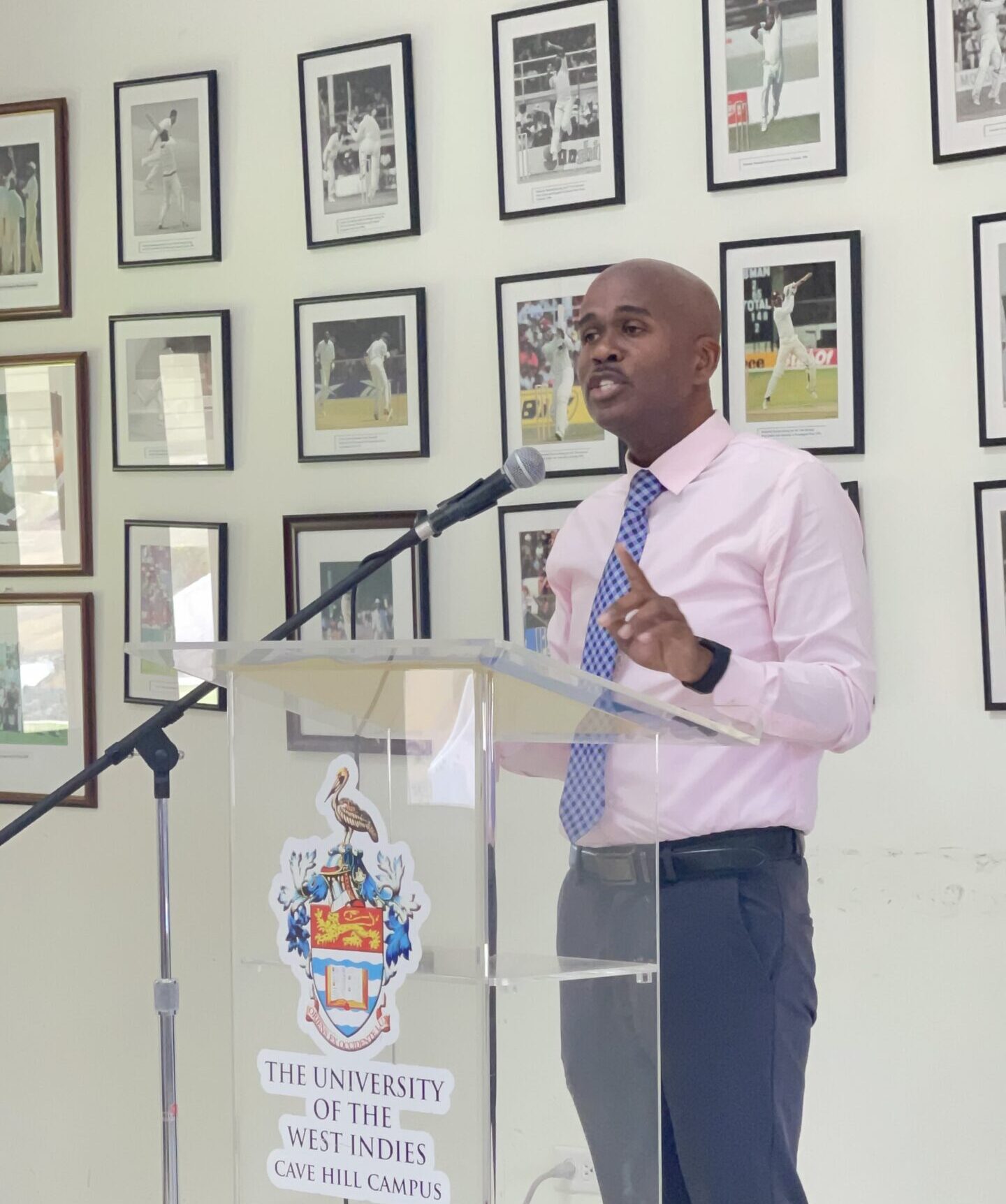
Against a backdrop of growing concern over rising youth violence, increasing encounters with the justice system, and shifting social pressures reshaping adolescence for Barbadian boys, the Social Empowerment Agency (SEA) launched a targeted all-male workshop for 12 to 16-year-olds Thursday at the 3Ws Pavilion on the Cave Hill campus of the University of the West Indies.
Titled *The Blueprint: Designing the Man You Want to Be*, the initiative brought together cross-sector experts ranging from local law enforcement and drug counselling specialists to healthcare providers, legal representatives, probation officers and educators. The collective goal is to arm at-risk young males with practical tools to navigate an increasingly complex and risky social landscape that looks far different than it did just a generation ago.
SEA Deputy Chairman Carl Applewhaite explained that the workshop was intentionally designed to create a judgment-free, safe space where young men can feel seen, supported, and heard, aligned with the agency’s community-centered mission. Drawing a connection to local Barbadian culture, he noted that the agency’s acronym SEA sounds identical to the Bajan phrase “we see you” — a core promise from the prime minister that the social service body would remain rooted in local identity and priorities.
Applewhaite emphasized that the challenges facing young Barbadians have shifted dramatically in recent years, requiring a new approach to intervention. “We are fighting a different fight in 2026 than we did years ago,” he said, pointing to escalating peer pressure, worsening mental health crises, a widespread scourge of violence, and a host of overlapping stressors that disproportionately harm young male adolescents. The workshop forms part of a broader systemic effort to address the root causes of youth delinquency, rather than just responding to its outcomes, with a key objective of dismantling automatic, survival-driven responses that often lead to violent behavior and criminal justice involvement.
Roseann Richards, Director of SEA’s Social Care Delivery and Support Directorate, added that the workshop marked the conclusion of the agency’s five-part stakeholder workshop series, developed specifically in response to alarming local trends involving adolescent boys. She noted the timing of the event is particularly critical, as Barbados has recorded a steady increase in the number of boys under 18 coming into conflict with the law.
Drawing on decades of experience working with local children and families, Richards voiced deep concern over growing disconnection among many young boys, noting a troubling pattern of disengagement from family, community social structures, formal education, and positive extracurricular activities such as sports and community groups. She also highlighted rising rates of harmful behavior among underage males, including underage smoking and drinking, and peer bullying. Richards urged participants to reject rigid, harmful stereotypes of masculinity that force young men to suppress their emotions, encouraging them to open up to trusted adults about feelings of happiness, sadness, and frustration rather than bottling up their experiences. She stressed that consistent access to positive role models and strong mentors is critical to guiding boys through a healthy transition to adulthood.
Jakeem Sealy, a social worker in SEA’s Child Care Unit, reiterated that the initiative was tailored specifically to the unique, on-the-ground realities facing young male Barbadians. “We recognise and understand that in Barbados, as we are all aware, the crime rate among boys 18 and under is extremely high,” he explained. One core session of the workshop explores the well-documented link between childhood trauma and adverse behavioral outcomes later in life, helping young people connect their past experiences to their current actions. A central takeaway for participants is the message that emotional vulnerability is not a weakness for men: it is okay to cry, feel pain, express sorrow, and seek support, with dedicated safe spaces available in schools and communities for young men to share their experiences without judgment.
Roger Husbands, founder and chairman of local support organization Drug Education Counselling Services (DECS), focused his contribution on teaching participants how to identify and resist unhealthy social influences. He explained that while some peer pressure can be positive, much of what pushes young men toward harmful behavior goes unrecognized, and the workshop helps boys clearly distinguish between positive and negative pathways. Husbands encouraged participants to trust their own judgment and take ownership of their paths, noting “You don’t have to follow the path, you can be your own lone wolf.”
Presenter Paul “Ras Simba Akoma” Rock led a session focused on redefining masculinity and teaching practical emotional self-control. He challenged the common cultural narrative that frames violence as a core trait of manhood, explaining that true strength means having the capacity for violence but intentionally choosing non-violent responses. Rock emphasized the importance of teaching young men to recognize their personal emotional triggers, understand when their emotions are out of balance, and develop practical strategies to regulate their responses — a critical skill in a cultural environment that often normalizes and glorifies chaotic violence. “If we want to prepare boys to be men, we have to let them understand their own capacities to be violent and to control it in the midst of an environment that sort of encourages chaotic violence and representations of that violence,” he said.
Unlike traditional intervention programs that rely on one-sided lectures, the workshop is structured around a collaborative “shoulder-to-shoulder” engagement model that encourages open discussion and participation. Core topics covered include the link between child maltreatment and brain development, digital safety, navigating peer pressure, rethinking harmful norms of masculinity, and improving mental health outcomes. Per SEA’s program outline, overarching goals include helping participants identify their personal emotional triggers, dismantle harmful stereotypes about manhood, resist negative peer and online influences, understand the long-term consequences of their choices, and build healthy habits for digital engagement. Ultimately, officials say the program seeks to empower adolescent boys to move beyond being passive followers of destructive social norms and grow into proactive, engaged young men who contribute positively to their families and communities across Barbados.