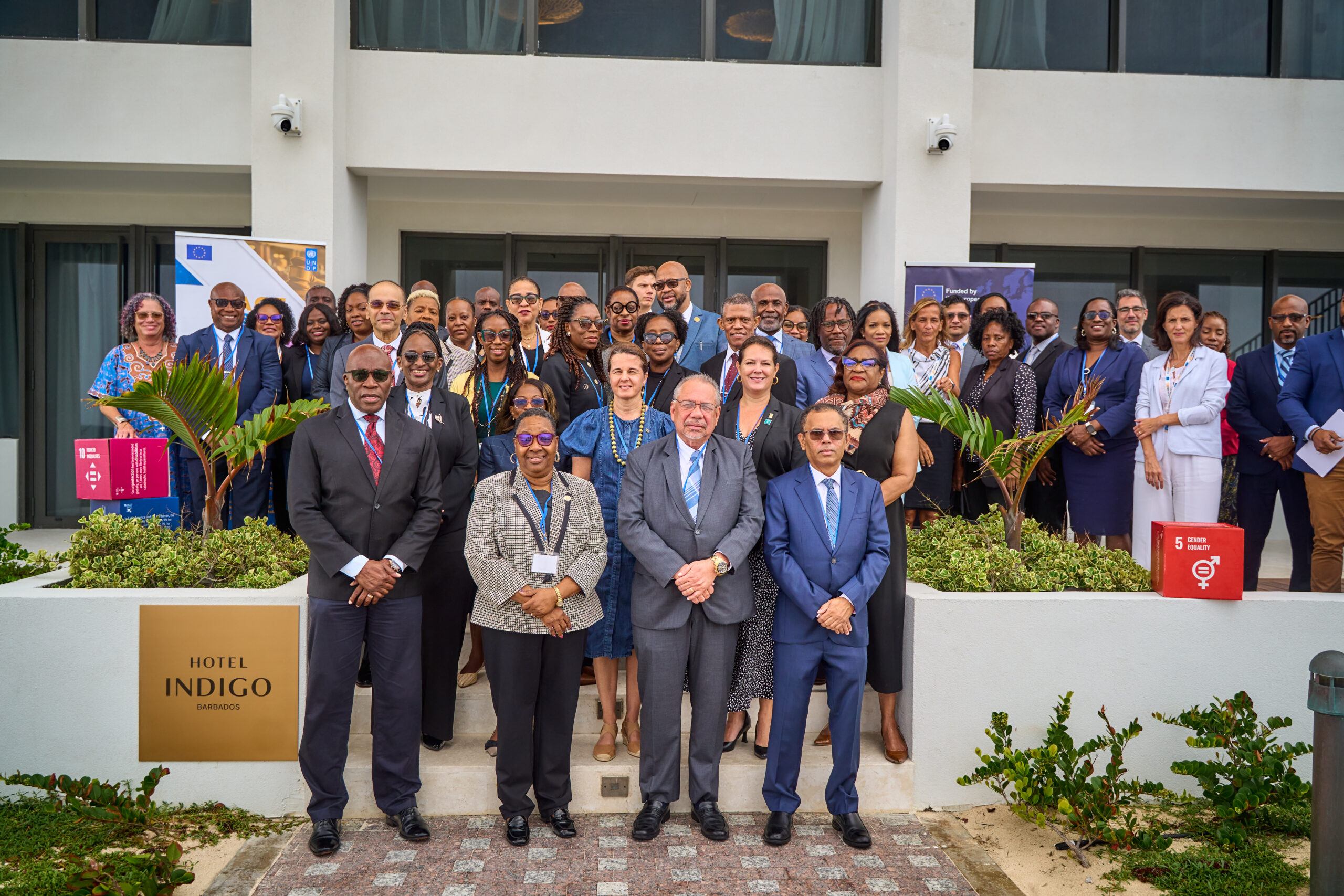
As a regional workshop focused on standardizing case management procedures for Caribbean judicial bodies got underway this week, Chief Justice Leslie Haynes has delivered a stark warning: the absence of reliable, systematically collected judicial data is actively undermining regional efforts to cut through crippling case backlogs and boost overall court performance across the Caribbean. He is calling for immediate action to build formal, structured frameworks for gathering and analyzing court data to evidence-based justice reform.
Opening the two-day workshop on judicial case management standard operating procedures (SOPs) at Hotel Indigo on Thursday, Haynes emphasized that meaningful, lasting change to the region’s justice systems will remain out of reach without consistent, credible information to guide policy and operational decision-making. Currently, the region lacks any standardized, institutionalized framework for judicial data collection, he explained. Instead, data gathering tasks are most often delegated informally to overstretched legal assistants, judicial support staff and court clerks, with no clear, unified protocols in place to standardize collection or storage.
Even in jurisdictions where some data is collected, Haynes noted, continuity of records is frequently broken when staff transition to new roles or leave their positions, leaving gaps that erase institutional knowledge. Without a formal data collection framework, Haynes argued, judicial leaders are forced to make critical reform decisions based on anecdotal observation rather than hard evidence. “There is a necessity for us to create a framework for the collection of this data because if we do not, we will be unable to make the necessary decisions that we ought to make, and our decisions will be based on anecdotal evidence,” Haynes told attendees.
Haynes was careful to reframe judicial data not as a tool for disciplinary blame, but as a diagnostic instrument to pinpoint and resolve systemic inefficiencies across court operations. “We need data to understand where the bottlenecks exist, and having gathered the data, to resolve the issue,” he said. Beyond data infrastructure, the chief justice also pushed back on the common assumption that technology alone can solve the judiciary’s most pressing challenges. Organizational culture and institutional accountability, he argued, are equally critical to sustainable reform. He put it bluntly: “Culture eats technology for breakfast.” Meaningful change, he explained, requires a fundamental shift in institutional mindset that cannot be achieved through digital upgrades alone. Successful reform, he added, demands greater operational discipline, consistent accountability, respect for procedural timelines, a shared commitment to efficiency, and a widespread willingness to adapt to new processes across the judiciary.
Haynes stressed that the regional workshop could not be more timely, noting that criminal justice systems across every Caribbean territory are facing growing, unsustainable pressures. The region can no longer be reduced to the outdated, romanticized image of a laid-back tropical paradise, he argued: shifting social and economic realities have brought new, complex security and public safety challenges that demand a modernized justice response. “The Caribbean region can no longer be described as an easy-going paradise where we drink coconut water in various mixtures,” he said. “That crime is now an everyday reality for us is reflected in the songs that we sing, the movies that we watch, the news reports that we listen to, and the day-to-day stories shared by our friends and neighbours.”
Rising crime rates have driven a sharp increase in court caseloads, placing unprecedented demand on a justice sector already constrained by limited resources. Combined with evolving complex social issues and rising public expectations for faster, fairer justice, these pressures have made systemic reform an urgent priority, Haynes said. He highlighted that collaborative discussions across the two-day workshop will play a pivotal role in strengthening three core pillars of the regional criminal justice system: credibility, efficiency, and fairness. Improvements to these areas, he added, will in turn rebuild and strengthen public trust and confidence in how justice is administered across the Caribbean.