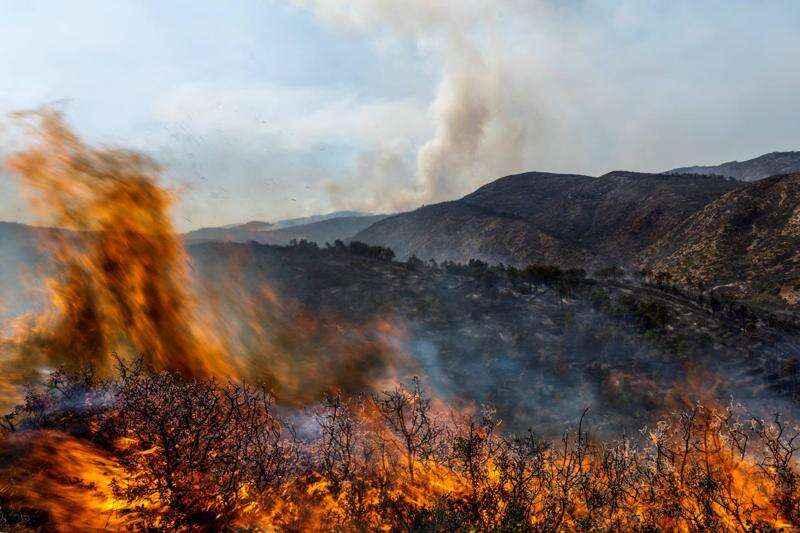
In a striking climate-driven shift in natural patterns, Greenland is now grappling with localized wildfires emerging far earlier than any recorded historical observation, a development that leading polar climate researchers say ties directly to accelerating global warming. Speaking with Agence France-Presse on Thursday, Karl Brix Zinglersen, who leads the Department of Environment and Minerals at the Greenland Institute of Natural Resources, outlined the anomaly of the current outbreak: blazes breaking out in June, a full month before the traditional narrow window when Greenland’s tundra fires have occurred in recent years. Zinglersen noted that it is scientifically logical to connect the unprecedented early fires to long-term planetary climate shifts, amplified by the amplified warming trend across the Arctic and the current global influence of the El Niño weather system.
Greenland, the world’s largest island, is dominated by a massive permanent ice sheet that covers roughly 80% of its landmass. The remaining ice-free coastal regions are covered almost entirely by low-lying Arctic tundra vegetation. Unlike fire-prone forested regions across the globe, vegetation wildfires are an extremely recent phenomenon here, according to comprehensive analysis of historical satellite data. When researchers reviewed decades of satellite imagery to reconstruct past fire activity, they found no documented evidence of any significant tundra fires across Greenland prior to 2008. Following that turning point, the frequency of the blazes rose steadily: between 2008 and 2020, researchers recorded a total of 21 separate vegetation fires across the island. Almost all of these past events were concentrated in the warmest mid-summer months of July and August, when periods of extended warm, dry conditions create the only environment capable of supporting combustion. The onset of widespread fire activity in June remains a unique and unforeseen event, Zinglersen emphasized.
Nearly all of the current early-season blazes have ignited across western Greenland, a region that has seen an unusual stretch of cloudless, warm conditions paired with near-negligible rainfall in recent weeks. While this unseasonably sunny weather has been welcomed by local residents for outdoor recreation, it has also created tinder-dry conditions across the tundra, turning low-lying vegetation into highly flammable fuel that can ignite from even a small spark. Local emergency officials have moved quickly to issue public guidance to reduce the risk of new blazes. The fire department for Sermersooq municipality, which encompasses Greenland’s capital Nuuk and the surrounding populated coastal areas, shared public safety recommendations on its Facebook page, urging residents and visitors to restrict all open burning—including campfires and recreational barbecues—to officially designated fire-safe zones. As of the latest update, the early-season wildfires have not resulted in any reported injuries, and all active blazes have been rapidly contained and extinguished by local emergency response teams.