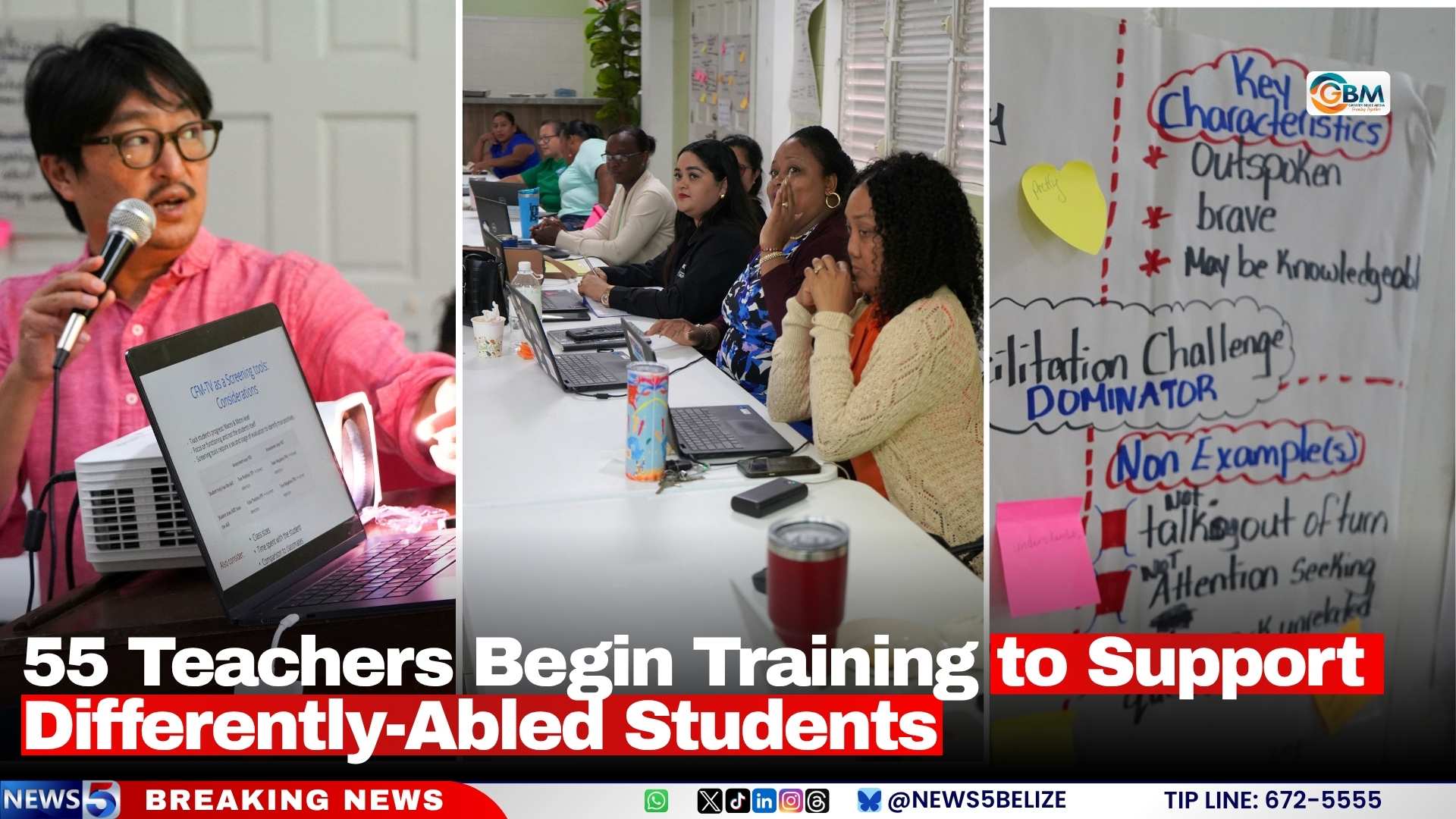
For decades, Belizean families raising children with disabilities and learning differences have grappled with a persistent, systemic gap: a severe shortage of educators trained to meet their children’s unique learning needs. That gap is finally beginning to close, as the country’s Ministry of Education launched a landmark national inclusive education training initiative this week, backed by funding and technical support from two leading global education and development organizations, the Inter-American Development Bank and the Global Partnership for Education.
The initiative kicked off with an inaugural cohort of 55 participants, comprising practicing classroom teachers and veteran Special Education Officers, who are currently undergoing a seven-day intensive in-person training split across two of Belize’s key educational hubs. Trainees split their time between the main campus of the University of Belize in the capital city of Belmopan and the facilities of the ITVET Institute in Belize City, the country’s largest urban center, working with leading education specialists to build core skills in adaptive instruction and inclusive classroom design.
Once participants complete all program requirements and earn their official certification, they will step into new roles as Special and Inclusive Education Coaches tasked with cascading their knowledge across the entire national education system. Unlike traditional one-off training workshops, this scalable coach model is designed to create a sustainable network of trained educators across Belize: each coach will be responsible for training and ongoing mentoring of classroom teachers in their regions, equipping local educators with the skills to develop customized Individual Education Plans for students who require extra support, and adapt classroom spaces, curricula, and teaching methods to welcome and accommodate learners of all abilities.
The intensive in-person kickoff is only the first phase of the initiative. Following the opening week of on-site training, participants will continue their development through a structured program of online coursework and long-term one-on-one mentoring from international inclusive education experts. When fully rolled out, program organizers project that the initiative will ultimately reach and upskill more than 500 teachers across every region of Belize, laying the foundation for a more equitable national education system that leaves no student behind.