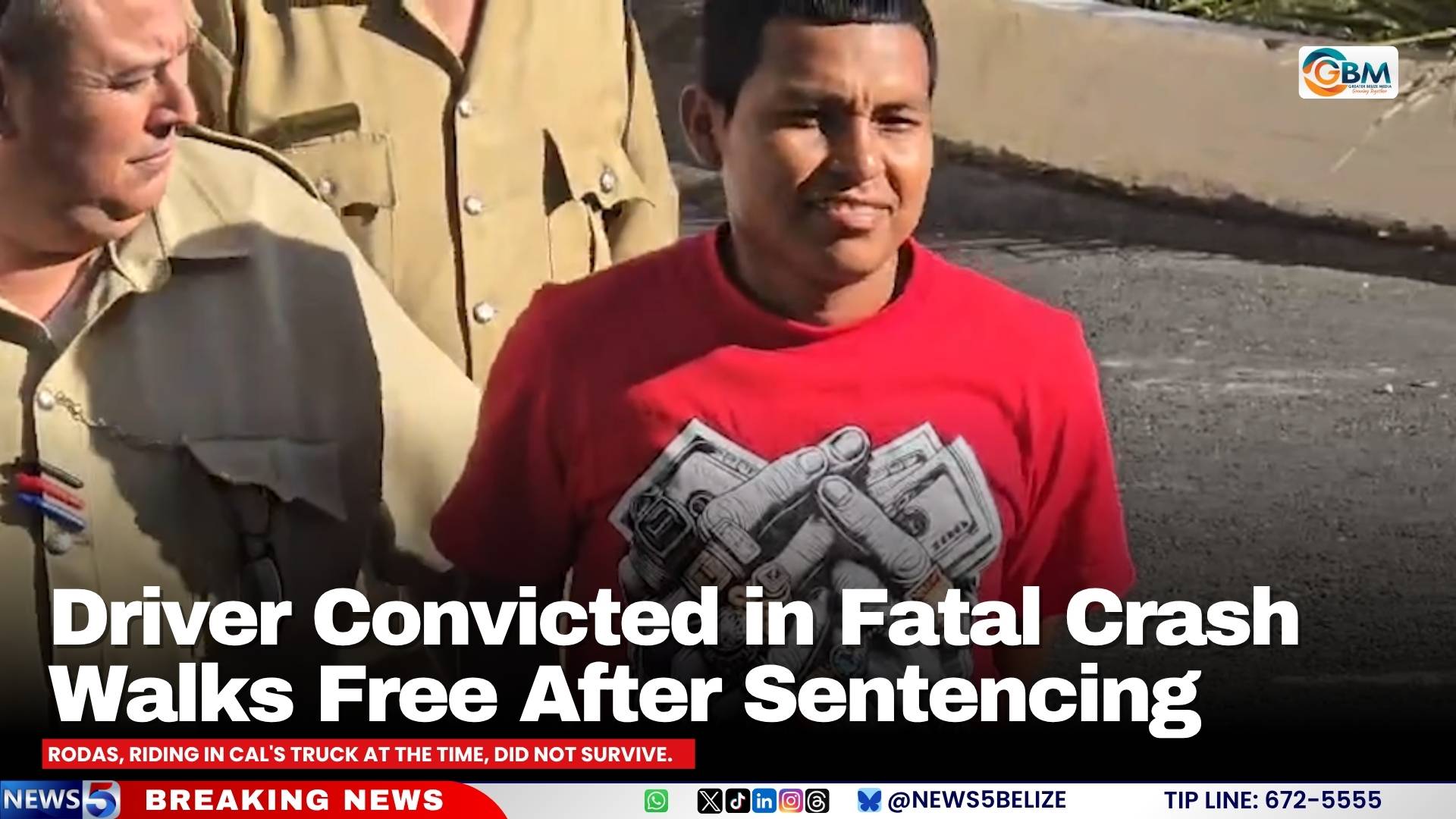
On June 17, 2026, a High Court in Belize handed down a controversial sentencing that has laid bare the difficult balancing act judges face between legal accountability and human compassion: a 29-year-old Hattieville truck driver convicted of manslaughter for a 2023 fatal highway crash will serve no additional prison time beyond the 47 days he has already spent in custody.
The defendant, Marvin Cal, stood trial after pleading not guilty to the death of his coworker Oscar Rodas, rejecting a pre-trial plea deal. The collision that killed Rodas occurred on June 12, 2023, along the Hattieville-Burrell Boom Road. According to prosecution evidence, Cal was behind the wheel of his white Ford Ranger when he pulled out from behind a stopped bus to overtake. As the truck hit loose gravel along the roadside, it spun out of control, crashed into an oncoming vehicle, and became entangled in the vehicle’s towed trailer. The impact crushed the dashboard into Cal’s lap, trapping him until emergency responders cut him free with hydraulic cutting tools. Rodas, who was riding in the passenger seat of Cal’s truck, did not survive the crash.
Throughout the trial, Cal maintained his innocence, insisting he had never been behind the wheel that day and had been sitting in the passenger seat. He told the court that law enforcement never checked his identification at the crash scene or the hospital where he was treated, and did not contact him to press charges until nearly a full year after the collision. His defense team argued that the prosecution’s narrative of the crash was implausible, but after deliberations, the jury rejected the defense’s argument and returned a guilty verdict.
The aftermath of Rodas’s death has shattered the life of his long-term partner Rosa Reyes. Reyes, who shared eight years with Rodas, was three months pregnant when she received the news of his death. The devastating shock triggered a miscarriage just two days later, requiring an emergency hospital stay for life-threatening heavy bleeding. With Rodas’s steady income gone, Reyes’s teenage daughter was forced to drop out of school to bring in income for the household. Remembering Rodas as a generous man who regularly stopped to help stranded strangers with flat tires or dead batteries on the side of the road, Reyes said the loss has left an unfillable void in every part of her life, from emotional well-being to financial stability.
On the defense side, Cal’s family painted a portrait of a devoted breadwinner facing desperate circumstances. Cal’s common-law wife Catalina told the court that the couple’s two young children, including a five-year-old daughter with a disability, cry every night asking for their father. While Cal has been in custody, the family has had no source of income, and Catalina said she cannot figure out how to pay for their son’s upcoming school fees, which are due when he starts classes in September. Catalina described her partner as a hardworking, loving father who does not fit the description of a criminal.
A court-ordered pre-sentence background report added critical context to Cal’s personal history. Raised in poverty as one of 13 children, Cal left school at a young age to help support his younger siblings, and had held a steady job at a local Hattieville trucking company for five years leading up to the crash. Investigators found no prior criminal record and no evidence that Cal posed a public danger or was likely to reoffend. The report also noted that Cal’s employer provides the family’s housing, meaning a lengthy prison sentence would not only take the children’s father away, but could also leave them homeless.
In handing down his ruling, High Court Justice Derick Sylvester started with a standard six-month prison term for this class of manslaughter offense. He reduced the sentence to four months after accounting for two mitigating factors: Cal and Rodas were close coworkers traveling together for work, and Cal himself sustained serious injuries that required hospitalization in the crash. No standard plea deal sentencing discount was applied, as Cal never entered a guilty plea. After subtracting the 47 days Cal had already served in pre-sentence custody, Sylvester ruled that Cal had completed his sentence and ordered his immediate release. The judge also declined to suspend Cal’s driver’s license, noting that driving is the only source of income Cal has to support his family.
As a condition of his sentence, Cal is required to pay Rosa Reyes $5,000 in restitution, via monthly installments of $300 starting in July 2026. If Cal misses any single payment, the full outstanding amount will become due immediately, and he will be ordered to serve a six-month prison sentence.