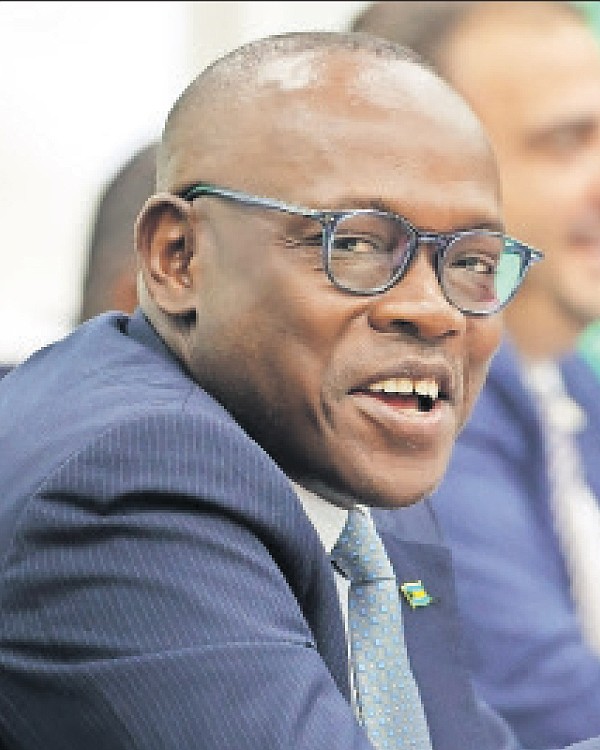
Nassau, Bahamas – Amid growing public discourse over systemic flaws in the country’s education sector, Bahamas Education Minister Chester Cooper has pushed back against the decades-old perception that Bahamian students collectively earn a “D average”, labeling the pervasive stereotype both factually unfounded and deeply damaging to the nation’s youth. During his address to the ongoing budget debate, Cooper also pulled back the curtain on a critical unaddressed challenge: the country currently faces a shortage of roughly 300 teachers across multiple academic and vocational disciplines.
Cooper emphasized that there is no statistically valid method to calculate a uniform national grade average for all Bahamian students, even as he acknowledged the widespread label has become a common shorthand for public frustration with longstanding shortcomings in the education system. Rather than focusing exclusively on student test performance, Cooper outlined that the Davis administration’s core mission extends far beyond boosting exam pass rates. The government’s goal, he explained, is to cultivate engaged citizens who possess strong literacy skills, critical thinking capabilities, and effective communication tools to build successful careers and contribute to national development.
“We have capable young people, many of whom an outdated system has not yet unlocked,” Cooper told lawmakers during his budget contribution. “So, we intend to stop grading only the students, and start grading the system that is meant to serve them, and we will be measured on whether we fix it.”
The sweeping reform agenda Cooper laid out is backed by a $383.6 million recurrent budget allocation to the Ministry of Education, a commitment the government says reflects its priority of addressing deep-rooted weaknesses in the sector. Cooper did not shy away from acknowledging systemic failures: he admitted that too many Bahamian students are not reading at grade level, struggle to master core mathematics concepts, and graduate secondary school without the technical and soft skills that local employers demand. He also pointed to low parental engagement as a persistent barrier to improvement, noting that many caregivers remain disconnected from their children’s educational progress.
Even amid these challenges, Cooper struck a confident tone about the country’s ability to deliver meaningful change. “The Bahamas is capable,” he said. “We are not without talent, ideas or resources. What we must bring now is even more focus, more discipline, more urgency, more accountability, more engagement and more partnership. And a willingness to measure success not by speeches, not by photo ops, but by outcomes.”
A top policy priority for the ministry in the coming year will be building robust systems to track post-graduation outcomes and measure workforce readiness among leaving students. While the ministry will continue its core mandate of issuing academic credentials and preparing young people for the workforce, Cooper stressed that the country must do more to equip graduates to contribute meaningfully to national economic and social life.
One of the most significant long-term reforms under consideration is the introduction of three distinct secondary school diploma pathways, set to launch in the 2027 academic year. The new framework aligns with international best practices, designed to raise the national secondary graduation rate to 85 percent by 2030 while offering students flexible routes to success that uphold rigorous academic standards. Under the plan, students will be able to select a diploma track that matches their individual strengths, interests and career goals: an academic diploma with an honours distinction for high-achieving students, a vocational diploma focused on career and technical skills, and a specialized diploma for students receiving special education support.
Turning to immediate operational challenges, Cooper reaffirmed the government’s commitment to resolving the national teacher shortage ahead of the upcoming school year. He added that the ministry’s top near-term priority is ensuring all schools are fully prepared for reopening, with all necessary campus repairs completed and long-running infrastructure issues resolved. To end the recurring cycle of last-minute emergency repairs every summer, Cooper said the ministry will build out its own in-house maintenance capacity, eliminating the wait for budget allocations that delays critical work ahead of the fall term.
“Schools should not have to wait until June and then July for budget drawdowns to fix what breaks for September; stronger internal maintenance capacity and process is how we end that cycle,” he explained.
In a major announcement for technical education in the country, Cooper revealed plans to construct a new, purpose-built campus for the Bahamas Technical and Vocational Institute (BTVI). The institution has long outgrown its existing facilities, and Cooper noted that it urgently requires a modern, fit-for-purpose campus to meet growing student demand. The government has already identified a 30-acre plot of land adjacent to Government High School as the proposed site for the project, and has secured $10 million in financing to advance initial planning and design work.
“Our long-term vision is to create a world-class technical education campus that will serve thousands of students annually and become the centerpiece of technical and vocational education in The Bahamas,” Cooper said. “The full development of this campus is expected to represent an investment of approximately $250 million over several phases.”