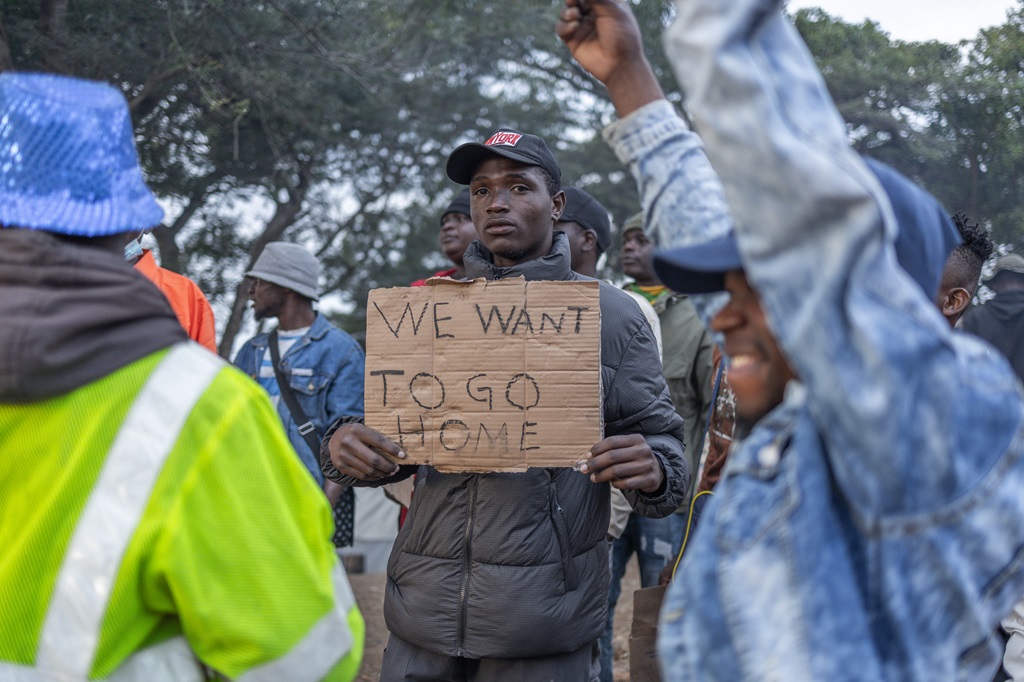
JOHANNESBURG, South Africa – Against a backdrop of rising anti-immigrant violence and unrest across the nation, South African President Cyril Ramaphosa delivered a clear rebuke to xenophobic scapegoating on Tuesday, calling on citizens to stop holding migrants responsible for the country’s deep-seated socioeconomic challenges. As one of the most robust and largest economies on the African continent, South Africa has for decades drawn migrant workers from across the region, with many entering the country both through legal channels and without official authorization. But over recent weeks, organized crowds of South African demonstrators armed with sticks, whips, and makeshift shields have taken to streets in multiple regions, issuing an ultimatum that all undocumented foreigners must leave the country by June 30.
Ramaphosa’s remarks came during an official address commemorating Youth Day, a national holiday marking the 1976 Soweto uprising, a pivotal youth-led movement that accelerated the end of apartheid in South Africa. “There are some who blame the problems of the current government, of unemployment and crime and poor service delivery, on foreign nationals,” the president told the gathered crowd. He acknowledged that unauthorized migration poses a measurable policy challenge for the country, one his administration is already pursuing decisive action to resolve, but added: “our problems are… our own problems, and which we have a responsibility to fix ourselves.”
Highlighting the severity of the nation’s unemployment crisis, Ramaphosa confirmed that youth unemployment currently sits at 42%, far outpacing the overall national workforce unemployment rate of 32%. He outlined ongoing policy initiatives from his administration to generate new formal jobs, and issued a public appeal to the country’s private sector to prioritize offering entry-level opportunities to young South Africans who lack formal work experience. “Addressing these challenges does require practical solutions, not the scapegoating of vulnerable people,” he emphasized.
Speaking to reporters after the official commemoration ceremony, Ramaphosa issued a stern warning to organizers of the anti-immigrant marches, who have ramped up public pressure to expel undocumented residents. “There does seem to be an intention to destabilise the country, and the clear message is that we are not going to allow that,” he said. The recent wave of violence, which has included looting of foreign-owned businesses and targeted attacks on migrant communities, has sparked widespread security fears. In response, governments of neighboring and regional countries including Nigeria, Malawi, Ghana, Zimbabwe, and Mozambique have organized voluntary repatriation efforts, which hundreds of vulnerable foreign residents have already accepted.
Data from South Africa’s national statistics agency shows that more than three million foreign-born people currently reside in the country, accounting for approximately 5.1% of the total national population.