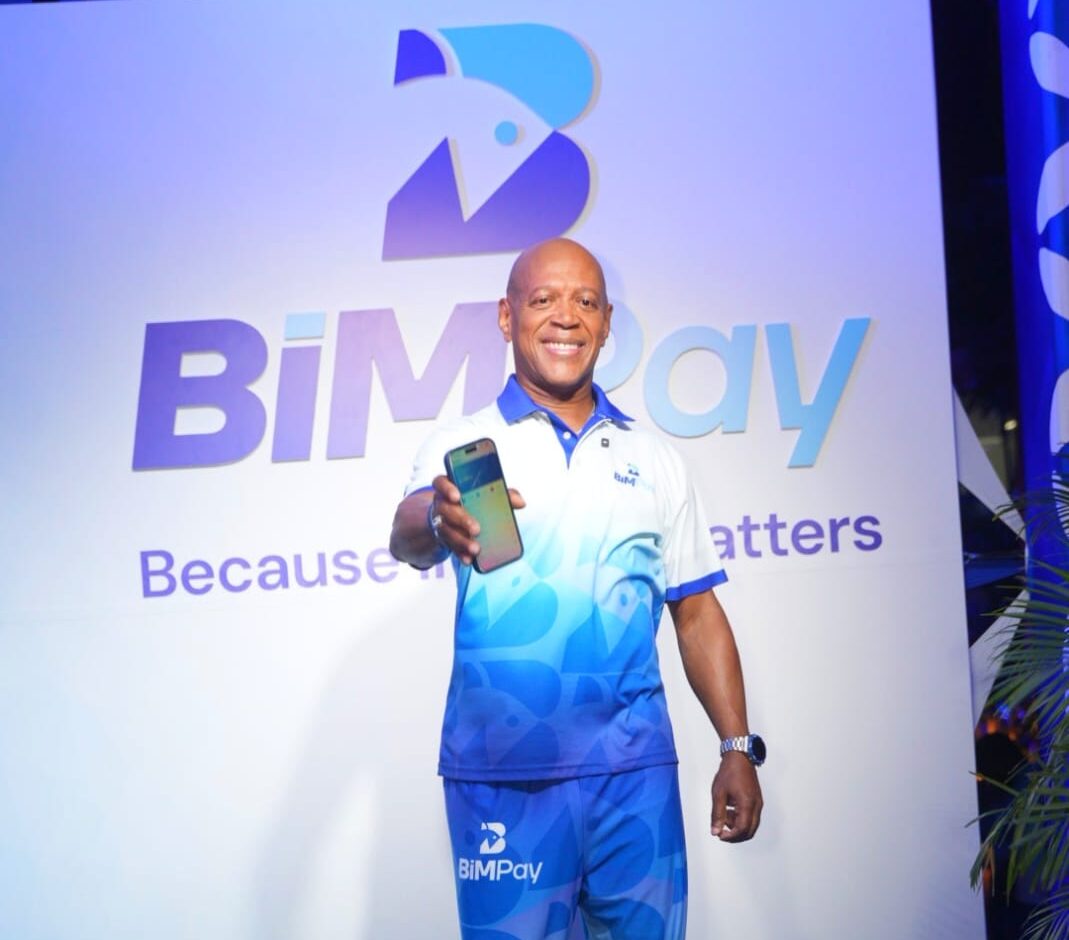
Barbados’ first national instant payment infrastructure, BiMPay, has delivered a solid performance in its first 48 hours of public operation, Central Bank of Barbados Governor Dr. Kevin Greenidge confirmed in a Monday press briefing held at the bank’s Grand Salle. In the two days since the system went live over the weekend, it has processed more than 20,000 transactions totaling nearly $8 million, with a 99% success rate that puts early performance well above expectations for a newly launched fintech platform.
Despite the overall strong showing, Greenidge acknowledged that the rollout hit predictable early-stage “teething issues”, most notably widespread registration difficulties reported by hundreds of users on social media just hours after BiMPay launched Saturday. The governor explained that the overwhelming majority of registration blocks stemmed from an unforeseen interaction with Google’s spam protection systems. In the first hour after launch alone, the BiMPay app was downloaded more than 12,000 times, and a large share of those users registered with Gmail accounts. The sudden volume of verification emails sent from BiMPay’s domain triggered Google’s automated anti-spam defenses, which blocked all outgoing verification messages from the platform, leaving users unable to receive the access codes required to complete registration.
Greenidge noted that prior stress testing ahead of launch could not have predicted this specific outcome, as there was no way to anticipate that such a large majority of early registrants would use Gmail accounts or that Google’s security protocols would flag the verification traffic as malicious. Central Bank teams quickly contacted Google to resolve the issue, and the block was cleared within hours, allowing affected users to complete their registration. Greenidge added that most other early issues have either been fully resolved or are on track to be fixed imminently.
Of the less than 1% of total transactions that failed in the first two days, Greenidge attributed all problems to minor formatting errors, such as incorrect entry of account or branch numbers, rather than fundamental flaws in the BiMPay infrastructure. “This is an extremely strong success rate for a newly launched system,” Greenidge emphasized. “Nearly 99% of 20,000 transactions worth $8 million went through without a hitch, across all participating financial institutions. The system is working exactly as it was designed to.”
Another ongoing adjustment involves the process for retrieving BiMPay access tokens from users’ financial institutions. Currently, users must obtain a unique token from their bank to access BiMPay, either via text, email, or their existing online banking portal. Most participating institutions have opted to host token access through their existing banking apps, but not all have placed the BiMPay token link prominently on their homepage as required. The Central Bank has held multiple meetings with chief executives of participating institutions over the past two days to address this, and is working with all providers to add a clearly labeled “BiMPay Token” button or link to their homepage for easy access.
When pressed for details on the total development and launch cost of BiMPay, Greenidge declined to share a specific figure, but clarified that the project did not draw on taxpayer funds. As an operationally and financially independent institution, the Central Bank of Barbados funds the initiative through its own investment portfolio, rather than government allocations.
Greenidge framed BiMPay as a critical public good for the Barbadian economy, noting that no single domestic financial institution had the scale to develop and roll out a universal instant payment system on its own, given the country’s small size. The upgrade to the national payments infrastructure, he argued, will strengthen Barbados’ economic standing and position the country to capitalize on upcoming regional and domestic development opportunities.
Looking ahead to the second phase of BiMPay rollout, which will onboard additional financial institutions and government agencies including the National Insurance and Social Security Service (NISSS), the Central Bank has declined to set a firm launch date. Deputy Governor Michelle Doyle explained that rigorous standardization of payment data formatting across all new participating entities is a non-negotiable prerequisite for expansion. Without aligned data standards, Doyle noted, there is an increased risk of transaction failures that could undermine user trust in the system. The Central Bank will first complete detailed preparatory work with all prospective new partners to ensure full data standardization, and will only announce a launch date once onboarding preparations are fully complete. “We are prioritizing long-term functionality over a fast rollout,” Doyle explained, “to make sure the entire system works seamlessly for all users when we expand.”