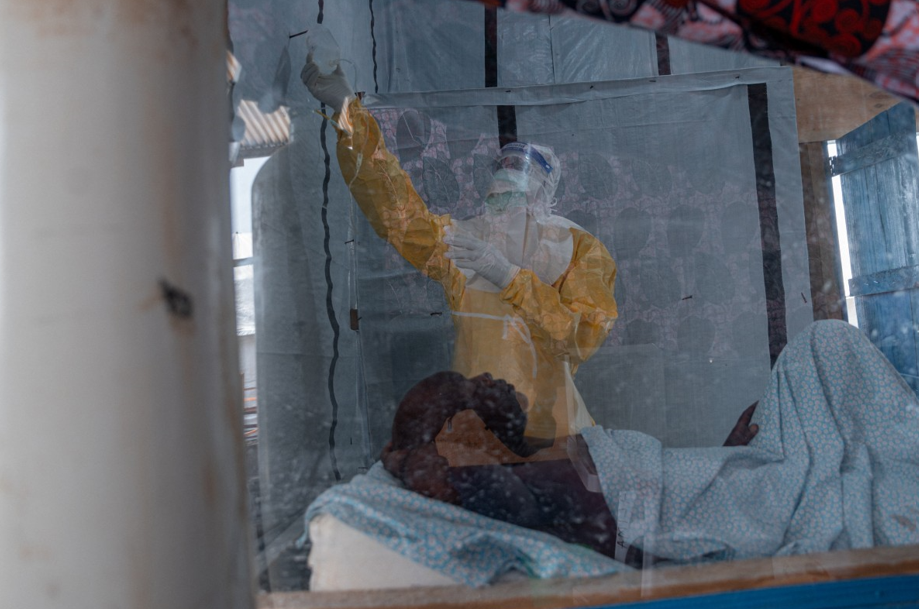
GENEVA, SWITZERLAND – International medical humanitarian organization Doctors Without Borders (known by its French acronym MSF) sounded an urgent alarm Monday, highlighting that devastating, unaddressed gaps continue to hobble containment efforts against a fast-moving Ebola outbreak that has already claimed more than 180 lives in the Democratic Republic of the Congo.
While global and local response teams have expanded their operations substantially since the outbreak was formally declared in the vast Central African nation on May 15, MSF emphasized that the full magnitude of the public health crisis remains shrouded in uncertainty. A month into the official response, the spread of the virus is still outpacing intervention work, according to Kate White, MSF’s emergency medical coordinator for the DRC.
“No-one knows the true scale or exactly where the disease is spreading,” White stated in an official briefing. “What we do know is that most treatment centres in Ituri province are overwhelmed; many of our patients arrive at a late stage of the disease, and the majority were never identified or monitored as contacts before seeking care.”
Latest official data from the World Health Organization puts the current confirmed caseload at 782 infections and 181 deaths within the DRC, with an additional 19 cases and two fatalities recorded in neighboring Uganda. MSF cautioned that actual infection and death numbers are almost certainly far higher than the confirmed counts.
The current outbreak is driven by the Bundibugyo strain of Ebola, a variant for which there are no widely approved vaccines or targeted treatments. The epicenter of the outbreak is northeastern DRC’s Ituri province, with spillover cases also detected in the adjacent North Kivu and South Kivu provinces. Ebola, which spreads through close physical contact and exposure to infected bodily fluids, causes life-threatening hemorrhagic fever; public health investigators confirm the virus circulated undetected for several weeks in local communities before the outbreak was formally announced.
Persistent insecurity across affected regions has blocked access to many at-risk communities, MSF reported. Even in areas with relatively stable security conditions, core response work including case detection, patient testing, contact identification, and transmission monitoring remains inadequate, the organization added.
White pointed to diagnostic testing as one of the most crippling weaknesses in the current response. While laboratory capacity has been expanded in recent weeks and mobile testing kits specifically designed for the Bundibugyo strain have started arriving in eastern DRC, many remote communities still lack access to these critical tools. At the same time, overstretched testing infrastructure has led to substantial delays in returning results to treatment facilities, and North Kivu currently operates just a single laboratory capable of processing Ebola test samples.
“Without faster and more widely available testing, we will struggle to detect cases early enough to contain the outbreak,” White warned.
Over the past half century, Ebola outbreaks have killed more than 15,000 people across Africa. The DRC’s previous deadliest outbreak, recorded between 2018 and 2020, killed nearly 2,300 people among 3,500 confirmed cases. Infectious disease experts have repeatedly warned that without immediate, targeted action to close response gaps, the current outbreak could grow to match the scale of the 2014 West Africa Ebola epidemic, which killed more than 11,000 people and infected more than 28,000 across the region.