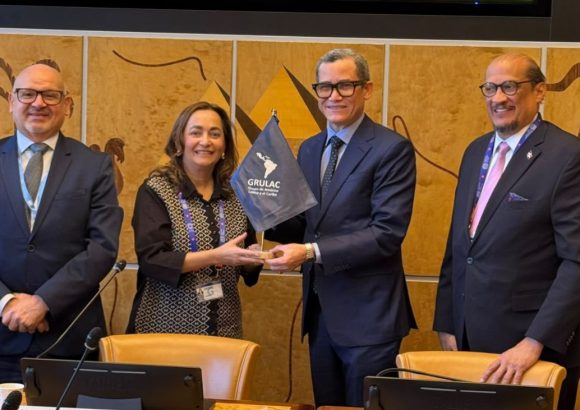
GENEVA, Switzerland – The Dominican Republic has entered a new chapter in its regional diplomatic and labor history, securing its first-ever appointment to coordinate the Group of Governments of Latin America and the Caribbean (GRULAC) ahead of key proceedings at the International Labour Organization (ILO).
The landmark appointment was formally announced during the 114th session of the International Labour Conference, where Dominican Labor Minister Eddy Olivares Ortega officially took up the coordination role. In his inaugural address following the assumption of office, Olivares framed the selection as a profound honor for the Caribbean nation. He extended public gratitude to Paraguay, the outgoing bloc leader, for its successful tenure, praising Paraguay’s relentless work to build cross-regional consensus and amplify Latin America and the Caribbean’s collective voice in global labor governance conversations.
Olivares went on to reaffirm the Dominican Republic’s longstanding dedication to inclusive social dialogue, emphasizing that consensus-driven governance has been a cornerstone of President Luis Abinader’s administration’s public policy strategy. Outlining his tenure’s priorities, the minister pledged to prioritize alignment among member states to forge a unified regional stance on global labor issues within the ILO framework, promising to steadfastly advance the shared interests and development aspirations of all GRULAC member countries.
The formal handover ceremony drew a high-profile audience of regional stakeholders, including labor ministers and senior diplomatic representatives from across Latin America and the Caribbean. Among the attendees was Juan Castillo, Uruguay’s labor minister and current presiding officer of the International Labour Conference. Senior Dominican government officials and the country’s permanent representatives to multiple international bodies also took part in the event.
Policy analysts and regional diplomatic observers widely interpret the election as a significant international endorsement of the Dominican Republic’s expanding influence in regional labor governance. The appointment reflects growing recognition of the country’s progress in institutional strengthening, as well as its consistent advocacy for policies that expand access to decent work, advance social inclusion, and drive equitable sustainable development across the Latin America and Caribbean region.