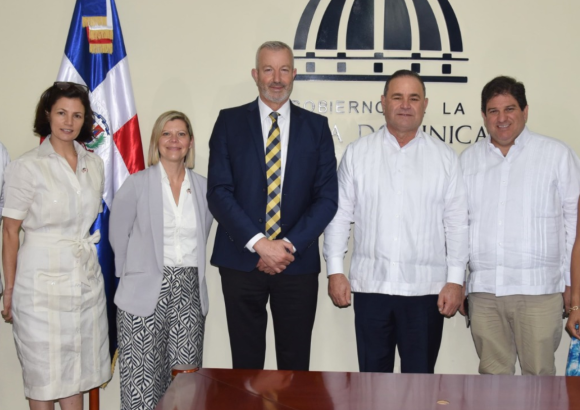
In a high-level working meeting held in Santo Domingo, Francisco Oliverio Espaillat, the Dominican Republic’s Minister of Agriculture, hosted a delegation from the United States Department of Agriculture’s Animal and Plant Health Inspection Service (APHIS) to advance technical collaboration on three core priorities: strengthening national animal health systems, safeguarding domestic food security, and rolling out more effective prevention measures against transboundary livestock diseases, most notably African Swine Fever (ASF).\n\nASF, a highly contagious viral disease that is fatal to domestic pigs and has no widely available vaccine, has spread across multiple regions globally in recent years, posing severe threats to livestock industries and food supply stability. The gathering offered Dominican and U.S. regulatory officials a platform to review the latest progress of the National Swine Biosecurity Program, an innovative effort launched by the Dominican Republic that stands as a pioneering model for disease control across the Americas.\n\nConversations between the two delegations centered on actionable next steps to upgrade key parts of the country’s ASF defense framework. Participants zeroed in on enhancing cross-regional disease surveillance networks, refining evidence-based prevention protocols, reinforcing rapid emergency response capabilities for potential outbreaks, and expanding the scope of bilateral partnership to better support the long-term growth and stability of the Dominican Republic’s entire livestock sector.\n\nAbel Madera, Director General of the Dominican Republic’s Livestock Division, outlined key milestones the program has already hit. To date, more than 630 pig farms have enrolled in the initiative, accounting for 82 percent of the country’s total technified pig production inventory. The program has also delivered on a major structural goal: the establishment of a nationwide, standardized biosecurity certification system. So far, 27 commercial pig operations have earned full certification, and none of these properties have ever recorded an ASF case.\n\nSenior authorities from both sides emphasized that the program has done more than just reduce immediate outbreak risk. It has also significantly bolstered the Dominican Republic’s in-country technical capacity and expanded its network of trusted international public health and agriculture partnerships. These gains, officials noted, have helped the country emerge as a critical regional bulwark stopping ASF from spreading further into the Caribbean and broader Latin American region.\n\nBoth delegations closed the meeting by reaffirming their shared commitment to sustained investment in targeted biosecurity measures. They agreed that ongoing investment is essential to mitigate risks linked to high-risk practices, including unregulated animal movement, inadequate transportation biosecurity protocols, and the ongoing challenges faced by small-scale, less technologically advanced farming operations across the country.
USDA delegation visits Dominican Republic to strengthen African swine fever prevention