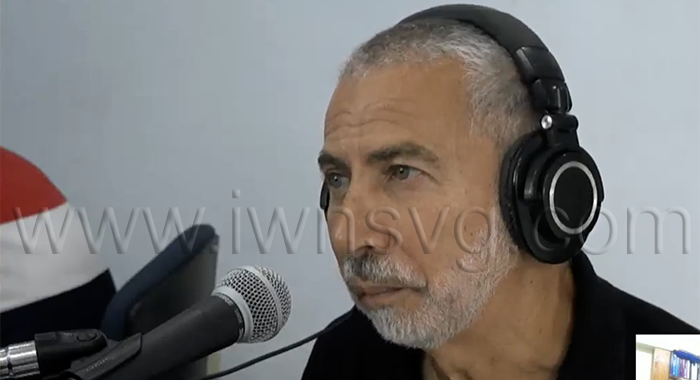
The chair of the National Insurance Services (NIS) board of directors in St. Vincent, Stephen Joachim, has publicly addressed the state of the country’s state-run social security system amid mounting demographic and economic headwinds, confirming that while the agency faces significant pressure, it remains financially secure for the foreseeable future.
Joachim made the comments during an interview with local outlet Boom FM, coinciding with the upcoming leadership transition: incoming executive director Ronette Lewis will officially take over the role on July 1, stepping into the role at a moment when both the NIS and the wider government are grappling with fiscal strain, with the country carrying a heavy national debt.
The most recent independent actuarial assessment of NIS’s long-term solvency, completed three years ago, projected that the system would remain fully funded through 2060 based on demographic and economic assumptions in place at the time. A new updated actuarial review is currently in its final stages of completion, Joachim confirmed. That 2021 projection was built around detailed calculations of future contribution inflows, scheduled benefit outflows and other core operational factors to reach the 2060 solvency estimate.
However, Joachim issued a stark warning that unforeseen shifts in national fertility rates, combined with potential inaccuracies in earlier demographic data, could drastically alter that long-term outlook. When the previous assessment was conducted, modelers estimated St. Vincent’s fertility rate stood at roughly two children per woman. A few months back, officials revised that estimate down to 1.8, but the latest official government data puts the actual fertility rate much closer to 1.5. That downward shift carries massive implications for the long-term funding of the social security system, Joachim explained, as a smaller working-age population will be called on to support pension benefits for a growing cohort of retirees going forward.
At its core, Joachim’s message emphasized that the NIS does not have an infinite pool of funds to draw from, and every policy decision regarding benefit levels and retirement age represents a delicate intergenerational balancing act between meeting the needs of current beneficiaries and preserving solvency for future generations. “Everybody wants lots of benefits,” he noted. “We could double your pension next week… but what happens to your grandchild? There’ll be no money there for your grandchild. You really want us to do that?”
Joachim explained that policy trade-offs for the NIS are not simple questions of factual right or wrong, but require deliberate judgment to strike an acceptable balance between how much the system can pay out to current contributors and retirees, and how much reserves must be set aside to meet future obligations.
Joachim also pushed back against public criticism of Lewis’s appointment, with many observers arguing that the role should be filled by a trained actuary, following the departure of former executive director Stewart Haynes, an actuary who led the NIS for nine years before resigning earlier this year to accept a new position in St. Kitts. Joachim rejected the idea that an actuarial background is a prerequisite for the top role, noting that what the NIS needs most is an experienced manager, not a technical specialist. “Why do you need an actuary? People just say it because Stuart was an actuary,” he said. “If anybody doubts me, speak to Stuart Haynes. He will tell you: ‘Steve, I do not use my actuarial skills to manage the NIS. This is about managing.’”
In a pointed rebuke to critics of both the appointment and the board’s overall approach to the NIS, Joachim urged opponents to set aside empty sloganeering and engage with the actual mechanics of how the social security system operates. “At least be logical and sensible,” he said. “Tell me why you need to have an actuary. Tell me, do you understand the NIS and how it works? Do you understand what really happens in the NIS? I don’t think most people have a clue, so they automatically assume, because Stuart is an actuary, we have to have an actuary too.”
While Joachim acknowledged that members of the public are fully entitled to hold differing opinions on NIS governance, he made clear that under his leadership, the board will stand by all decisions it has made after a thorough selection and review process, on the grounds that these choices serve the long-term best interests of all NIS contributors. “We had people who disagreed with us. I don’t have a problem with people disagreeing,” he said. “But you can’t say we didn’t do a thorough process.”