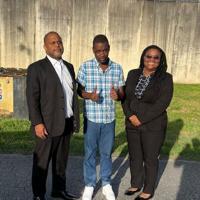
In a landmark judge-alone trial delivered Friday, a Maracas St Joseph man facing charges for a high-profile 2020 double homicide has walked free after a High Court justice threw out the prosecution’s core evidence as fatally unreliable.
Warren Small, 48, who also goes by the street names “Quincy” and “Blacks”, faced four total charges: two counts of murder for Darrie Simon and Sharlene Ramkissoon, plus unlawful possession of a firearm and matching ammunition. The two victims were killed in a brazen daytime shooting on March 3, 2020, outside a mini-mart at Acono Junction, Maracas, St Joseph, a case that shook the small local community for nearly four years.
The entire prosecution case rested entirely on the testimony of Joseph Tinto, Darrie Simon’s mother, who was present inside the mini-mart during the attack. Tinto told the court she had known Small since he was a child, and claimed she was able to identify him when the gunman’s face covering slipped for a brief moment during the shooting.
But presiding Justice Nalini Singh outlined multiple critical flaws in Tinto’s identification that cast irreparable reasonable doubt over the prosecution’s narrative. In her ruling, Singh noted that the gunman was almost fully concealed by a hooded sweatshirt and bandana throughout the incident, meaning any glimpse of his face could only have lasted a matter of seconds amid the chaos and terror of a sudden violent attack. Compounding this issue, Tinto was positioned behind a thick glass display counter inside the store at the time of the shooting, a barrier that the court ruled further distorted and compromised her ability to make a clear visual identification.
Singh also highlighted conflicting testimony from a second independent eyewitness, Celine Rebeiro, who not only failed to identify Small as the gunman but also described the shooter as wearing dark sunglasses — a key detail that never appeared in Tinto’s account of the incident. Beyond the problematic eyewitness testimony, the court also called out significant investigative failures by law enforcement, including the complete absence of a formal police identification parade and a failure to conduct a prompt, official reconstruction of the crime scene to verify witness accounts.
After weighing all the evidence, Justice Singh concluded that the crown could not overcome reasonable doubt over the identity of the actual shooter, and entered not guilty verdicts on all four counts against Small, resulting in his immediate discharge from custody. Prosecutors Shervon Noriega, Rebecca Trim-Wright and Khi Cambridge represented the State during the trial, while Small was defended by court-appointed defense attorneys Colin Selvon and Anastasia Weekes.