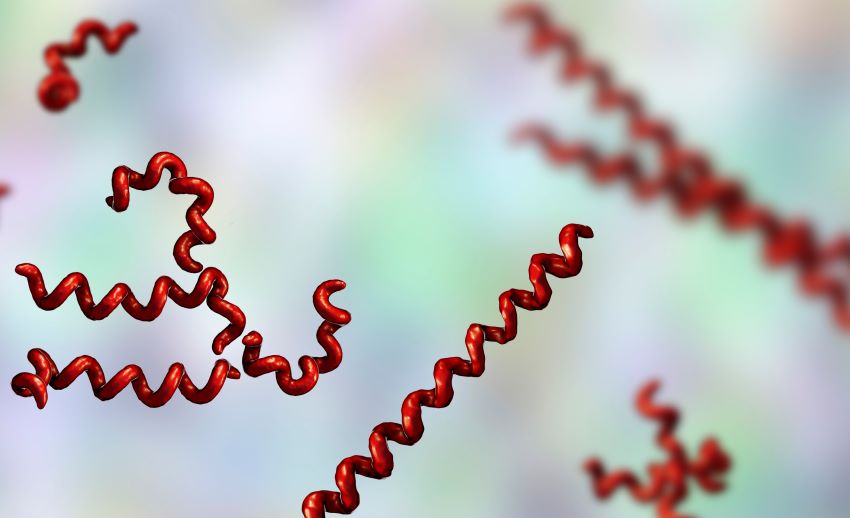
Barbados is facing a notable surge in new syphilis infections, prompting the country’s Ministry of Health and Wellness to issue a renewed public alert urging all adults to prioritize sexual health protection through evidence-based preventive measures, routine screening and timely medical intervention.
Syphilis, a sexually transmitted infection (STI) that is both fully preventable and curable with appropriate care, often flies under the radar for affected people. The infection is characterized by mild or even completely asymptomatic early stages, meaning many carriers remain unaware they have contracted the pathogen and can spread it to sexual partners unknowingly.
Official national surveillance data compiled by health authorities paints a clear picture of the growing trend: between 2024 and 2025, new reported cases climbed from 107 to 156, a year-over-year increase of roughly 46%. Young adults between the ages of 20 and 29 have consistently accounted for the largest share of new infections in both reporting years, representing 40.2% of cases in 2024 and 37.8% of cases in 2025. Within this age bracket, men made up the majority of confirmed cases, at 72.1% in 2024 and 61% in 2025.
The data also shows a concurrent rise in syphilis screening across the country. The Best dos Santos Public Health Laboratory, the island nation’s leading public health testing facility, processed 14,835 syphilis tests in 2025, up from 12,731 tests conducted in 2024. Over the past five years, syphilis positivity rates among tested individuals have fluctuated between 2.1% and 4.1%, resulting in a five-year average positivity rate of 2.9%.
To help the public recognize potential infection, health officials outlined the common, often subtle symptoms of syphilis. Early infection typically presents as a painless open sore on the genitals, anus or mouth. As the infection progresses, a non-itchy rash often develops, most frequently on the palms of the hands or soles of the feet. Other possible symptoms include swollen lymph nodes, low-grade fever, persistent fatigue, sore throat and generalized body aches. Because these symptoms are mild, intermittent, and easily mistaken for other common illnesses, many people dismiss them and forego testing. Crucially, even if visible symptoms resolve on their own without treatment, the underlying infection remains in the body and will progress to more advanced stages over time.
Left untreated, syphilis can cause severe, permanent and irreversible damage to critical organ systems, including the brain, heart and blood vessels, leading to long-term disability or even death. For pregnant people, untreated syphilis carries devastating risks, including miscarriage, stillbirth, and life-threatening congenital illness in newborns. Health officials emphasize that all of these severe outcomes are entirely avoidable through early detection via screening and prompt, effective treatment.
The Ministry of Health and Wellness is calling on all sexually active Barbadians to undergo regular syphilis testing, particularly for individuals who have new or multiple sexual partners. Testing is straightforward, widely accessible through both public and private healthcare providers across the island. Correct and consistent condom use remains one of the most effective individual-level interventions to reduce the risk of contracting syphilis and other common STIs.
Anyone who receives a positive syphilis test result is advised to start treatment immediately and notify all recent sexual partners so they can also get tested and treated if needed. Pregnant people are reminded that attending antenatal care early in pregnancy enables routine STI screening and early intervention to protect the health of both parent and child. Health officials also highlighted that sexual health protection is a shared responsibility for all sexual partners.
Moving forward, the Ministry of Health and Wellness will maintain ongoing surveillance of STI transmission trends across Barbados. It will continue collaborating with frontline healthcare providers, community organizations and the general public to strengthen prevention outreach, expand access to testing and treatment, and improve public education about sexual health risks and protective measures across the island.