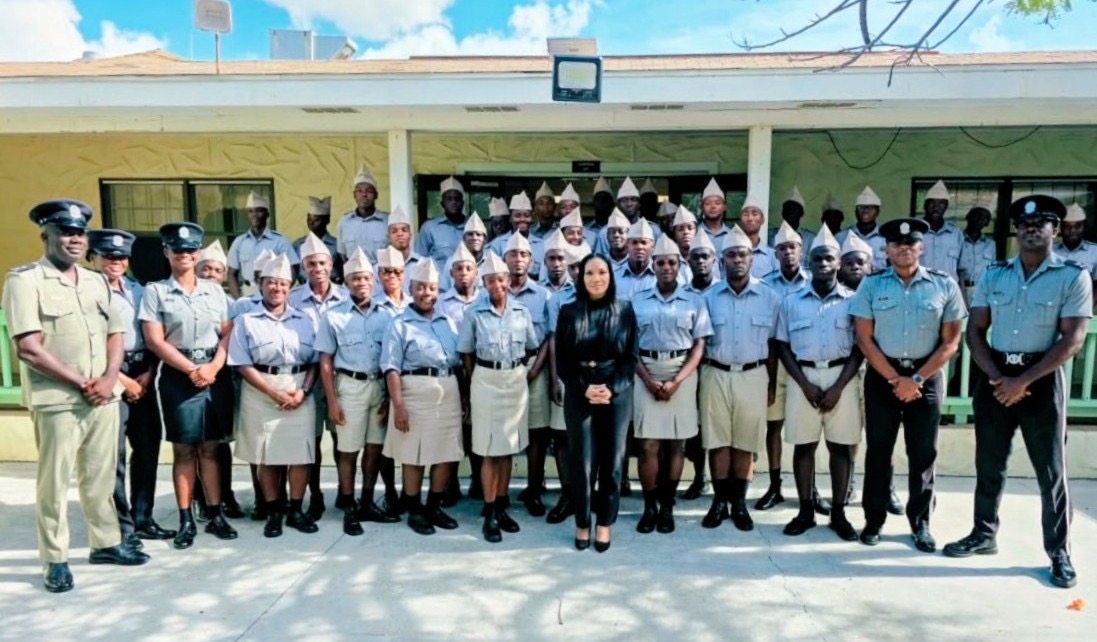
In a targeted effort to boost the preparedness of the next generation of law enforcement officers in Antigua and Barbuda, Chief Magistrate Ngaio Emanuel has led a pivotal educational session for trainee officers at the Sir Wright F. George Police Academy. The engagement, held on June 9, 2026, comes as part of a broader push to bridge the gap between academic police training and real-world operations within the country’s criminal justice system. The official media release from the Royal Police Force of Antigua and Barbuda’s Office of Strategic Communications confirmed the details of the session, which focused on two core areas: criminal practice and procedure in the Magistrate’s Court, and the practical application of the nation’s Child Justice Act.
Trainees in attendance gained targeted, actionable insight into key operational topics that will shape their day-to-day work, from court procedural rules and mandatory evidential requirements to structured case management practices. A major focus of the lecture was the unique legal framework that governs cases involving children and young persons, an area of law that requires specialized sensitivity and knowledge from frontline police officers. This classroom session was not an isolated training moment: it built on a hands-on educational experience one week prior, when the recruits traveled to the St. John’s Magistrate’s Court for an on-site visit. During that June 3 excursion, the group got a firsthand look at active court proceedings, observing how justice is administered in real time and deepening their understanding of the judiciary’s central role in the broader criminal justice ecosystem. That on-site visit already reinforced core lessons for the trainees, including the critical importance of conducting thorough investigations, maintaining accurate case documentation, and upholding professional standards of conduct when appearing in court.
Beyond technical legal knowledge, Chief Magistrate Emanuel used the session to emphasize the foundational character traits that define effective, trusted law enforcement. She told recruits that competent policing extends far beyond memorizing statutes and procedural rules: it requires consistent sound judgment, unwavering personal integrity, and a deep, abiding commitment to serving the public. She laid out three core guiding principles for every officer to carry throughout their career: integrity even when no one is observing their actions, courage that is always paired with disciplined judgment, and prioritizing public service over personal ambition. Emanuel reminded the group that public trust, the most valuable asset any police force can hold, is only earned through consistent accountability and ethical conduct. She encouraged them to remain steadfast in upholding values of fairness, professionalism, and compassion in every interaction they have with community members over the course of their careers. “Policing is not merely the exercise of authority,” she told the group, emphasizing that it is ultimately the responsible, humane application of law to serve the public good.
Leadership from the Royal Police Force of Antigua and Barbuda, alongside the commandant and staff of the Sir Wright F. George Police Academy, publicly thanked Chief Magistrate Emanuel for donating her time and extensive expertise to train the incoming cohort of officers. They noted that her willingness to lead this session is a reflection of the strong, collaborative partnership that exists between the police force and the judiciary in Antigua and Barbuda. This partnership, they added, works continuously to advance equal access to justice and lift professional standards across the country’s law enforcement community. For the recruits, the combined experience of on-site court observation and expert-led lecture has equipped them with a more holistic understanding of how police work intersects with the judicial process, preparing them for the practical realities of serving the public once they graduate and enter active duty.