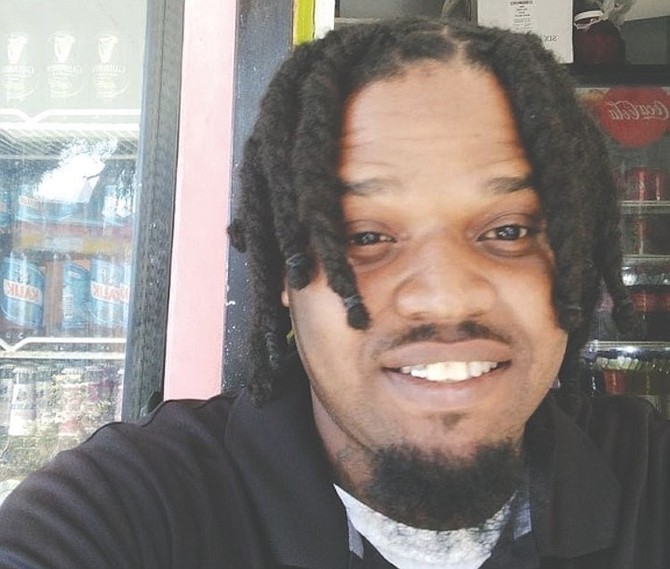
Nearly three and a half years after a coroner’s jury ruled 31-year-old Azario Major was unlawfully killed by law enforcement, three police officers charged in his death will face a judge-only trial starting September 14. The high-profile case, which has already been marred by repeated delays and public outcry, took another procedural turn this week as Justice Guillimina Archer-Minns formally set the new trial date for Sergeant Antonio Sweeting (badge number 2825), Sergeant Jamal Johnson (badge number 3039), and Sergeant Deangelo Rolle (badge number 3726). The trial was originally slated to kick off last week, but it was rescheduled to accommodate the defense’s long-held request for a bench trial, rather than one decided by a jury.
The fatal incident dates back to December 26, 2021, when Major was shot and killed inside his vehicle parked outside a local bar on Fire Trail Road. Since that day, Major’s family has waged a sustained public campaign for accountability, repeatedly speaking out against lengthy procedural delays and emphasizing that they have yet to see justice delivered for their loved one more than three years after his death.
Defense counsel Keevon Maynard argued on behalf of the three officers that a trial overseen solely by a judge would deliver a fairer outcome for his clients. Maynard explained that a judge would center the proceedings strictly on applicable law and verified evidence, insulating the decision from the widespread public attention and emotional pressure that have surrounded the case since the shooting. This request builds on prior legal challenges to the original Coroner’s Court inquest process. During that inquest, the officers contended that the intense saturation of media and public commentary around Major’s death created unfair prejudice that biased the jury toward its unlawful killing finding.
That challenge to the coroner’s verdict ultimately reached Justice Franklyn Williams, who issued a ruling on the matter in March 2024. Justice Williams declined to throw out the Coroner’s Court’s original finding, but he acknowledged that the widespread public discourse around the case—including organized social media campaigns, news commentary, media interviews, a dedicated advocacy website, and a podcast focused on Major’s death—created significant public pressure. Multiple voices in these spaces repeatedly called for the immediate indictment of the three officers, which Justice Williams noted could have impacted the jury’s final decision. Even so, the justice ruled that the challenge to the verdict was not properly framed for the application brought by the defense. He also rejected a separate complaint that the Coroner’s Court mishandled a constitutional challenge the officers filed during the inquest, noting that the officers had failed to exhaust all available legal remedies before bringing their request to set aside the verdict.