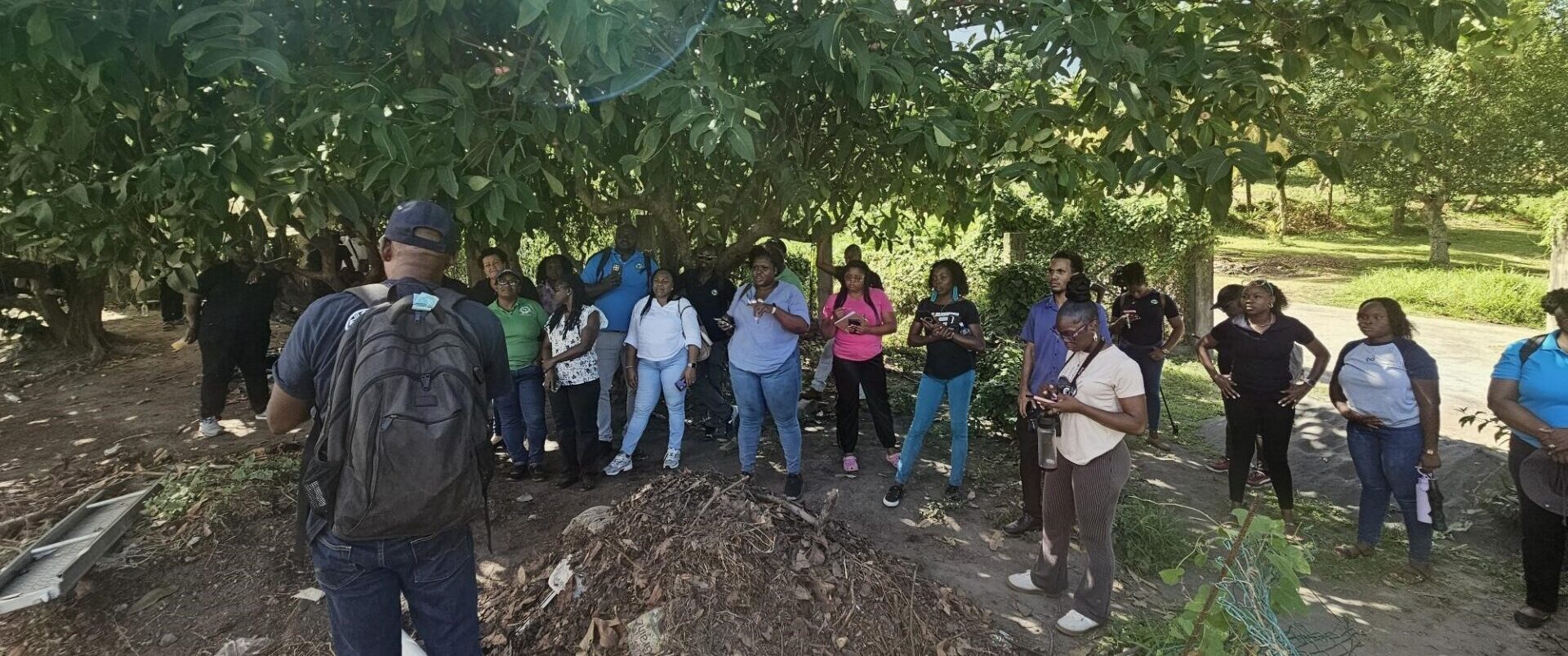
On June 5, 2026, the Food and Agriculture Organization of the United Nations (FAO) partnered with Saint Vincent and the Grenadines’ Ministry of Agriculture, Forestry and Rural Transformation to host a landmark Youth and Gender Inclusion Working Session in Kingstown, creating a dedicated space for young producers, agribusiness leaders and agricultural traders to share unfiltered insights into the challenges they face and co-design actionable solutions for a more inclusive agricultural sector.
The convening brought 23 cross-sector stakeholders together around a common goal: centering youth and gender-responsive strategies that open new pathways for young women and men to participate, lead, and thrive across every segment of national agrifood value chains. Attendees included not only young people actively engaged in farming, trade and agribusiness, but also representatives from the national Gender Affairs Division, local civil society organizations, and senior technical staff from the Ministry of Agriculture.
Throughout the day-long discussion, participants laid out firsthand accounts of systemic barriers that block their success, while working collaboratively to map out targeted opportunities to expand their role in the sector. Juan Cheaz, FAO’s Caribbean Gender Focal Point and Value Chain Technical Lead, opened the session by emphasizing the non-negotiable role young people and women must play in driving national agricultural transformation.
“Young people are the core engine of innovation and systemic change in agrifood systems,” Cheaz explained. “Yet far too often, young women and men face disproportionate barriers to accessing training, securing quality employment, and stepping into leadership roles. By centering youth and gender equity in our policy and program design, we can build more inclusive pathways to decent work, and secure a stronger, more resilient future for agriculture across Saint Vincent and the Grenadines.”
Permanent Secretary Colville King echoed this call, drawing attention to a stark demographic gap that threatens long-term agricultural sustainability: just 10 percent of registered farmers in the country are young people. “The future of our agriculture depends entirely on our ability to attract young people into the sector, and to ensure they have a meaningful seat at the table when we shape its development,” King noted. “We need the next generation of farmers, innovators, processors, marketers and entrepreneurs to keep agriculture sustainable and protect our national food security for decades to come.”
Discussion attendees outlined a consistent set of interlocking barriers holding young and female producers back, including limited access to affordable financing, arable land, formal markets, reliable transportation, and skills training, as well as widespread exclusion from key decision-making processes. For many, these barriers translate directly to tangible, devastating financial losses. Young farmer Dianza Selby shared a prominent example of how lack of market access derails small-scale producers: she once lost more than 600 pounds of unsold cucumbers, after exhausting all local distribution channels including supermarkets, schools, charities and community customers.
“My losses were significant, and it was incredibly discouraging,” Selby said. Her experience struck a chord with other participants, who shared innovative workarounds they have developed independently to cut post-harvest losses and boost profit margins. Many have turned to value-added production, turning surplus produce into shelf-stable goods like pickles and hot sauces, while others leverage public storage facilities to extend the shelf life of their crops.
The conversation also highlighted under-tapped opportunities for growth, including youth-led entrepreneurship, expanded domestic agro-processing, strategic product branding, and scaled-up value-added production. Participants also raised concerns about gaps in transportation infrastructure and export capacity, noting that younger, less established producers and traders have far fewer resources to absorb these challenges than larger, long-standing industry operators.
Agricultural trader Glenroy Thomas emphasized that meaningful change requires centering young people in the decision-making process from the very start, rather than treating them as afterthoughts. “If we’re making decisions that impact young people, young people need to be part of those conversations from day one,” Thomas argued.
A core, recurring theme across all working group discussions was the urgent need for expanded, targeted support systems for young people and women entering or scaling up operations in agriculture. Attendees called for expanded mentorship programs, increased access to technical assistance, more equitable access to critical resources, and greater youth representation in national agricultural policy discussions.
In closing, both FAO and the Ministry of Agriculture reaffirmed their shared commitment to ensuring the perspectives and lived experiences shared during the session will directly inform the development and implementation of future agricultural programs and initiatives across Saint Vincent and the Grenadines, laying the groundwork for a more inclusive, sustainable and food-secure future.