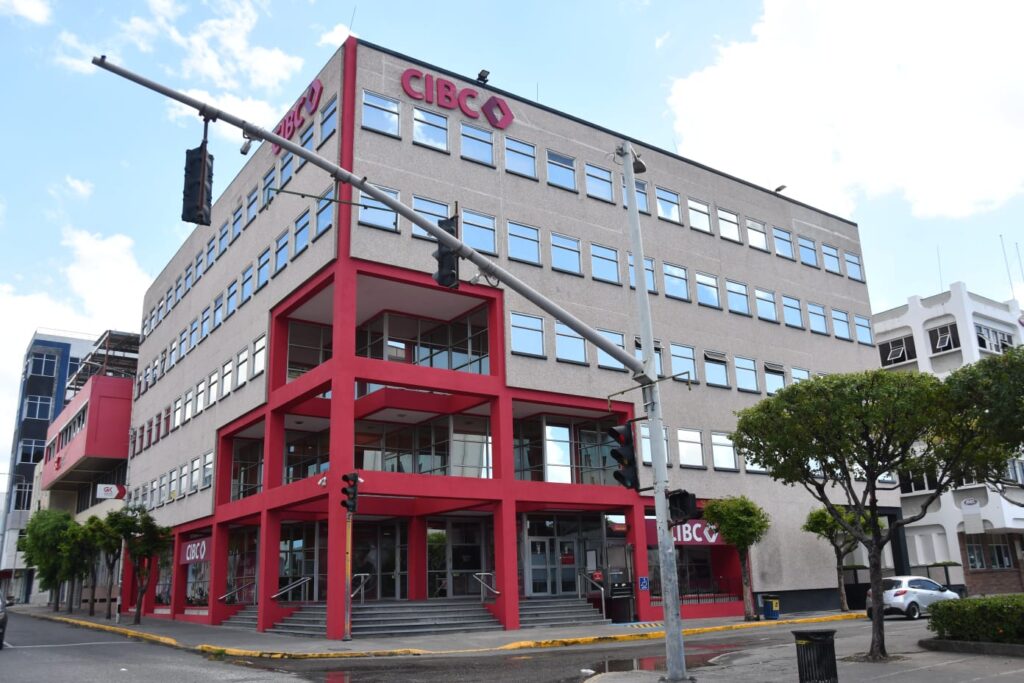
KINGSTON, Jamaica — As big tech giant Google accelerates its expansion of contactless digital payment infrastructure across the Caribbean region, CIBC Caribbean has become the latest financial institution to roll out Google Pay integration, with a phased rollout that introduces differing access rules across its regional footprint. The launch marks another key milestone in the Caribbean’s gradual shift toward modern cashless payment systems, even as local market challenges remain to full adoption.
Google Pay, the contactless payment tool hosted within Google’s Wallet mobile application, allows users to link their existing debit or credit cards directly to their Android devices. The platform’s core value proposition lies in its security model: through a tokenisation process, actual bank card details are never shared with merchants during transactions, cutting down the risk of card data theft and fraud. Users can complete both online checkout and in-person contactless payments with just a tap of their smartphone.
Per CIBC Caribbean’s official announcement, Jennifer Fuller, the bank’s director of enterprise payments, cards and merchant services, framed the launch as a key step in the bank’s ongoing digital transformation strategy. “Introducing Google Wallet support for clients reflects CIBC Caribbean’s ongoing commitment to delivering innovative client-centred digital banking solutions and is another important step in enhancing the digital banking experience for our clients,” Fuller stated in the press release.
For Jamaican CIBC Caribbean customers, the launch brings immediate access to Google Pay for all Visa and Mastercard credit cards, which can be added to the Google Wallet app on any Android device for instant use. However, the country faces a unique limitation not seen in other CIBC Caribbean markets: Jamaican users will not be able to link their debit cards to the service for the foreseeable future. To date, Jamaica is the only market in the bank’s footprint where this restriction is in place.
By contrast, CIBC Caribbean customers in four other regional markets — Barbados, The Bahamas, the Cayman Islands and Trinidad & Tobago — enjoy full access, with the ability to add both debit and credit cards to their Google Wallet accounts. The bank confirmed that it plans to gradually roll out the service to its five remaining Caribbean operating territories in the coming months, following a controlled, phased rollout schedule.
“Adding Google Pay supports our focus on convenience, security and innovation, while allowing us to roll out this service in a phased and controlled manner across our markets. Our clients expect modern payment options that fit their lifestyles, and Google Pay delivers exactly that,” Fuller added, explaining the bank’s incremental approach to the regional launch.
CIBC Caribbean’s entry into Google Pay comes as part of a broader regional push by Google to expand its digital payment services across Caribbean nations. Other major local banks have already beat CIBC Caribbean to the launch in multiple markets: Commonwealth Bank Limited rolled out the service to its Bahamian customers in November 2025, and Trinidad-based First Citizens Bank Limited launched its own Google Pay support just one month later, in December 2025.
Prior to CIBC Caribbean’s rollout, the Cayman Islands already had four local banks offering Google Pay to their customers. Across the Dominican Republic, 12 different banks now support the service, with Scotiabank customers in both the Cayman Islands and Dominican Republic already able to link their cards to the platform.
Digital wallet expansion in Jamaica is not limited to Google Pay, either. Rival digital payment service Apple Pay has also been in the works for the Jamaican market. The Bank of Nova Scotia Jamaica Limited first announced plans to launch Apple Pay in late 2024, and during the Scotia Group Jamaica Limited annual general meeting held on March 4 this year, President and CEO Audrey Tugwell Henry confirmed to shareholders that the launch is still on track for late 2026. Sagicor Bank Jamaica Limited CEO Chorvelle Johnson Cunningham also told investors during a May 20 briefing that supporting Apple Pay, tokenisation and other modern digital payment tools is a core short-to-medium term priority for the institution.
Despite the growing momentum from banks to roll out these modern payment options, full adoption across the region still faces a notable barrier: pushback from local merchants. A July 2024 survey by the Jamaica Observer found that while the three major Jamaican banks confirmed their digital wallet systems are secure and had not received high volumes of customer fraud disputes, many local merchants have publicly posted signs refusing to accept digital wallet payments at their businesses, slowing the uptake of the new payment method among consumers.