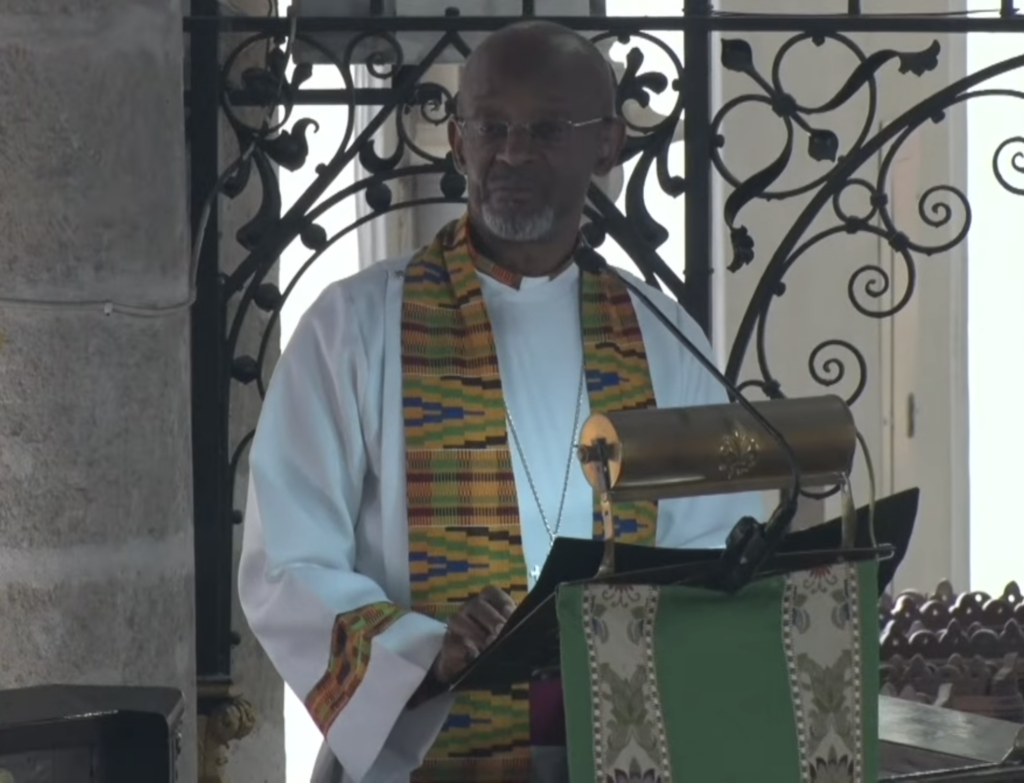
On the Second Sunday after Pentecost at Bridgetown’s St Michael’s Cathedral, a senior Anglican cleric delivered a landmark sermon challenging Barbadian society to move beyond quick judgments and harmful stereotypes of young men trapped in cycles of unemployment, despair, and violent harm, emphasizing that these vulnerable youth must not be written off as lost causes.
Reverend Canon Stephen Fields, speaking during celebrations marking the ninth anniversary of the cathedral’s St. Michael’s Centre for Faith and Action — a community-focused ministry dedicated to outreach, public education, and poverty alleviation — told gathered worshippers that most pressing issues dominating national public discourse demand nuanced, empathetic investigation rather than snap moral judgment. “Our young men are brimming with untapped promise, yet too many are caught in inescapable cycles of joblessness, hopelessness, and early death,” Fields told the congregation. “It is far too easy to slap a label on them, dismiss their struggles out of hand, or claim they have simply strayed from the right path. But the core message of the gospel calls us to look again, and to look far deeper than surface appearances.”
The cleric pushed both religious communities and the broader public to critically examine the structural and social factors that drive the widespread struggles facing Barbadian young people. He posed a series of probing questions: “What systemic forces have shaped the paths these young men walk? What opportunities have been systematically withheld from them? What deep wounds have they carried that have never been allowed to heal? These are not abstract questions — they are the urgent breaking story of our time. Every evening on the news, every morning as we read our papers, we ask what has gone wrong to create this reality. We cannot stand apart as outsider judges; we must lean in to understand.”
Turning to broader debates about the role of organized religion in 21st-century society, Fields acknowledged growing public skepticism about the relevance of faith institutions in an increasingly fast-changing world. He noted that many critics argue churches prioritize protecting outdated traditions and institutional self-preservation over addressing urgent modern crises, from economic inequality and mental health access to systemic racism, community violence, climate change, and the unique pressures weighing on younger generations. In particular, Fields recognized that many young people today view the church as overly formal, judgmental, and disconnected from their daily lived experiences. But he pushed back against this critique by outlining a historic pattern of renewal within Christianity, arguing that the faith has always survived criticism through adaptation, not rigid stagnation. “The church has survived not by refusing to change, but by adapting, reorienting its mission, and reconnecting the core message of the gospel to the lived realities of each new generation,” he explained.
Drawing a parallel from the Gospel of Matthew, which recounts Jesus calling the tax collector Matthew — a figure widely marginalized in his own time — to follow him, Fields held this up as a guiding model for modern Christians. “Jesus did not see Matthew as a person to be avoided; he saw him as a child of God worth approaching and calling to a new path. Faith begins when we stop seeing people as problems to be solved, and start seeing them as possibilities to be nurtured,” he said.
Meaningful community service and ministry, he added, requires first listening to the personal stories that shape people’s lives and struggles. “Ministry that only skims the surface of people’s experiences can never heal the deep wounds that lie beneath,” he emphasized.
Throughout his address, Fields wove together the core concepts of worship and active social good, stressing that authentic Christian faith cannot stay confined within the walls of a church building. “When there are people in our community going hungry, the church does not only stop to pray — we provide food. When injustice continues unchallenged, we do not stay silent; we advocate, we speak out, and we act. When disaster hits our communities, we do not just reflect on what happened — we rebuild together,” he said.
Praising the nine years of work done by the St. Michael’s Centre for Faith and Action, Fields noted that the organization’s work serving vulnerable low-income communities puts this belief into practice. “Feeding a hungry neighbor is theology in action. Serving your local community is theology in action. When the church engages pressing public issues with thoughtfulness and courage, that too is God’s work made visible,” he said.
In closing, Fields challenged all attendees to recognize the presence of the divine in the daily struggles and quiet resilience of Barbadian communities. “Do we see God in the resilience of people who refuse to give up? In the struggle for a better life? In acts of neighborly generosity? In communities that refuse to abandon one another? If you can see God there, you will know where you are called to serve: not as a bystander on the sidelines, but as an active participant in building a more just and compassionate world through God’s work.”