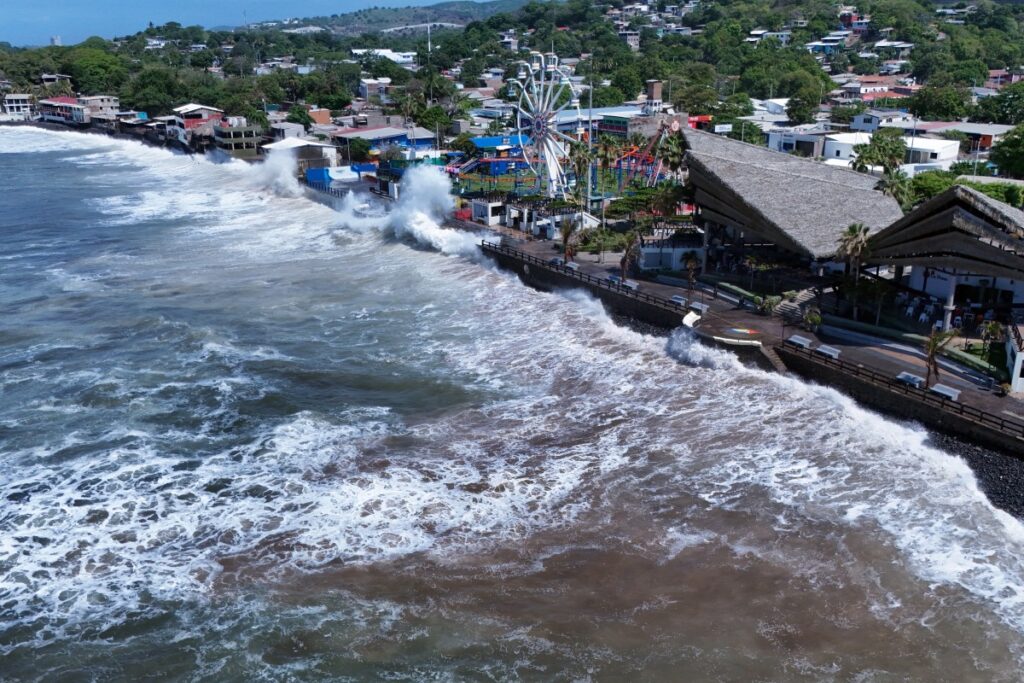
As Tropical Storm Cristina churns toward the Central American coastline, four countries in the region have activated emergency protocols and halted daily activities Tuesday, bracing for the storm’s forecast heavy downpours, flash flooding and life-threatening mudslides.
El Salvador, one of the first nations in the storm’s projected path, has rolled out widespread precautionary measures. The country’s Ministry of Education has shuttered all primary, secondary schools and higher education institutions for both Tuesday and Wednesday, citing elevated risks of landslides, widespread flooding and other storm-related hazards that could endanger students and staff. Thirty-five kilometers south of the capital San Salvador, in the coastal department of La Libertad, all fishing vessels have been ordered to stay anchored in port, where rough, powerful waves already began lashing shorelines ahead of the storm’s full arrival. Dozens of seafront retail businesses and the local seafood market have also locked their doors early, as owners and workers evacuated to safer inland areas.
Luis Alonso Amaya, director of El Salvador’s civil protection agency, confirmed that authorities have prepped 180 emergency shelters across the country, ready to accommodate residents forced to leave low-lying or high-risk areas ahead of three consecutive days of projected heavy precipitation.
Neighboring countries have also followed suit with their own emergency preparations. In Guatemala, national officials reported that the most intense rainfall is expected to hit the country’s Pacific coastline, the central Altiplano highlands and river valleys in eastern regions of the country. In Nicaragua, co-president Rosario Murillo has publicly urged all residents to avoid coastal areas entirely, noting that heavy rain has been steadily intensifying across the country since Sunday, raising baseline flood risks even before Cristina’s arrival. In Honduras, the country’s emergency management agency has issued formal storm alerts for nine at-risk regions, urging locals to make final preparations before conditions deteriorate.
Early Tuesday, the U.S. National Hurricane Center (NHC) based in Miami released its latest update on the storm, reporting that Cristina was moving northward at 6 kilometers per hour, with sustained maximum winds of 65 kilometers (40 miles) per hour as it closed in on the Central American coast. Through Thursday morning, the NHC projects the storm will drop 4 to 8 inches of rain across much of the region, with isolated coastal areas of Nicaragua, Honduras, El Salvador and Guatemala seeing accumulations as high as 12 inches.
“This rainfall may produce life-threatening flooding and mudslides, especially in areas of steep terrain,” the NHC emphasized in its official bulletin. The agency also warned that coastal flooding driven by storm surge remains a possible threat in zones hit by onshore winds from the cyclone.
Central America has long been ranked as one of the most hurricane- and tropical storm-prone regions on Earth, due to its geographic position along the eastern Pacific and Atlantic hurricane basins, leaving it regularly exposed to seasonal storm activity that often causes widespread damage and loss of life.