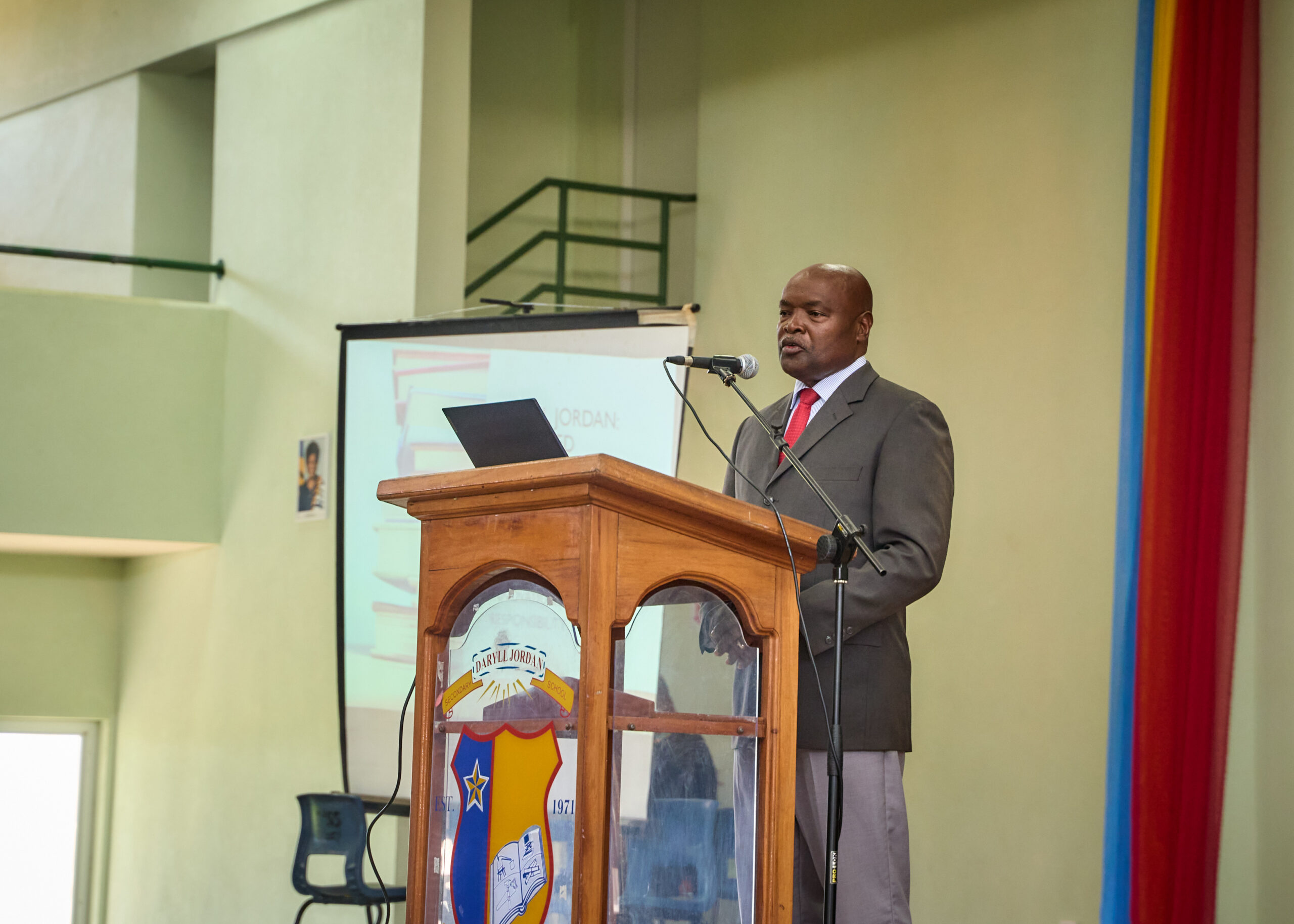
A persistent nearby wildfire has derailed reopening plans for a northern Barbados secondary school, pushing back the expected resumption of classes after the campus was shuttered Monday due to hazardous air quality, the institution’s principal confirmed this week.
Ken Layne, principal of Daryll Jordan Secondary School located in St. Lucy, announced Monday that scheduled classes set for Tuesday would not go ahead as planned. Uncontrolled smoldering embers continue to billow thick smoke and ash across the school grounds east of the fire line, creating unsafe conditions that have blocked clean-up and sanitation crews from accessing the campus to remediate the damage.
The school was first forced to suspend in-person learning on Monday after wind carried toxic ash and smoke directly into campus buildings from the adjacent burning area. Layne explained that ongoing active combustion just a short distance from school property has made it impossible to even begin the deep cleaning required to make classrooms safe for students and staff, creating a critical bottleneck to restoring normal operations.
“We are closed today because of the ash that has accumulated inside the building, and there is still a heavy concentration of smoke in the air today,” Layne said in an interview. “Right now, to the east of the school, you can still see active smoking — the embers are still smoldering up in that area. That is directly impacting our ability to respond, and it is even preventing us from starting the cleaning process at all.”
The sudden closure has prompted urgent emergency adjustments for one high-stakes group of students: those sitting for the Caribbean Secondary Education Certificate (CSEC) exams. To avoid disrupting the critical assessments and putting candidates at an unfair disadvantage, education officials moved all scheduled CSEC exams from Daryll Jordan Secondary to The Alexandra School in the nearby town of Speightstown. Layne confirmed that the relocated students had settled into their new testing site by Monday morning and would complete their scheduled exams as planned that day.
Layne added that school leadership, in partnership with emergency management and environmental officials, would conduct a second full assessment of campus conditions and air quality later on Monday. Following that evaluation, a further update will be distributed to all parents, guardians, and staff members outlining next steps, including any adjustments to the school calendar. Any decision on when classes can resume will be entirely contingent on the latest reports from emergency response and environmental health teams, with the inability to launch clean-up operations remaining the single largest barrier to reopening. “Everything hinges on being able to start that clean-up process, and right now, we cannot start cleaning yet,” Layne said.
Addressing widespread community questions about whether large wildfire-related closures are a regular risk for the St. Lucy school, Layne clarified that events of this magnitude are extremely rare. While the school did face a similar closure due to a nearby fire last year, he noted that no incidents on this scale had occurred prior to 2023. He added that the 2024 fire is far more extensive than any the school has experienced in recent memory: the blaze ignited far to the east of the campus and has since spread west, crossing a major road and moving much closer to school grounds than previous fires.
Despite the widespread disruption, Layne was quick to highlight the quick support the school has received from local landowners, specifically naming ABC Farms, which manages the large parcels of land east of the school. He explained that the school has built a proactive partnership with the farm in recent years to conduct regular vegetation clearing to reduce wildfire risk, and the farm has stepped up to support emergency response efforts as the current blaze spread. While the landowners could not stop the fire from spreading toward the campus, they deployed their on-site water tenders to support firefighters working to contain the blaze. “They have been good corporate partners with us. In the case of a fire, there is not much they can do to stop it once it starts, but they were out with their equipment assisting in putting out the fire,” Layne said.