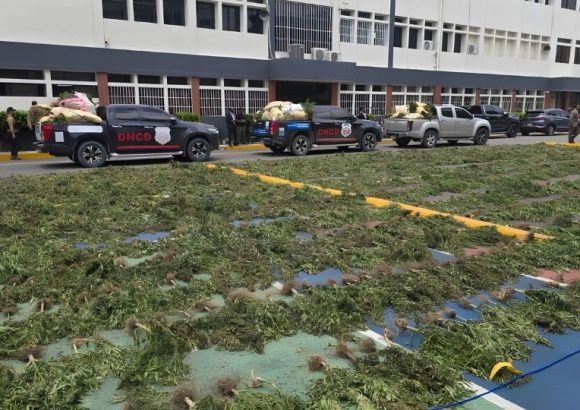
In a coordinated multi-agency anti-narcotics raid, law enforcement officials have taken down a massive illegal marijuana growing operation tucked away in the rugged remote highlands of the Dominican Republic’s San José de Ocoa province, arresting three people connected to the drug ring, the country’s National Drug Control Directorate (DNCD) announced this week.
The operation, which brought together DNCD enforcement agents, public prosecutors, air support from the Dominican Air Force, and tactical intelligence from national intelligence agencies, targeted an active agricultural plot located in El Pinar, a semi-rural municipal district in the province. When agents moved in on the target property, they uncovered more than 3,000 mature cannabis plants already in cultivation, alongside five pre-packaged containers of processed marijuana, batches of young germinating seedlings, and a full suite of gear purpose-built for every stage of the drug’s production chain.
Investigators detailed that the remote property included a permanent residential structure that the operation’s leaders had repurposed into a dedicated storage and processing hub. Confiscated assets found on site range from off-grid power infrastructure (solar panels to support the operation in its isolated location) to specialized cultivation and processing equipment: fans for ventilation, a functional water pump for crop irrigation, commercial drying racks and tools, vacuum-seal packaging supplies for distribution, encrypted communication devices, a personal cellphone, and a motorcycle used for navigating the area’s rough terrain.
Three individuals suspected of involvement in the ring were taken into custody at the scene, with two of the detainees confirmed to be Haitian nationals. All three suspects have already been transferred to the Dominican Public Ministry to face formal criminal prosecution. DNCD officials confirmed that the investigation is far from over, with active work ongoing to track down and apprehend additional co-conspirators who may be tied to the large-scale growing operation.
Due to the extremely challenging, mountainous terrain where the plantation was hidden, DNCD teams reported that removing the thousands of seized plants and transporting all evidence back for processing took more than 12 full hours of work. Mules and horses had to be used to move the large volume of contraband out of the remote site, as standard motorized vehicles could not access the location. All seized cannabis plants have been shipped to the National Institute of Forensic Sciences (INACIF), where forensic analysts will conduct official testing to confirm the exact total weight and count of the contraband.