As regional stakeholders gathered to chart the future of hemispheric maritime infrastructure, Barbados’ top tourism and transport official delivered a clear call to action: port authorities across the Americas must prioritize artificial intelligence and full digital transformation to build the resilient, efficient, and sustainable maritime networks the 21st century demands.
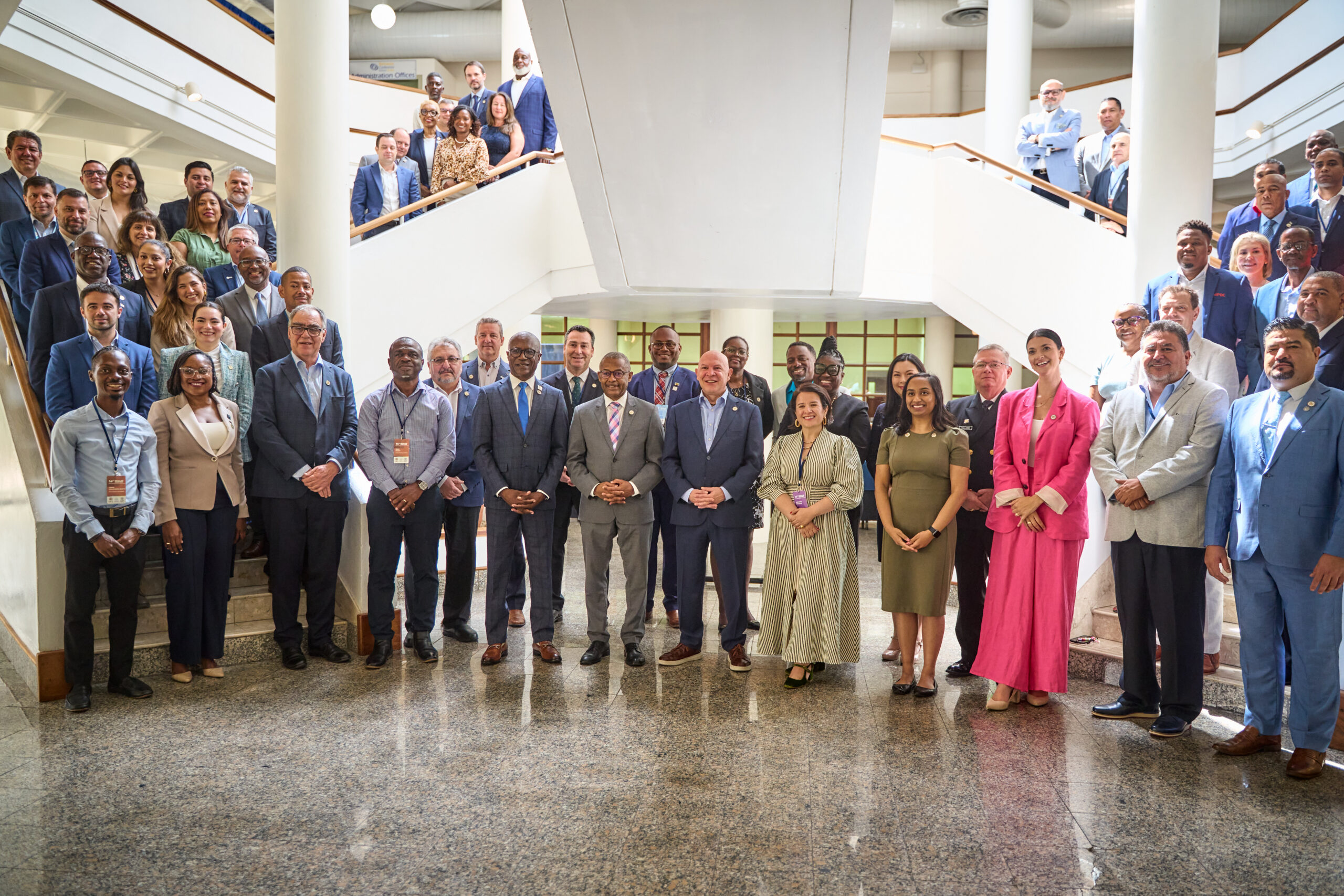
Ian Gooding-Edghill, Barbados’ Minister of Tourism and International Transport, opened the 14th Regular Meeting of the Inter-American Committee on Ports (CIP) on Monday at the Lloyd Erskine Sandiford Centre, where more than 100 port leaders and industry stakeholders from 35 nations across the Americas have convened to explore this year’s theme, “The Scope of Artificial Intelligence: Reshaping Strategies for Sustainable and Secure Ports.”
Gooding-Edghill emphasized that for small island developing states and coastal nations in particular, modern, well-functioning ports are far more than ancillary economic infrastructure – they are the critical lifelines that underpin national survival, economic prosperity, and collective security. The gathering comes at a uniquely pivotal moment, he noted, as regional nations work to shore up their maritime networks against a growing wave of global disruptions, from climate-fueled extreme weather to shifting supply chain dynamics and evolving security threats.
“This meeting carries fundamental importance, because our collective future depends in large part on developing maritime gateways that are modern, resilient, and effectively governed,” the minister told delegates. “For small islands and coastal states especially, ports are not peripheral assets. They sustain our commerce, power our vital tourism sectors, and guarantee access to the food and energy supplies our populations depend on.” Beyond trade and economic activity, Gooding-Edghill added, ports also play an irreplaceable role in coordinating disaster response and post-event recovery, making ongoing modernization a non-negotiable priority at both the national and regional levels.
Turning to the conference’s core focus on technological innovation, the minister stressed that digital transformation is no longer a discretionary upgrade for ports aiming to stay competitive in an increasingly interconnected global economy. “Digitization is no longer optional for ports that want to remain competitive, efficient, secure, and sustainable,” he said. He outlined the wide-ranging benefits AI already brings to port operations, from optimizing cargo logistics and enhancing on-site safety and security to enabling predictive maintenance that cuts costly downtime and improves data-driven operational decision-making.
Yet Gooding-Edghill also issued a critical caution: technology alone cannot deliver long-term, inclusive success. Transforming regional port systems to meet future challenges requires more than just cutting-edge tools, he argued. It demands intentional investment in institutional readiness, robust governance frameworks, upskilling for existing workforces, and a sustained commitment to keeping innovation centered on people and inclusive of all communities.
The minister called on regional leaders and policymakers to pursue collaborative action to ensure the benefits of AI and digital advancement are shared equitably across the entire hemisphere. “We share a collective responsibility to ensure that the gains from these advances are distributed broadly and fairly across our region,” he said, pushing for strengthened institutional capacity, updated policy frameworks, and clear safeguards to protect trust, enhance port security, and uphold public accountability.
Gooding-Edghill added that national governments and private industry stakeholders must proactively center workers and local communities throughout the transition, ensuring no group is left behind as the maritime sector evolves. “If we move forward with intentional foresight and cross-border cooperation, we can build port communities that are not only smarter, but also more resilient, more sustainable, and more responsive to the changing needs of our people,” he concluded.