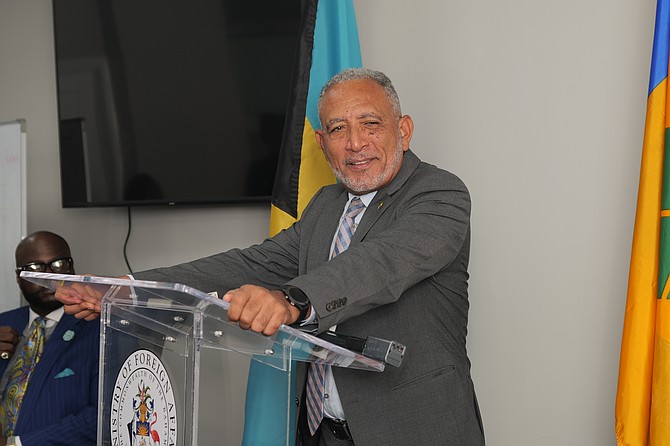
During a diplomatic stop at The Bahamas’ Ministry of Foreign Affairs this Thursday, St Vincent and the Grenadines Prime Minister Dr. Godwin Friday delivered a pressing call for unified global action on transboundary challenges, emphasizing that geographically small island developing states cannot turn a blind eye to risks that originate far beyond their territorial boundaries. The visit came amid Dr. Friday’s attendance at regional discussions hosted by the Caribbean Development Bank in the country, putting critical regional priorities on the international agenda.
Addressing assembled foreign affairs officials, Dr. Friday centered his remarks on two interconnected pillars: the growing urgency of deepened international collaboration and accelerated climate action. In an era of unprecedented global interconnectedness, he argued, every nation—no matter its population size or total land area—has a stake in developments unfolding across the world. For small open economies like his own, this reality is not an abstract political talking point, but a daily lived experience.
“Our status as small, open, disproportionately vulnerable economies is exactly why we must raise our voices louder than most,” Dr. Friday stated. He pointed to the stark injustice of climate change’s impacts on Caribbean island states: while the region contributes a negligible share of global carbon emissions, it bears the brunt of climate-fueled extreme weather, with communities forced to allocate scarce resources to annual hurricane preparedness that could otherwise fund social and economic development.
For years, Caribbean regional leaders have advocated for the creation of structured rapid-response frameworks within the global multilateral system. These mechanisms would allow climate-vulnerable states to access critical emergency aid and recovery resources immediately in the aftermath of climate-linked disasters, cutting through bureaucratic delays that often exacerbate damage and human suffering. Dr. Friday acknowledged that the push for these frameworks has faced significant headwinds over decades of international negotiations, but he struck a cautious note of progress, reporting that the campaign has steadily won growing backing from the broader international community.
Beyond policy discussions, the visit also carried personal and professional significance for the prime minister. Reflecting on his long-standing ties to The Bahamas, Dr. Friday recalled his first trip to the country in the early 1980s, when he traveled as a senior undergraduate student to conduct on-the-ground field research for his final degree project. Ministry officials also highlighted that his graduate academic work centered on Bahamian external policy: his master’s thesis focused specifically on analyzing the foreign affairs priorities and strategies of the Bahamian government.