On the occasion of Guyana’s 60th Diamond Jubilee of Independence, commemorative events held across St. Kitts and Nevis brought a clear message from one of the federation’s most senior political figures: the Guyanese diaspora is an irreplaceable driver of national progress, and the bilateral bond between the two Caribbean Community (CARICOM) nations remains a model of mutually beneficial regional partnership.
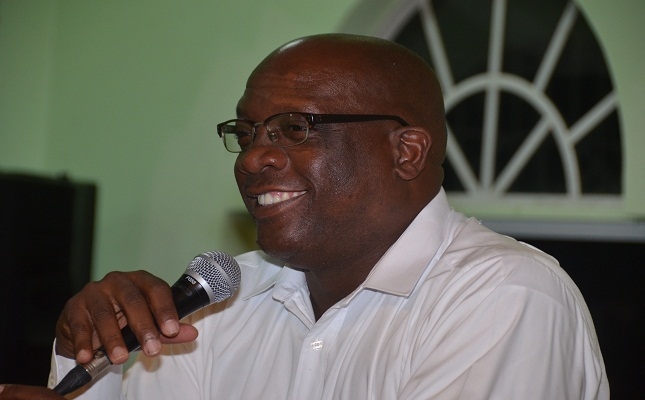
In an exclusive interview with local media outlet SKNVibes.com, former St. Kitts and Nevis Prime Minister and current People’s Labour Party leader Dr. Timothy Harris shared his reflections on the decades-long ties between the two nations, highlighting the outsized impact of one of the federation’s largest expatriate communities. For generations, Guyanese migrants have embedded themselves across every critical sector of St. Kitts and Nevis’ economy, from agriculture and education to small business, hospitality, sports, and media, building a legacy of contribution that extends far beyond labor support.
Harris traced the deep roots of this relationship back to the early 2000s, when St. Kitts and Nevis’ vital sugar industry faced a critical labor shortage. At that time, Guyana was one of the primary countries that stepped in to supply the workforce the federation needed to keep its core industry operational. In the decades since, that initial wave of migration has evolved into full integration: Guyanese nationals have become core contributors to the federation’s productive output, while their cultural traditions around food, music, and art have enriched the social fabric of St. Kitts and Nevis, strengthening people-to-people ties across the region.
Looking across Guyana’s 60-year journey as an independent nation, Harris praised the South American CARICOM member for its remarkable resilience and unwavering commitment to regional integration. While he acknowledged that the original vision of deeper regional integration has yet to be fully realized, he noted that the bloc remains on a steady progressive path, with Guyana at the forefront of modern regional growth.
In recent years, Guyana has undergone a dramatic economic transformation, sparked by major offshore oil discoveries that have pushed it to become one of the fastest-growing economies in the world, and the fastest-growing within CARICOM. Harris emphasized that this new era of prosperity for Guyana creates unprecedented opportunities for shared growth across the region, including for St. Kitts and Nevis. For decades, Guyanese educational institutions have provided critical agricultural training and expertise to St. Kitts and Nevis citizens, laying the groundwork for future collaboration in food security, energy development, and industrial expansion. Harris added that Guyana’s growing economy could also help address persistent labor shortages across smaller Caribbean island nations, turning its progress into collective regional benefit.
Beyond economic cooperation, Harris highlighted Guyana’s longstanding reputation for excellence in education and human capital development, noting that hundreds of St. Kitts and Nevis citizens have advanced their skills, particularly in agricultural fields, at institutions like the University of Guyana and Guyanese technical colleges. He called for continued expansion of these institutions’ regional impact to empower more Caribbean people.
When asked what lessons St. Kitts and Nevis and other small Caribbean nations can draw from Guyana’s 60 years of independence, Harris pointed first to the enduring resilience of the Guyanese people through decades of economic and social ups and downs. He also stressed the importance of responsible natural resource stewardship, noting that Guyana has long leveraged its abundant agricultural potential to drive growth, a lesson he explored during his time in office when his administration studied opportunities to add value to St. Kitts and Nevis’ own sugar industry, including the use of sugarcane byproducts for energy generation. He acknowledged that the federation’s small size creates inherent structural constraints to development, making it all the more important to identify targeted opportunities for growth.
Ultimately, Harris summarized the core lesson from Guyana’s six decades of independence as the value of disciplined, inclusive development, noting that this principle holds true for nations of all sizes, from the largest regional economies to the smallest Caribbean island states.
The 60th Independence Diamond Jubilee, celebrated officially on May 26, was marked by events across Guyana and across the global Guyanese diaspora, including the community in St. Kitts and Nevis, who gathered to mark the historic milestone.