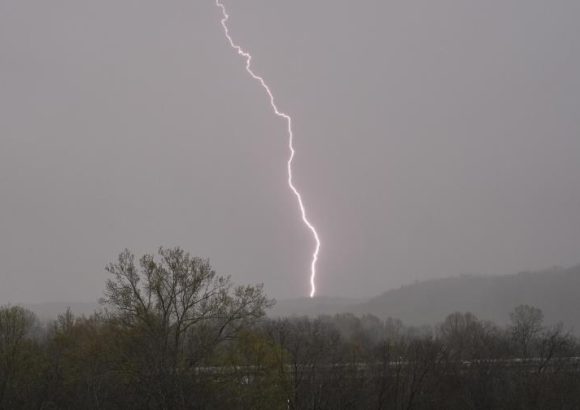
Each year across the globe, thunderstorms claim human lives, destroy residential properties, disrupt critical public services and trigger billions in cumulative economic losses. Yet according to regional lightning protection specialists, the vast majority of these tragedies and damages are entirely preventable – if communities prioritize public education, enforce internationally recognized safety standards and close gaps in systemic preparedness. At a recent international seminar focused on lightning protection best practices, three electrical engineers affiliated with the US-based Latin American Association for Lightning Protection Education sounded the alarm on systemic underpreparation, particularly in the Dominican Republic, where the threat of lightning remains widely underestimated by the public and regulatory bodies alike.
Speaking to attendees at the “Theoretical and practical foundations of lightning protection” event, José González, Lizardo López and Jorge Noé outlined the key gaps that put Dominican residents at unnecessary risk. First, they noted, a large share of public and private buildings across the country lack properly engineered lightning protection systems that meet global safety benchmarks. Even when protection systems are installed, many fail to meet standards because they are designed and fitted by workers without sufficient technical training, who often use unregulated commercial devices with no proven effectiveness. The experts explicitly debunked widespread marketing claims for products advertised as being able to “dissipate” or “cancel” lightning strikes, emphasizing no existing technology can eliminate the natural risk, only mitigate its impact.
International standards such as the U.S. NFPA 780, IEC 62305, and LPI 175 already outline clear, tested criteria for the design, placement and specifications of effective protection systems, the specialists noted, but these rules are rarely enforced consistently across the Dominican Republic. López, one of the association’s members, explained that being outdoors during an active thunderstorm is the deadliest behavior, as risk does not only come from a direct strike. The phenomenon of step voltage, he noted, can create lethal high voltage waves in the ground even from a lightning strike that lands a full kilometer away. Contrary to another common misconception, Jorge Noé added, damage and risk extend far beyond the direct point of impact, with dangerous surges capable of affecting any location within a five-kilometer radius of a strike – a fact that most of the public and many regional authorities do not understand.
When thunderstorms do form, the core protective action is simple: seek shelter in a solid enclosed building immediately, and avoid the dangerous habit of lingering outdoors to watch or photograph lightning storms. Even a building without a dedicated protection system dramatically reduces risk of lethal injury, the experts confirmed – while infrastructure may suffer damage, people inside are far more likely to survive without severe harm. For those trapped outdoors with no access to a safe building, specialists advise closing legs tightly together, minimizing contact with the ground, and avoiding elevated open areas to reduce the risk of fatal voltage differences.
Beyond public behavior gaps, the Dominican Republic also lacks a nationally implemented early warning system for thunderstorms, a tool that González calls essential to reducing population risk. While large-scale mining operations in the country currently use either satellite or local detection systems, and existing regional infrastructure can monitor atmospheric electrical activity, no widespread public alert framework is in place. Early warning systems, already successfully deployed in Colombia and Germany, give communities critical time to activate safety protocols and move to shelter before a storm hits. Past fatalities recorded at tourist beaches and outdoor recreation areas in Brazil and Peru could have been avoided, Noé noted, if adequate warnings had been issued and heeded.
The rapid growth of solar energy installations across Latin America has also created new, underaddressed risks, the specialists warned. Solar panels, mounted as elevated metal structures on rooftops, act as natural lightning rods, and unprotected installations face a far higher risk of strikes. In addition to damaging the panels themselves, lightning strikes generate destructive power surges that can destroy expensive inverters and other electronic components tied to photovoltaic systems. All new and existing solar installations, the experts recommend, should be assessed by qualified specialists and fitted with code-compliant surge protection devices.
Moving forward, the group called on Dominican authorities to prioritize lightning protection for high-occupancy sensitive infrastructure, including hospitals, schools, and churches, particularly in regions with frequent thunderstorm activity. Any protection project should begin with a evidence-based scientific risk assessment aligned with international standards, they emphasized, rather than installing one-size-fits-all systems without prior analysis. Beyond infrastructure upgrades, the specialists called for expanded technical training for professionals working on protection systems, and widespread public education campaigns to correct common misconceptions and teach life-saving safety protocols.
Contrary to popular belief, the experts emphasized, the leading cause of lightning-related deaths and accidents is not a lack of available technology, but unnecessary human exposure during storms. “Everyone is responsible for their own safety,” Noé reminded, stressing that the ultimate goal of all prevention infrastructure and policy is to protect the most valuable asset: human life.