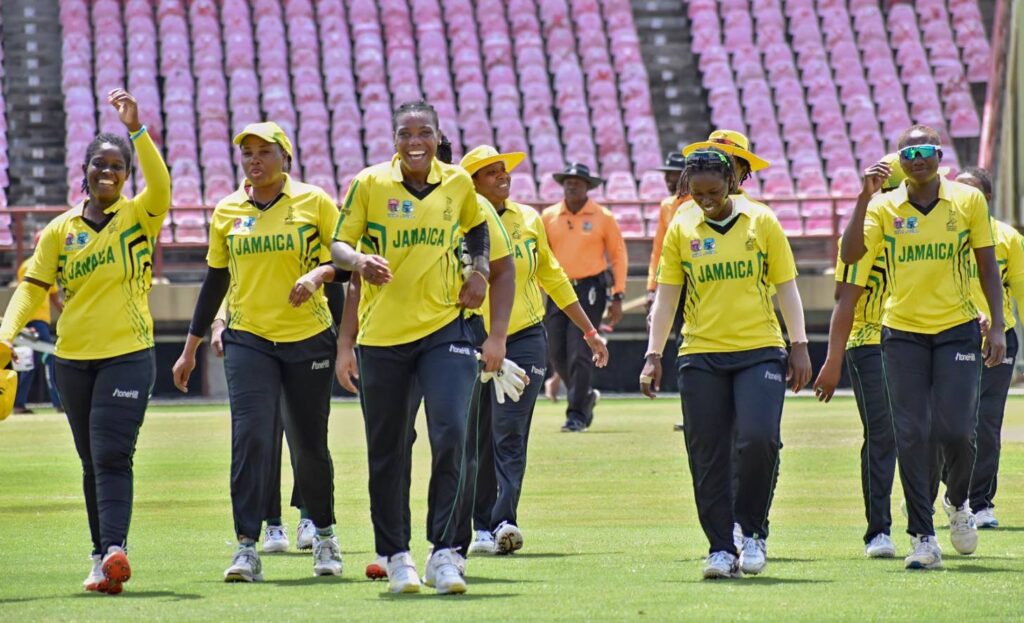
Against all expectations, Jamaica’s senior women’s national cricket team has built one of the most impressive dynastic runs in regional Caribbean cricket over the past half-decade, a streak of success that has confounded fans and analysts alike given the severe structural and resource constraints the squad operates under.
Early in 2024, the Jamaican side pulled off one of the most dramatic tournament turnarounds in recent regional cricket history to claim the prestigious Super50 Cup title hosted in St Vincent and the Grenadines. Entering the final matchday of the group stage, Jamaica sat in fifth place in the standings, but a dominant victory over the already crowned T20 regional champions Leeward Islands earned them critical bonus points that pushed them all the way to the top of the table and secured the championship. This latest trophy adds to an unprecedented streak: in the last five consecutive years, Jamaica’s women have claimed five regional titles, including a historic T20 and Super50 double championship in 2024.
But behind this extraordinary run of success lies a growing conversation about unmet potential. Head coach Shane Brooks, the strategic leader who has guided the team’s victories since 2022, argues that with improved institutional support from the Jamaica Cricket Association (JCA), the team could reach even greater heights. In an interview with the Jamaica Observer following the 2024 Super50 win, Brooks emphasized that the current system is leaving the team unnecessarily unprepared for competition.
“We have a group of ladies that is the most successful in the last decade. They have won more trophies than anybody, yet the preparation is watered down,” Brooks said. “What I’d love is for us to have a programme that’s operational, one that is running. We really don’t have a [women’s] cricket programme in the country. We gather a month, or sometimes two months, before a tournament — and that’s not sufficient.” Unlike top regional competitors that offer full-time contracts and year-round training programs for elite female players, Jamaica’s structure lacks even consistent domestic club competition to keep players match-fit between national tournaments. The rushed crash-course preparation before major events has even led to preventable health issues, Brooks explained: “A lot of times these ladies find themselves on the injury list because of the crash course in getting them ready for a tournament.” Reflecting on the 2024 Super50 turnaround, Brooks noted that the squad entered the tournament underdone: “We had a shorter time to prepare the team. We were not as sharp as we would have liked but the duration of the tournaments allowed us to get better each passing day.”
JCA leadership has acknowledged the gaps in the current system, citing chronic underfunding and conflicting scheduling priorities as the core barriers to building a consistent year-round program. O’neil Cruickshank, JCA’s manager of cricket operations and development, explained that while the association regularly includes women’s domestic tournaments on its official calendar, logistical and financial hurdles often derail those plans. Scheduling conflicts with regional tournaments organized by Cricket West Indies (CWI) and unavailability of top Jamaican players competing in overseas franchise competitions force regular rescheduling, he said. When push comes to shove, the association prioritizes preparing the national squad for regional competition over running domestic events when resources are tight. “When they come back it might be a case of having national teams to prepare, and if at the time the cash flow is not able to run [both] we would prioritise the national team preparation,” Cruickshank explained. Despite these ongoing challenges, Cruickshank confirmed that the JCA has formal plans in place to host both domestic T20 and 50-over tournaments for women in the upcoming summer, and acknowledged that more work is required to keep female cricketers active consistently.
JCA President Dr Donovan Bennett echoed Cruickshank’s note that limited funding is the primary barrier to structural reform, but highlighted progress in youth talent development as a bright spot for the future of the sport. The association runs an active nationwide talent identification program led by former men’s national coach Junior Bennett, which has worked across the island to spot and nurture young female cricketing talent from a young age. That early development work, paired with Brooks’ skilled coaching at the senior and under-19 levels, has been key to delivering the team’s current streak of titles despite limited resources.
Still, Brooks warns that Jamaica risks falling behind rival regional programs that have already prioritized investment in women’s cricket. Top competitors including Barbados, Trinidad and Tobago, and Guyana have implemented sustainable year-round programs, offered full-time contracts to elite female players, and support 12 months of annual training — a model Jamaica needs to adopt to maintain its competitive edge, Brooks argued. Without a full overhaul of the current underresourced structure, even the team’s remarkable current run of underdog success may not be sustainable against increasingly well-funded competition in the region.