A sudden, total islandwide power outage that plunged Jamaica into darkness on a Friday evening has sparked official outrage, prompted regulatory demands for accountability, and left tens of thousands of residents still grappling with disrupted water service days after the initial failure. The incident, which unfolded at approximately 9:02 pm last Friday, knocked out electricity across the entire country, derailing weekend plans for households, halting business operations, cutting off water distribution systems, and interrupting public entertainment events.
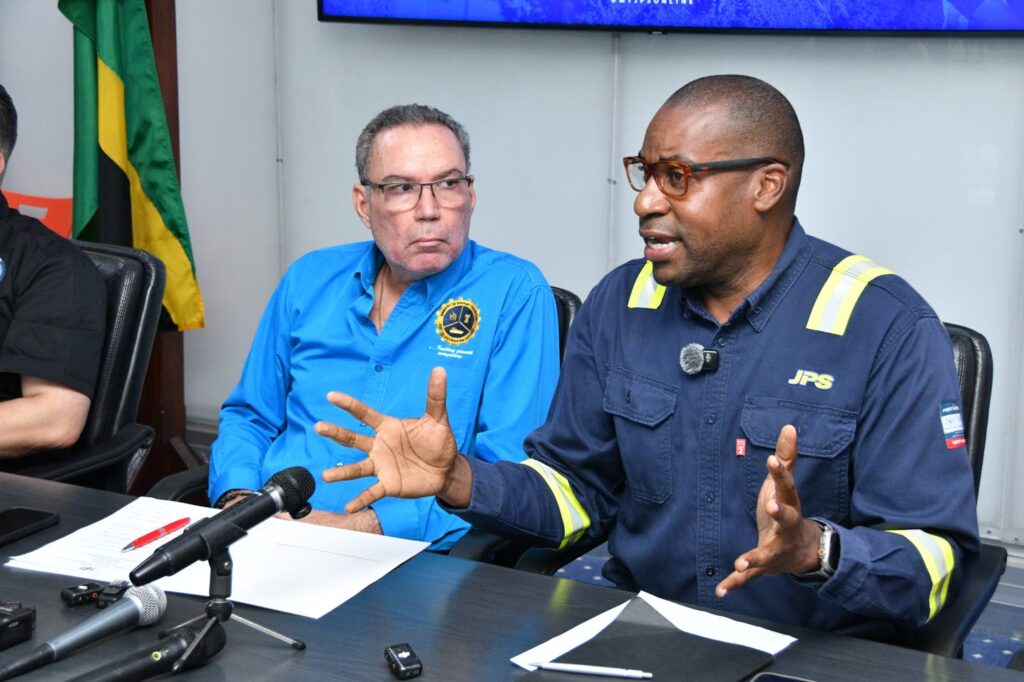
In the immediate aftermath of the collapse, Jamaica’s state power provider, the Jamaica Public Service (JPS), has pointed to severe, concentrated lightning activity as the trigger that damaged critical transmission infrastructure, sparking a cascading failure that brought down the entire national grid. JPS President and Chief Executive Officer Hugh Grant outlined the utility’s initial findings during a joint press briefing held on Saturday, noting that intense lightning strikes damaged key transmission infrastructure in Kingston’s Corporate Area.
“What we do know is that, as a result of the significant lightning activity, we lost five of our transmission lines emanating from one of our significant substations in the Corporate Area. In parallel to that, we had a cascading effect, causing a loss of generation across the entire island. This cascading effect resulted in the shutdown of the entire grid. At that point, we were mobilised and the team responded,” Grant explained. Further inspection confirmed visible damage: a broken high-voltage conductor connecting the Hunt’s Bay and Newport stations, plus damaged equipment at the Rockfort substation, all aligned with lightning-related impacts. Grant emphasized that full technical analysis is still ongoing to map the exact sequence of events that led to total grid collapse.
By 6:00 am Saturday, Grant said JPS crews had restored power to the entire national grid, though roughly 10,000 customers remained without power as of Saturday afternoon due to separate, localized weather-related damage in western and central parts of the country. He added that the company has now entered the investigatory phase, focused on identifying root causes, capturing actionable lessons, and implementing changes to prevent similar widespread outages in the future.
For Jamaica’s Energy Minister Daryl Vaz, however, the total grid failure was unacceptable and a source of deep embarrassment. In comments to reporters, Vaz noted that a properly functioning power system should never experience a total national shutdown from an isolated local fault, calling the incident an unacceptable disruption for all Jamaicans.
“This, for me as minister, is an embarrassment and one that I would not wish to experience again in my tenure in this position. I must say that when I got the call last night, I worked through the night with the JPS president straight back until 6 o’clock this [Saturday] morning, and he had his teams out there, but we lost a good night’s sleep that we should not have lost because the system should have been in a position that if there was one area that went down, it should not have caused the entire system to go down. Something went awry. There’s absolutely no two ways about that,” Vaz said.
Vaz also highlighted a troubling history of repeated total grid failures in Jamaica dating back to 2006. Official investigations by the Office of Utilities Regulation (OUR) have documented six major islandwide shutdowns not caused by hurricanes, with the most recent prior outage occurring in April 2016. Past investigations have repeatedly cited preventable issues: protection system failures, defective relays left unreplaced for months, unaddressed maintenance gaps, human error, and inadequate risk assessment. Multiple past outages, including the 2006 and 2012 incidents, were also triggered by lightning strikes on transmission lines.
Regulators have already formalized demands for accountability: the OUR has given JPS 48 hours to submit a preliminary incident report, and 30 days to deliver a full, root-cause analysis with recommended corrective actions. OUR Director General Ansord Hewitt said the agency will review the final report to assess its adequacy, issue any required regulatory directives, and verify that JPS has addressed lessons learned from past outages.
Vaz went a step further, urging a full independent investigation to get to the bottom of the 2025 incident and prevent future recurrence, noting that dramatic technological advances since the 2016 outage should have reduced the risk of total system collapse. The Jamaican government has committed to building a reliable, resilient national power system for all residents and is demanding full transparency and accountability from JPS.
The outage also triggered a secondary crisis for water supplies, as most water distribution infrastructure relies on electric power. As of 2:00 pm Saturday, roughly 65,000 water customers remained without service. Water Minister Matthew Samuda told reporters that full water restoration is expected to take an additional 24 to 48 hours, as crews need to recharge transmission lines and refill community storage tanks. The largest single impacted area is the Minard distribution system, which serves around 30,000 residents between Brown’s Town and Runaway Bay in St. Ann, where joint JPS and National Water Commission crews are working on site to resolve issues. Samuda noted that restoration progress is ongoing and moving in a positive direction, with significant reductions in the number of affected customers expected by Saturday evening.