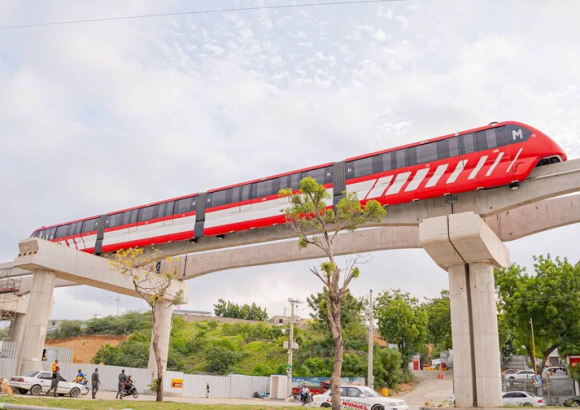
Proponents of Santiago’s high-profile Monorriel project have long framed the initiative as a transformative milestone for the Dominican city, touting its role as a catalyst for urban modernization, faster commutes, integration with existing cable car networks, and a polished new global image for the capital. Elevated rail infrastructure undeniably projects an aura of progress, and that shiny, visible narrative has dominated public discussion of the project from its inception. But behind this polished public face lies a far more contentious story of flawed planning, questionable contracting, skyrocketing cost overruns, and repeated delays that raise fundamental questions about whether the project prioritizes private business interests over the public good it claims to serve.
Critics of the process do not argue that Santiago does not need upgraded public transportation. The core dispute is not with the idea of improving mobility, but with how the monorail solution was chosen, and whether the city was forced to adapt to pre-selected technology and private business terms rather than selecting a solution tailored to its actual needs. Standard best practice for large public infrastructure projects follows a clear, public-centered sequence: first define the mobility problem, compare all viable alternatives against standardized metrics, then select the option that delivers the greatest benefit to the public at the lowest sustainable cost. In the case of the Santiago Monorail, all available evidence suggests this process was reversed: a specific technology was locked in early, separate contracts were structured around that choice, and the city was left to adjust its planning to fit the pre-determined project, rather than the other way around. This reversal inherently puts public interest at risk, as private interests end up guiding public planning that should remain the core responsibility of the state.
A 2019 study conducted by Spanish consulting firm IDOM, financed by the Inter-American Development Bank (IDB) and known as PIMUS, offers a stark counterpoint to the monorail approach. Rather than proposing a single iconic project, the study laid out a holistic, city-wide integrated mobility network built around actual passenger demand patterns. After modeling Santiago’s existing mobility flows, the study found that the city’s busiest corridors saw peak demand of only 1,150 to 1,400 passengers per hour in each direction. For this level of demand, the most technically and economically reasonable solution was not an oversized premium rail system, but high-capacity articulated buses operating on dedicated and semi-dedicated lanes. The proposed trunk-feeder bus network, designed to expand gradually as demand grew, would have covered most of the city at a total projected cost of just $471 million, including vehicles, stations, fare infrastructure, and road upgrades.
By comparison, the monorail concentrates nearly all its investment in a single corridor, with a stated capacity of 20,000 passengers per hour per direction – more than 14 times the maximum peak demand the PIMUS study identified. The cost gap is equally stark: the original 2022 civil works contract was awarded to the Santiago Monorail Transportation System Consortium (CSTM), a joint venture of Grupo Estrella and Sofratesa, for 25.028 billion pesos, equivalent to roughly $450 million at the time – nearly matching the entire cost of the alternative bus network. Since the award, major project adjustments including route changes and a new tunnel to bypass the Santiago Monument area have already been approved, and the final total cost is expected to rise dramatically, though updated figures have not been released to the public.
The technological portion of the project – covering rolling stock, signaling, electromechanical systems, power infrastructure, and commissioning – was awarded directly to French firm Alstom and local partner Sofratesa for roughly 500 million euros, with no new competitive bidding process. This structure creates a problem known as technological encapsulation: because the civil works were built specifically to fit Alstom’s monorail technology, no other supplier could fairly compete for the technological contract, as the existing infrastructure already dictates strict technical specifications that lock in the pre-selected provider. As a result, the state lost all leverage to compare alternative technologies, renegotiate better terms, or adjust the project to fit public needs. The total projected cost of the monorail has now ballooned to between $1.2 billion and $1.3 billion for the single corridor, according to recent official comments.
Delays have mirrored cost overruns. The original civil works contract stipulated an 18-month construction period, with work scheduled to wrap up between late 2023 and early 2024, followed by testing and commercial operation. The contract was awarded in March 2022, but Fitram – the Dominican Republic’s public Mass Transit Development Trust managing the project – has repeatedly pushed back completion dates. Initially, officials targeted the end of 2025, then pushed it to the first quarter of 2026, and now project operational testing will not begin until the end of 2026 – nearly four years after the original contract award, and 30 months past the original completion deadline. Much of the delay stems from the fact that core project details, including final engineering, land acquisition, urban adjustments, and inter-agency coordination, were not finalized before the contract was signed. Every additional month of delay adds further financial and fiscal costs that will ultimately be paid by Dominican taxpayers.
The project also exposes deep institutional and transparency flaws. Fitram operates as a public trust managing public funds for mass transit, but its structure has been used to reduce transparency rather than enforce accountability. Splitting the project into multiple separate packages for civil works, technology, rolling stock, oversight, and financing makes it far harder for the public and auditors to trace how public funds are being spent. Officials claim the trust is audited, but transparency requires far more than internal review: it requires full public access to updated total costs, all contract addenda, scope changes, adjusted timelines, risk assessments, and all fiscal commitments tied to the project. Without this information, public debate is trapped between one-sided official promotion and unproven criticism, rather than being grounded in verifiable facts. A project of this size requires more than public trust in officials; it requires formal, accessible public accountability.
This lack of accountability is not unique to the Santiago Monorail. The project is part of a broader regional wave of large public transport investment backed by multilateral loans, sovereign guarantees, and public trust structures, which have delivered a string of large urban rail projects including the Santo Domingo Metro expansion, new urban cable cars, and additional monorail proposals across the Dominican Republic. The issue is not that governments should invest in public transportation – improving mobility is a critical public good. The problem is that these investments are often advanced without full public disclosure of the comparative studies, risk assessments, updated costs, and long-term fiscal obligations that would allow citizens to verify whether the projects actually solve mobility problems, or simply add to public debt to build high-profile showcase infrastructure.
There is no question that the Santiago Monorail will deliver on its promise of a visible, modern, iconic landmark. What remains in question is whether it was ever the best solution for the city, once all costs, tradeoffs, and alternatives are considered. What Santiago needed was a comprehensive, sustainable mobility system tailored to the actual needs of its residents, not a single technological showcase built to impress. The monorail stands as a cautionary example of what happens when technology and branding override careful, public-centered planning. The visible result is a gleaming elevated train; the hidden cost is a $1.3 billion oversize investment concentrated in one corridor, marked by unrelenting cost growth, years of delay, and dozens of unanswered questions about public funds. Santiago deserved a better, more transparent, more accountable public decision – one that prioritized functional mobility for all over a single iconic infrastructure project.