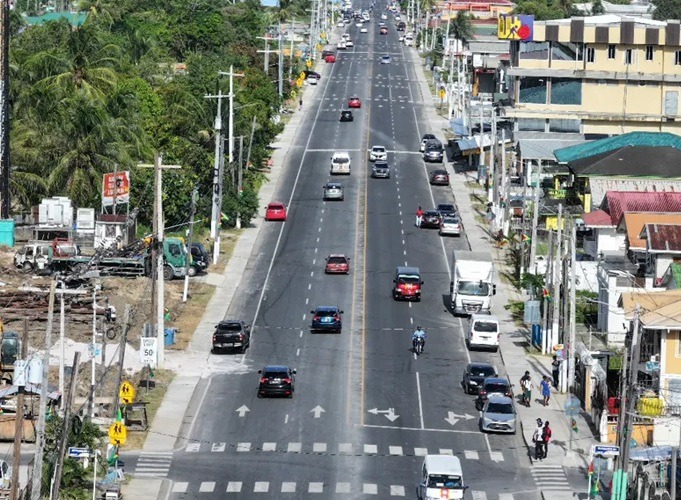
On Friday, June 6, 2026, a top official from the Caribbean Development Bank (CDB) pushed back against the widespread regional approach of expanding road networks to solve growing traffic gridlock, calling for a holistic, coordinated, and technology-enabled strategy to address what experts frame as a macroeconomic threat to Caribbean development.
Speaking at the CDB-hosted forum “Edge X by CDB: Unlocked – Stuck in Traffic: What Congestion Is Costing the Caribbean?”, William Ashby, Acting Division Chief of the Economic Infrastructure Division in the CDB’s Projects Department, argued that pouring resources into road expansion alone cannot fix persistent congestion. As Guyana — where the government has framed a surging vehicle count as a marker of growing national wealth, and has already completed multiple road widening projects and new highway construction in West and East Demerara — exemplifies the common reactive approach, Ashby emphasized that the region must shift its focus to integrated urban mobility planning rather than piecemeal road expansion.
Congestion is not just a local inconvenience, Ashby noted: it is a cross-cutting regional challenge that ripples across national economies, cutting into productivity, raising business costs, and slowing overall growth. It also carries far-reaching indirect impacts for public health, climate resilience, labor market function, and affordable housing access, he added.
To lay the groundwork for effective solutions, Ashby recommended that governments first build an analytical foundation through comprehensive mobility mapping, targeted congestion studies, and project feasibility assessments. The Barbados-headquartered CDB, he confirmed, stands ready to support this work through technical assistance, project preparation support, and policy-focused financing. For infrastructure investments, the bank can provide loans, grants, and concessional funding for integrated upgrades spanning public transit, active transport (walking and cycling) infrastructure, and smart traffic management systems.
Ashby warned against the common pitfall of ad-hoc, project-by-project reactive planning, urging decision-makers to adopt evidence-based, cross-sector coordinated strategies. He pointed out that fragmented institutional responsibility — where infrastructure development, transport planning, and traffic policing fall under separate, uncoordinated agencies — often worsens congestion even when new infrastructure is built. Beyond physical infrastructure, he said, the region needs to strengthen institutional coordination and clarify roles across government bodies to make solutions sustainable.
Capacity building is another critical gap, Ashby added: Caribbean nations need to invest in training for local experts in traffic engineering, transport modeling, and long-term mobility planning to design, roll out, and maintain effective congestion solutions.
Policy interventions to manage travel demand are also essential, he argued. Measures such as flexible or staggered working hours, structured parking pricing, and incentives for carpooling and ride-sharing can directly reduce peak-hour pressure on overstretched road networks. Ashby also made a strong case for integrating real-time digital tools into congestion management: leveraging data from road sensors, GPS tracking, centralized traffic control centers, and digital monitoring dashboards allows officials to shift from reacting to congestion after it forms to anticipating gridlock and responding in real time.
To test new approaches before large-scale deployment, Ashby suggested rolling out small targeted pilot projects, such as adaptive traffic signals, smart parking systems, and dedicated bus priority lanes in high-congestion zones.
“Congestion in the Caribbean is solvable but only if we treat it as the real development issue that it is,” Ashby concluded.
Joining Ashby at the forum, Dr. Rae Julien Furlonge, Managing Director of regional transport consultancy LF System, traced the roots of the region’s congestion crisis to a 30-year policy trend: governments have encouraged cheap vehicle imports as a source of tax revenue and business growth, but failed to invest in matching public transport infrastructure. This has created a “wicked cycle” where countries are forced to spend increasing amounts of foreign exchange on fuel imports and road repair bitumen, all while public transit systems remain underfunded, unreliable, and inadequate to meet commuter demand. Furlonge noted that more than 60 percent of regular public transit users across the region are women and children, who bear a disproportionate share of the burden of inadequate service.
Furlonge outlined the wide range of hidden costs of unaddressed congestion: lost worker productivity, wasted fuel, widespread travel delays, billions of hours of lost time, elevated driver stress and fatigue, increased air pollution, missed economic opportunities, and stunted national economic growth. He did note one unexpected local exception: some small business owners have asked for slower speed limits to allow passing commuters to spot their storefronts, a rare conflict of interest in congestion planning.
To reverse the trend, Furlonge called on Caribbean societies to fundamentally “rethink mobility” — focusing on removing private vehicles from roads during peak congestion periods rather than just diverting them to new or expanded roads, with the core goal of reducing total vehicle kilometers traveled. He pointed to developed economies that have achieved as much as a 30 percent reduction in peak vehicle use through these strategies.
Even with high private vehicle ownership across the region, Furlonge emphasized that most commuters still lack access to reliable, high-quality public transit, and ordinary commuters bear the brunt of congestion caused by unregulated private vehicle use. Among his proposed policy solutions are pay-as-you-drive insurance schemes that price driving based on actual road use, replacing traditional one-size-fits-all tolls, and offering income tax rebates to both employers and employees that adopt flexible work or shared commuting arrangements. For near-term parking and traffic management, he recommended targeted tweaks including structured parking regulation, expanded park-and-ride facilities, metered roundabouts, intersection design improvements, double-lane roundabout conversions, adjusted traffic signal timings, and cracking down on arbitrary bus stopping that blocks traffic flow.