Barbados has emerged as a regional leader in prioritizing climate resilience and advancing climate-friendly investments across government and community levels, but a new UNICEF-commissioned study has uncovered a critical gap: the island’s young people trail their peers across the Eastern Caribbean in awareness of green and circular economy opportunities. The research, which examined youth engagement across four island nations — Antigua and Barbuda, Barbados, Dominica, and St. Lucia — was officially released on World Environment Day during a public presentation focused on youth perspectives on climate action. Titled “Young People’s Knowledge, Attitudes and Practices on Climate Change and Green and Circular Economies in the Eastern Caribbean”, the project was designed to create an evidence base for building more inclusive climate programs that center young people’s needs and input.
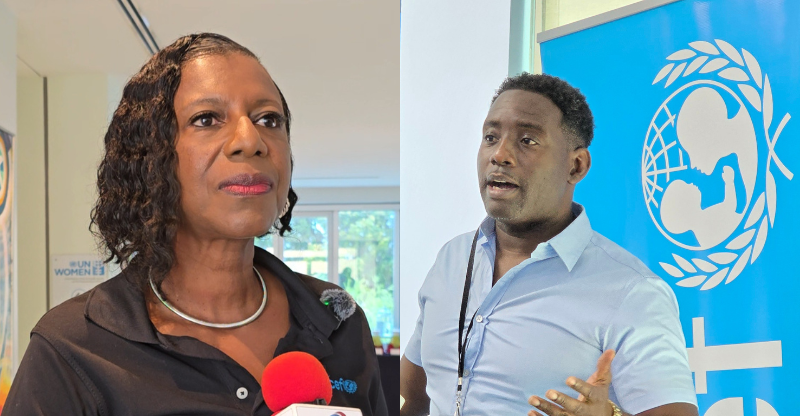
Lead researcher Professor Dwayne Devonish explained that while Barbados’ significant investments in climate resilience have gained international recognition, there is a clear disconnect between these top-level efforts and youth understanding of how young people can participate in related sectors. Contrary to common assumptions, this gap is not rooted in a lack of interest among Barbadian youth, but rather in how information about green and circular economy opportunities is communicated. “Many young people we spoke to acknowledged that the government is moving forward with climate-ready investments, but they consistently reported that the information provided is not framed in accessible language for their age group,” Devonish noted in remarks to reporters following the findings’ presentation at UN House in Bridgetown.
Focus group discussions conducted as part of the study revealed clear demands from Barbadian youth: they want more accessible information about green career pathways, paid internships, and skills training programs in sustainable sectors. Within the national education system, many respondents called for updated curricula that explicitly break down what green and circular economy activities entail, and map out clear routes for young people to enter these fields through education, work experience, and professional development. “What young people are asking for is for these investments to be made tangible for them,” Devonish said. “They want opportunities they can actually access, explained in terms they can actually understand.”
The study also offered a useful point of comparison: Dominica, which outperformed Barbados on metrics of youth awareness and engagement, owes its stronger results to two key factors. Beyond the fact that Dominica has faced more frequent and severe climate-fueled natural disasters that put climate issues at the forefront of public life, the Dominica government has also pursued more consistent, aggressive outreach and programming to embed climate action across all levels of society. “Frequent exposure to disasters naturally makes climate issues more personal for young people, but it is also the government’s consistent response that has driven higher engagement,” Devonish explained. Too often in Barbados, he noted, large-scale climate investments and technical projects are led exclusively by senior experts and specialists, with no structured plan to pass knowledge and opportunities down to younger generations. That missing link between national investment and youth participation has resulted in lower buy-in, even among young people who care deeply about climate action.
UNICEF’s social and behaviour change specialist Dr. Lisa McClean-Trotman said the organization will now support Eastern Caribbean governments to develop new social and behaviour change strategies in response to the study’s findings. These strategies will need to go beyond simple awareness-raising, she emphasized, to address the structural barriers that prevent young people from participating in climate action and green economy sectors. “The findings for Barbados were somewhat unexpected, but they do not mean that Barbadian youth are disengaged or uninterested in climate issues,” McClean-Trotman stressed. She pointed out that much of the gap may stem from terminology: young people may understand concepts like recycling or sustainable job creation, but do not recognize the academic jargon of “green economy” or “circular economy” that officials and experts often use.
“Barbados has done strong work to build public awareness of climate change overall, but we need to adjust how we frame these messages for younger audiences,” she said. “We have to pivot to use language that resonates with young people, terms and examples that they can relate to and connect with their own lives.”