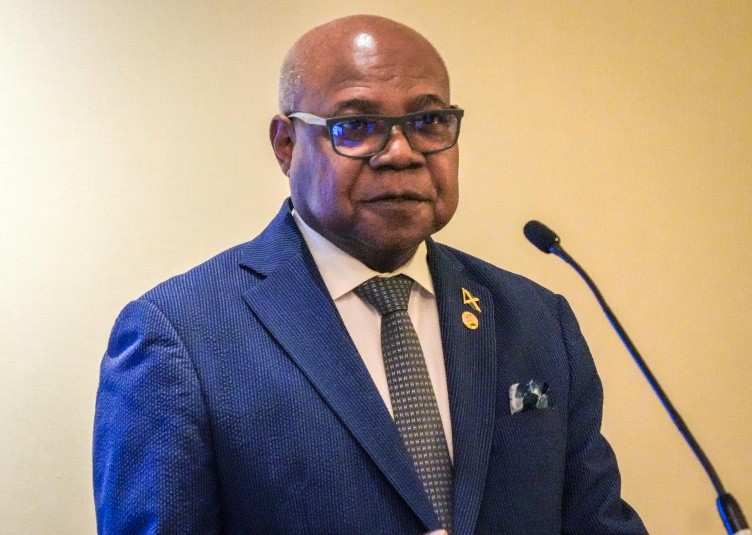
During a launch event hosted this Thursday in Manhattan, New York, Jamaica’s Tourism Minister Edmund Bartlett, who also chairs the Tourism Supply-Side Ministerial Committee, called for a foundational overhaul of the way Caribbean nations approach the growth and measurement of their travel and tourism sectors.
Opening the Caribbean Tourism Organization (CTO)’s new Supply-Side Initiative under the overarching theme “Reimagining Caribbean Tourism”, Bartlett made the case that the region has long relied on outdated metrics to gauge tourism success, such as annual visitor arrival numbers and hotel occupancy rates. Moving forward, he argued, the sector must center its growth strategy on three core priorities: boosting local production across all Caribbean economies, integrating and strengthening regional value chains, and keeping more tourism-generated wealth within local and regional communities instead of leaking it to outside suppliers.
“What we must now prioritise is the extent to which tourism stimulates production, strengthens regional value chains, and retains wealth within our economies,” Bartlett stated during his address. “We are building a practical architecture for regional economic integration — one that connects what we produce, how we move it, and how it is consumed within the tourism economy.”
The transformative initiative has secured core backing from the Inter-American Development Bank (IDB), which is providing both financial and technical support to advance its core goals. First, the IDB will fund a targeted, demand-driven analysis of all goods and services that the regional tourism sector regularly sources. This analysis will map purchasing trends across every major Caribbean tourism destination, and quantify how much of this existing demand can be met by local and regional producers, rather than importing from outside the bloc.
Second, the IDB will support the design of a unified regional logistics hub framework, with Jamaica selected as the pilot site for the project. This logistics development will build on the IDB’s existing investment in Jamaica’s Special Economic Zone (SEZ) program, most notably the large-scale Caymanas SEZ. The new framework will create a clear, direct link between the country’s industrial policy, cross-border trade facilitation efforts, and the growing demand for goods and services from the tourism sector. The first phase of the full initiative is scheduled for completion by February 2027.
Bartlett emphasized that the Supply-Side Initiative is a intentional, coordinated push to integrate multiple key economic sectors — including agriculture, manufacturing, logistics, transportation, creative industries and digital technology — directly to tourism demand. The end goal, he explained, is to transition the Caribbean to a new, self-sustaining tourism model where local and regional producers supply the majority of goods for regional hotels, and regional creative professionals build authentic, one-of-a-kind experiences for visitors.
“If we execute this with discipline and unity of purpose, we will not only strengthen tourism — we will strengthen the economic architecture of the Caribbean itself,” Bartlett said in closing.
The initiative unites a wide coalition of stakeholders to deliver on its goals, including Caribbean national governments, the CTO, the Caribbean Hotel and Tourism Association, and global and regional development partners. All parties are aligned on the shared objective of transforming tourism from a volatile, export-led sector into a consistent, sustained engine that drives inclusive regional economic growth and development.