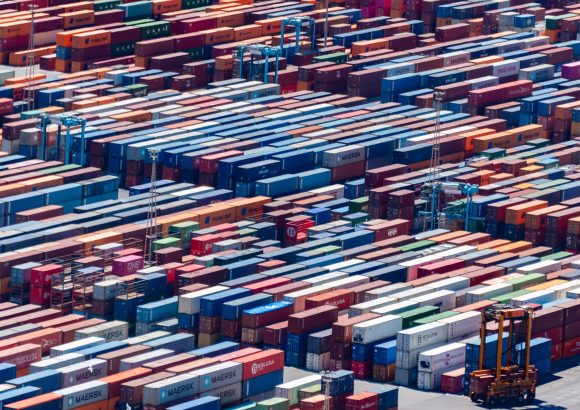
The Caribbean nation of the Dominican Republic has been drawn into growing U.S. trade oversight, after the Office of the United States Trade Representative added it to a high-stakes probe evaluating if global trading partners are adequately cracking down on forced labor in cross-border supply chains. This inquiry carries tangible risks: nations found lacking in their labor regulation enforcement could face punitive additional tariffs on their goods exported to the United States, a outcome that has sparked widespread anxiety across the Dominican Republic’s export-focused commercial ecosystem. The stakes of this review cannot be overstated given the United States’ long-standing role as the Dominican Republic’s largest single trading partner. Provisional trade data for 2025 shows the country hit a new export milestone, shipping out a total of $14.6 billion in goods. Nearly half of that total – $7.1 billion, equal to 48.6% of all exports – was bound for U.S. consumers and businesses. The potential economic impact is even more pronounced for the Dominican Republic’s network of free trade zones, which alone contributed more than $6.3 billion in U.S.-bound exports last year. These zones are a foundational pillar of the country’s economy, driving widespread job creation, attracting critical foreign direct investment, and fueling consistent national economic growth. Should U.S. authorities ultimately enforce tariffs aligned with the penalties proposed for other nations currently under review, Dominican exporters could see hundreds of millions of dollars in extra annual operating costs. Key export sectors that would bear the brunt of these new costs include medical device manufacturing, pharmaceutical production, electronics assembly, textile and apparel production, and tobacco product exports. Yet for all the near-term risks the investigation creates, it also opens unexpected strategic opportunities for the Dominican Republic. The same probe that threatens tariffs on the Caribbean nation could also lead to new tariffs on major Asian manufacturing competitors, a shift that would accelerate the growing nearshoring trend that has seen U.S. companies move production closer to the North American mainland. With its prime geographic location adjacent to North America, preferential trade access under the Dominican Republic-Central America Free Trade Agreement (DR-CAFTA), and a mature, well-developed free trade zone infrastructure, the Dominican Republic is uniquely positioned to capture new manufacturing investment and operations from companies looking to reduce their reliance on Asian supply chains. U.S. officials have confirmed the investigation is on track to reach a final conclusion within the coming weeks. As the outcome nears, labor compliance standards and end-to-end supply chain traceability have become make-or-break factors for Dominican exporters seeking to retain unobstructed access to the lucrative U.S. market.
Why concerns over forced labor could affect Dominican Republic exports