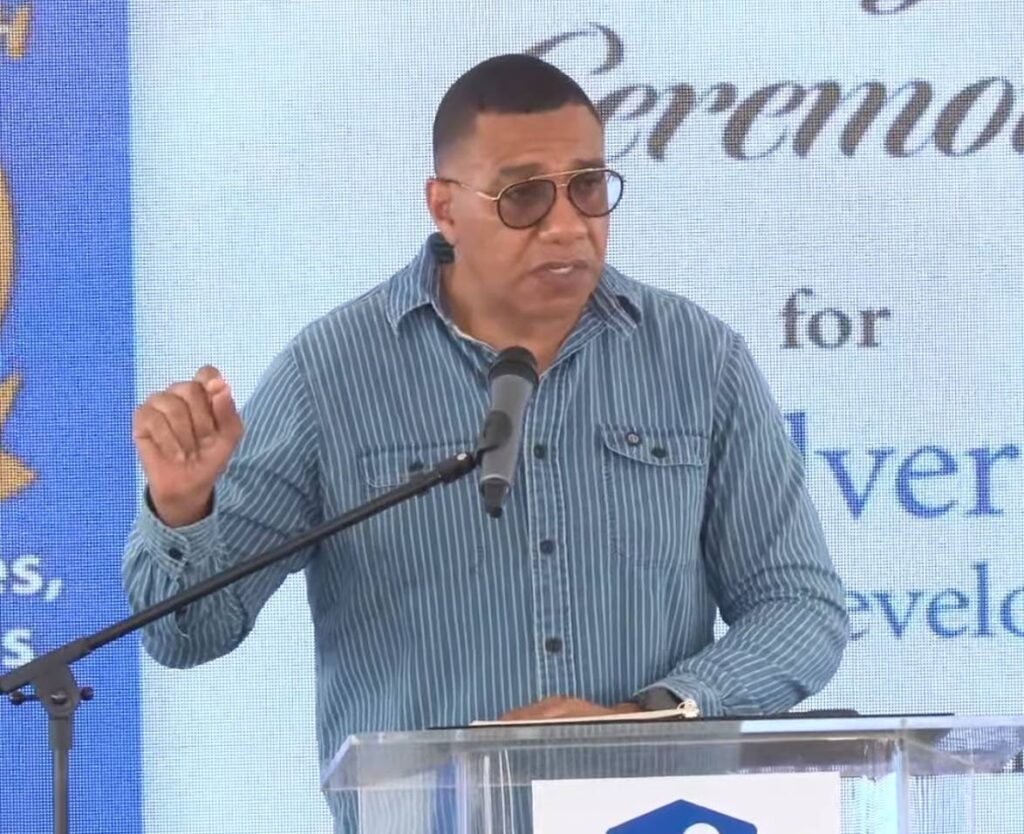
Seven months after Category 5 Hurricane Melissa carved a path of destruction across multiple regions of Jamaica, mounting frustration over glacial insurance claim settlements has drawn public intervention from the country’s top leadership. During a public handing-over ceremony for 27 residential service lots in Malvern, St Elizabeth on Thursday, Prime Minister Dr Andrew Holness publicly called on private insurance providers to accelerate payout processing, framing timely claim resolution as an indispensable pillar of the island’s post-disaster national recovery effort.
In his remarks, Holness drew a sharp contrast between the performance of private insurers and the state-run National Housing Trust (NHT), which he lauded for its rapid progress on Hurricane Melissa-related claims for mortgaged properties. To date, the NHT has processed 3,835 claims with a total assessed value of $7 billion. After accounting for policy deductibles, the agency is expected to disburse approximately $6 billion in payouts, with $2.85 billion already released to claimants via a phased disbursement structure — representing nearly half of the total eligible claims, according to Holness.
While the prime minister highlighted the NHT as a model of swift disaster response, the agency has not escaped criticism entirely, with a subset of mortgagors still waiting for updates on their pending applications. Holness acknowledged the backlog, noting that processing remains ongoing across all outstanding claims.
The prime minister’s public call to action follows weeks of growing complaints from both individual property owners and business leaders across Jamaica, who say seven months without settlement has left many families and enterprises in crippling financial limbo. Holness confirmed he has received hundreds of personal testimonials from claimants who have completed damage assessments but have yet to receive any communication or payout from their private insurers.
Business leaders have repeatedly warned that prolonged delays threaten the long-term survival of storm-impacted enterprises. In a May interview with Business Observer, Montego Bay Chamber of Commerce & Industry President Jason Russell emphasized that slow claim settlements directly undermine a company’s ability to retain employees, fulfill payment obligations to suppliers, and resume normal operations post-disaster. “We’re talking about the life and death of a business. A business can’t wait a year to get paid,” Russell noted.
Individual business owners have also gone public with their experiences to highlight systemic failures in the private insurance sector. In a letter to the editor published in Wednesday’s Jamaica Observer, Andrew Houston Moncure, managing director of Westmoreland-based Bluefields Bay Villas & Suites, detailed his family’s seven-month struggle to get updates on their property damage claim, saying they have received nothing but “silence” from their insurer’s loss adjuster since November last year.
Houston Moncure clarified that he and his family do not expect an unreasonably fast resolution for complex claims, acknowledging that Hurricane Melissa created an unprecedented backlog that stretched industry resources thin across the hardest-hit parishes like Westmoreland, where thousands of structures were destroyed. Instead, he is calling for basic, consistent communication from providers — a standard he says his family’s long-time insurer has failed to meet, even as the family led local recovery efforts for their community without waiting for their own claim payout.
The business owner also pointed to existing Jamaican regulations that mandate timely claim settlement: Regulation 135 of the country’s Insurance Regulations requires providers to resolve all valid claims within 30 days of meeting payment conditions, with statutory interest added for late payments. The Financial Services Commission’s 2022 Market Conduct Rules further require insurers and their intermediaries to settle claims fairly, without undue delay, and via transparent, efficient processes.
Top industry leaders have already acknowledged the widespread delays constitute a major failure of the private insurance sector. During a panel discussion at the Insurance Association of Jamaica’s annual business conference in May, BCIC CEO Peter Levy described the industry’s slow post-Melissa response as a “significant failure”.
Levy, however, outlined significant operational and logistical challenges that providers faced in the immediate aftermath of the storm. In the storm’s wake, key transportation routes were blocked, national communication infrastructure was disabled, and even independent contractors tasked with preparing damage estimates were themselves dealing with personal storm damage. The unprecedented volume of claims left the entire industry stretched beyond its existing resource capacity, he added.
In response to the breakdown, the Jamaican insurance industry has launched a full review of its disaster response protocols to identify gaps and implement critical changes ahead of future catastrophic weather events. Key areas under review include loosening some verification requirements during large-scale disasters and streamlining processing for claims where loss estimates fall within a pre-defined reasonable range, with the goal of cutting down overall payout timelines for most claimants.