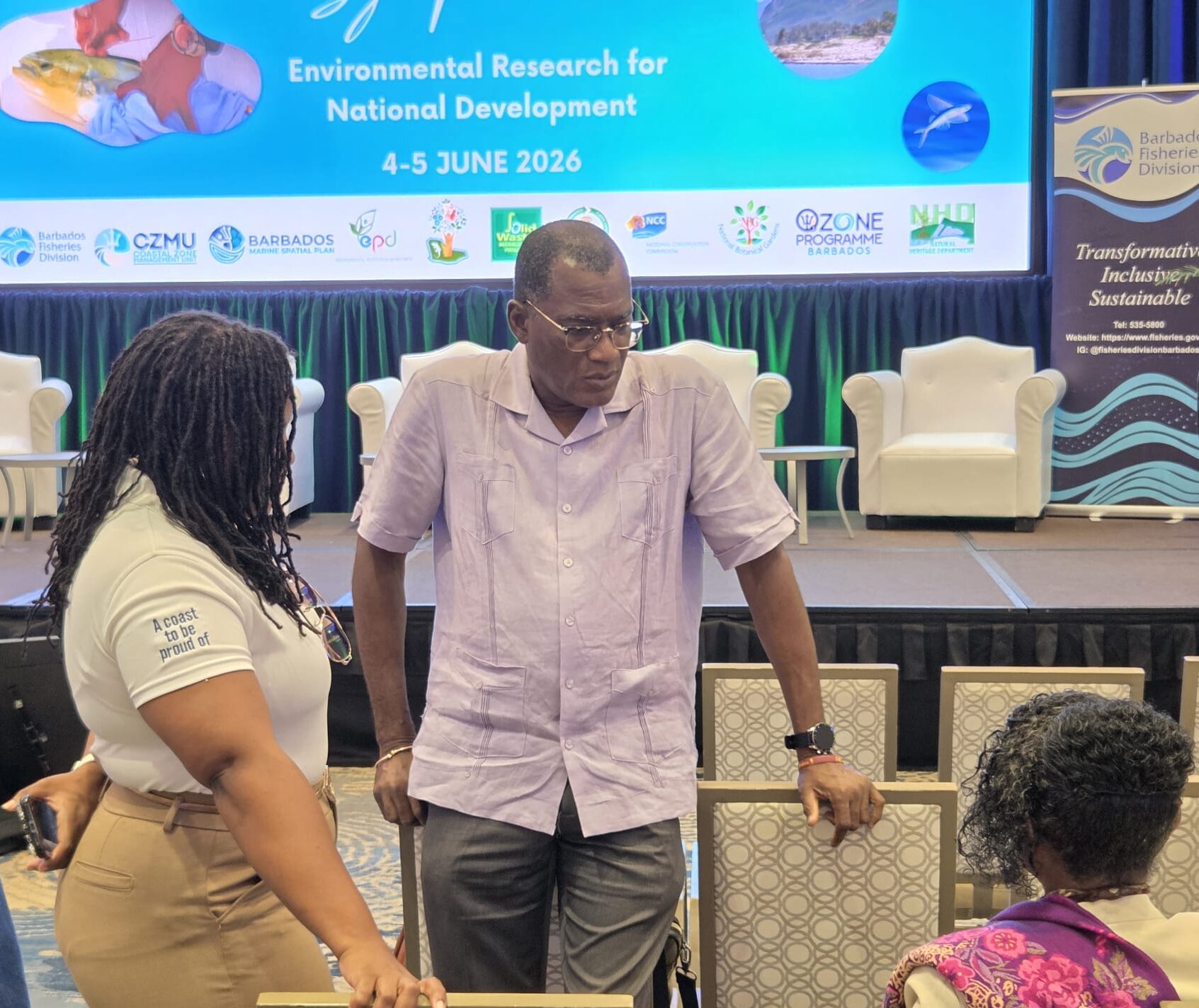
On Wednesday, the government of Barbados unveiled a landmark new strategy designed to anchor national and regional scientific research at the heart of public policymaking. The ambitious project seeks to break down long-standing academic silos, bridge gaps between scientific inquiry, public policy design and community-led action, and position evidence-based research as a foundational driver of national development. The initiative was formally launched during the opening ceremony of the second annual Research Frontier Symposium, a two-day convening hosted jointly by the Barbados Fisheries Division and the Coastal Zone Management Unit (CZMU). Held as a centerpiece event for the island’s national Environment Month programming, the symposium functions as a collaborative cross-sector platform to highlight cutting-edge advances in both sustainable blue and green economy development across the Caribbean region.
The gathering brings together a diverse coalition of stakeholders, including multiple agencies under Barbados’ Ministry of Environment and National Beautification, Green Economy and Resilience — among them the CZMU, the National Conservation Commission, the Marine Spatial Plan unit, and the Barbados Fisheries Division — alongside academic partners from the region and leading international collaborators. Dr. Leo Brewster, director of the CZMU, noted that the high level of participation from both local stakeholders and international virtual attendees signals a clear and growing momentum for expanded scientific investment across Barbados.
“Based on the response we have seen this year, it is evident that not only is the Ministry of Environment fostering a wave of new activity and innovation, but through our partnerships with external associate entities like the University of the West Indies, research is steadily growing in importance for Barbados’ long-term success,” Dr. Brewster explained. He emphasized that establishing the symposium as a permanent annual fixture will help reshape public perceptions of the work carried out by government agencies, moving beyond the common view that these bodies only focus on policy drafting and inter-agency administration. “This is a trend we need to cement as an annual event,” Dr. Brewster said. “It is critical for us to show that active research is happening right within our own government departments, not just policy preparation and work on internal or cross-ministerial issues.”
Chief Fisheries Officer Dr. Shelly Cox outlined two additional core goals for the symposium: making scientific career paths more attractive to young Barbadians and dismantling traditional institutional barriers that have historically isolated research from policy action. “Too often, research is seen as something only done by senior, established academics,” Dr. Cox noted. “Over the course of these two days, attendees will get to see outstanding work from talented early-career researchers, which is exactly the kind of visibility we wanted to cultivate to make research feel accessible and appealing to the next generation. We also aim to break down academic silos and translate raw scientific data into actionable national policy.”
Dr. Cox also highlighted that regional research from Barbados already holds its own in the global scientific community, with Barbadian researchers regularly publishing their work in top-tier international peer-reviewed journals. Discussions and presentations at the symposium are tailored to the unique scale of Barbados’ marine jurisdiction: the island’s exclusive economic zone spans more than 400 times the area of its landmass, making marine research a national priority. Topics on the agenda cover a wide range of environmental and economic priorities, including marine spatial planning, deep-sea floor mapping, pelagic species migration patterns, science-based sustainable catch limits for popular commercial species like dolphin fish, as well as green economy topics such as terrestrial biodiversity conservation at Long Pond, municipal waste characterization, circular economy development strategies, and the application of artificial intelligence to advance environmental research.
The symposium is scheduled to conclude on World Environment Day, which coincides this year with the International Day for the Fight Against Illegal, Unreported and Unregulated Fishing. Organizers have structured the closing of the event to raise public awareness of the harms caused by unsustainable fishing practices and build support for coordinated regional action to address the threat. Delegates in attendance include senior representatives from the United Nations Development Programme, the Food and Agriculture Organization, private sector leaders, and local fishing industry associations. Moving forward, event organizers hope the cross-sector gathering will strengthen existing collaborative partnerships, unlock new financial and institutional resources, and create a clear pathway to expand and support future scientific research initiatives across Barbados.