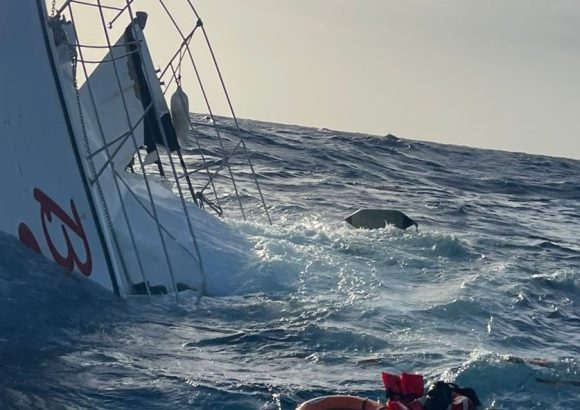
A dramatic high-seas rescue operation off the northern Atlantic coast of the Dominican Republic has ended in success, with two foreign citizens pulled to safety after their recreational vessel suffered catastrophic mechanical failure and began flooding. The 18-meter leisure craft, identified as the *CAICOS CAT*, encountered sudden mechanical trouble roughly 23 nautical miles off the Dominican coast late last week, leaving its two-person crew stranded as water rapidly filled the vessel’s hull.
The emergency response was triggered immediately after the Maritime Operations Center received an automated distress signal from the stricken craft, prompting officials to quickly mobilize a specialized Dominican Navy rescue unit to the reported coordinates. When the naval team arrived on scene, they found the *CAICOS CAT* already partially submerged, with the two crew members clinging to the boat’s raised stern waiting for assistance. The navy personnel executed a swift evacuation, transferring both men safely to their patrol craft without incident.
Both survivors, confirmed to be citizens of the neighboring Turks and Caicos Islands, were then transported back to a coastal port in the Dominican Republic, where waiting medical teams from the country’s National Emergency and Security System 9-1-1 conducted full health evaluations. In a post-rescue briefing, government authorities confirmed that both crew members had escaped the ordeal unharmed and remained in stable condition, with no requiring hospital admission.
Following the successful operation, Dominican Navy Commander General Juan B. Crisóstomo Martínez used the incident to issue a public safety reminder to all mariners operating in Dominican territorial waters. He emphasized that all vessel operators must complete comprehensive mechanical inspections of their craft before setting out, ensure they carry a full complement of certified safety equipment including life rafts, distress beacons and personal flotation devices, and always file a detailed navigation plan with local authorities before departing. This simple preparation, he noted, can drastically reduce response times in an emergency and prevent avoidable loss of life at sea.