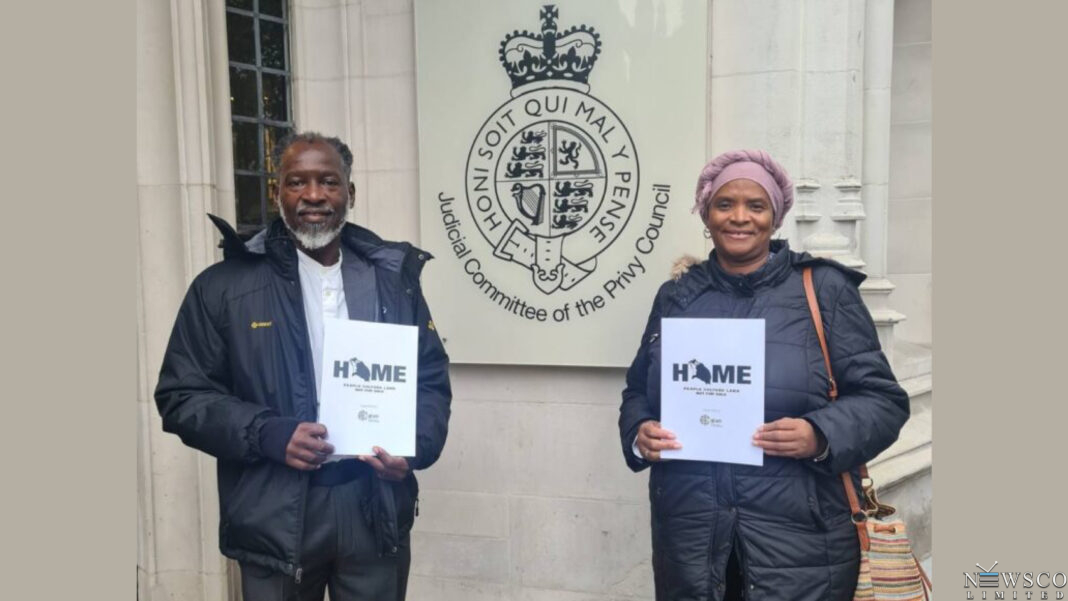
A years-long legal fight over a controversial airport development on the Caribbean island of Barbuda moved one step closer to a resolution this week, when a High Court judge began reviewing final legal arguments in what is being hailed as a watershed case for Caribbean environmental justice. The challenge has been brought by two local figures: John Mussington, a prominent environmental activist, and Jackie Frank, an elected member of the Barbuda Council. Backed by the international human rights and environmental legal organization Global Legal Action Network (GLAN), the pair have spent years pushing their claim that the airport project violated core legal and procedural standards from its earliest stages.
At the heart of their argument is the allegation that developers and government officials pushed forward with construction without securing mandatory environmental impact assessments, completing legally required public engagement processes, or following established land planning protocols. Crucially, they maintain that local Barbudan residents were blocked from providing meaningful input on a project that will fundamentally reshape the island’s future, contradicting commitments to local self-governance enshrined in regional and national law.
The case has already cleared a major legal hurdle: in 2024, the UK-based Privy Council, which serves as the final court of appeal for Antigua and Barbuda, issued a landmark ruling confirming that Mussington and Frank have the legal standing to bring the challenge. The ruling explicitly referenced Antigua and Barbuda’s binding obligations under the Escazú Agreement, a landmark regional pact that guarantees communities the right to participate in environmental decision-making and access to justice for ecological harms. That 2024 decision opened the door for this week’s final substantive hearing before the High Court.
Speaking to reporters after the close of arguments, Frank reaffirmed that he and his co-claimant remain optimistic that the High Court’s final ruling will align with the interests of the Barbuda people. “We have stood this ground for years because this is not just about our island—it’s about the right of every community to have a say in developments that change their home,” Frank noted in his post-hearing remarks.
GLAN has emphasized that the stakes of the case extend far beyond Barbuda’s borders. The airport project draws partial funding from development groups tied to high-end luxury tourism ventures, a fast-growing sector across the Caribbean that has sparked repeated conflicts over land access, environmental protection, and community input. The organization argues that an unfavourable ruling for the claimants would open the door to weakened environmental safeguards across the region, while a ruling in their favour would set a powerful precedent that upholds the Escazú Agreement’s commitments to public participation and environmental justice.
For Antigua and Barbuda specifically, the upcoming High Court decision is expected to reshape how all future large-scale development projects are reviewed and approved. A ruling siding with the challengers would force a full re-evaluation of current planning and environmental regulations, raising the bar for community engagement and ecological assessment for years to come. All parties are now awaiting the judge’s final written ruling, which is expected to set a new legal standard for development and environmental protection across the small island nation.