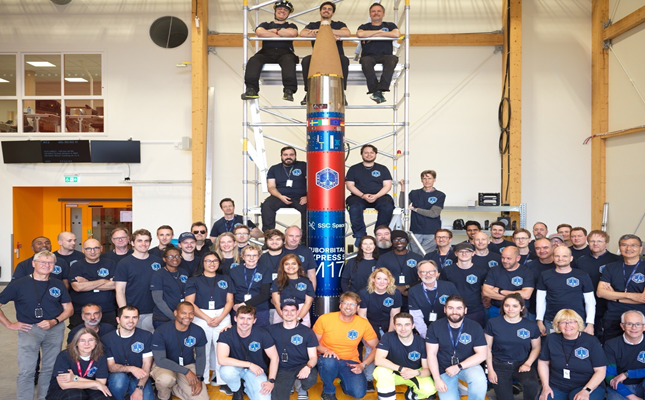
On May 31, 2026, a small Caribbean nation made unprecedented global scientific history: the Federation of St. Kitts and Nevis successfully launched the first space life sciences experiment ever originating from the Caribbean region, lifting off aboard the SSC SubOrbital Express SIX-5/M17 mission from Sweden’s Esrange Space Center in Kiruna. This landmark achievement, announced officially by the Nevis Island Administration on June 2, 2026, cements Nevis’ place in the growing global community of space research contributors and shatters assumptions about the capacity of small island developing states to lead cutting-edge scientific innovation.
This groundbreaking project did not emerge overnight. It is the product of years of intentional investment in STEM capacity building and strategic international collaboration, bringing together three partners: Nevis’ Ministry of Education, the University of Zurich, and the Center for Space and Aviation of Switzerland and Liechtenstein. What sets this initiative apart from many other global space projects is its core focus on lifting local expertise: four Nevisian science teachers were selected to work side-by-side with leading international space researchers through every stage of the project, from experimental design to implementation, gaining direct, hands-on experience in advanced space research methodologies that they will bring back to their classrooms and communities.
The experiment itself carries meaningful scientific weight. Its core goal is to address longstanding gaps in global space biology research by investigating how gravitational fluctuations alter the behavior and function of human immune cells. Researchers will analyze how both microgravity, the near-weightless condition of space flight, and hypergravity, the increased gravitational force experienced during launch and re-entry, impact gene expression and cellular activity. Any insights generated from the project are expected to advance global research into human health risks for astronauts on long-duration deep space missions, an area of growing priority as space agencies around the world plan for crewed missions to the Moon and Mars.
Beyond its contributions to space science, the project has already delivered transformative, lasting benefits to Nevis’ local education sector. Through the collaboration, thousands of local students and educators have gained unprecedented exposure to real-world, cutting-edge scientific research. New, fully equipped laboratory facilities and expanded research capabilities have also been established across the Federation, strengthening the foundation of STEM education by connecting classroom learning directly to global exploration efforts.
St. Kitts and Nevis government officials emphasized that the successful launch demonstrates the outsized impact small nations can achieve when they prioritize strategic international collaboration and investment in youth scientific development. The milestone also positions the Federation as an emerging, competitive participant in the fast-growing global space economy, opening new doors for future scientific partnerships, workforce development in advanced technology fields, and innovation-driven economic growth.
As researchers begin the process of analyzing data collected from the experiment, Nevisian students and educators will have exclusive access to the findings, creating a pipeline of engagement that is already inspiring the next generation of Caribbean scientists, engineers, and innovators. For a region long underrepresented in global space research, this achievement stands as a powerful testament to what can be accomplished through vision, cross-border partnership, and a commitment to expanding opportunities for young people through science and education.