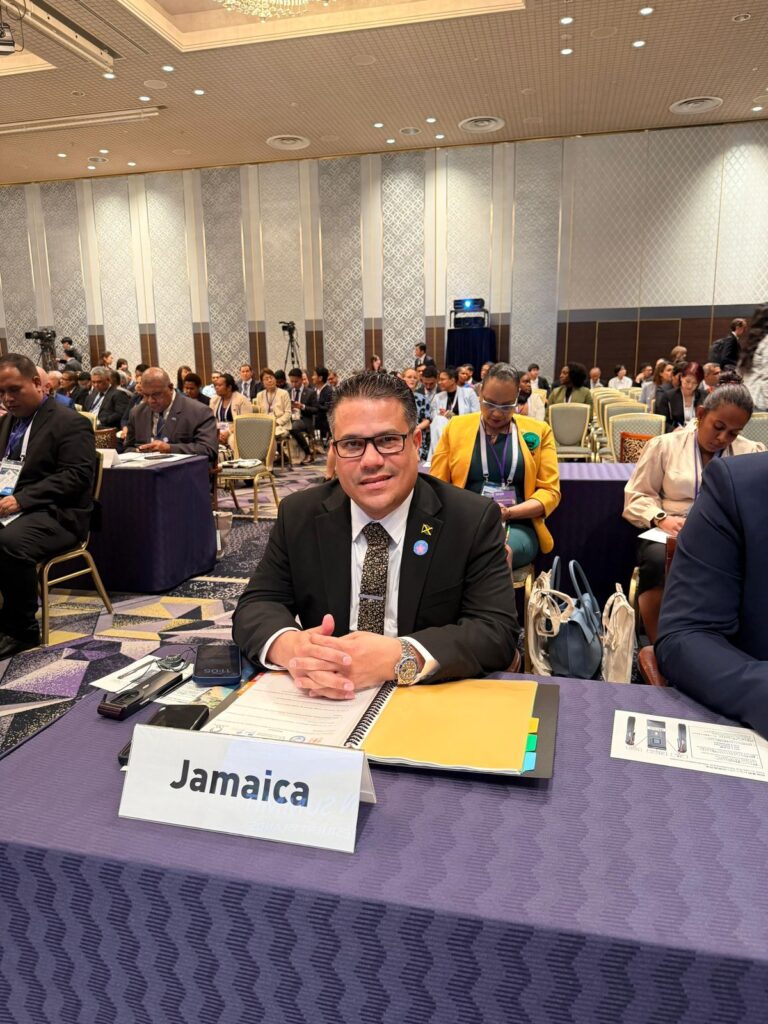
KINGSTON, Jamaica — At the two-day Island States Ocean Summit, held June 3–4, Jamaica’s Minister of Water, Environment and Climate Change Matthew Samuda has issued a urgent global appeal for scaled-up financing, cross-border technology transfer, targeted capacity building, and specialized technical support to empower small island developing states (SIDS) to upgrade ocean governance frameworks and advance inclusive sustainable development of the blue economy.
For Caribbean island nations like Jamaica, Samuda emphasized, national prosperity is inextricably linked to the long-term health and sustainable stewardship of marine and coastal ecosystems. Blue economy industries already form a foundational pillar of the country’s economic output: the tourism sector alone generates roughly 20% of Jamaica’s gross domestic product and sustains more than 500,000 jobs, accounting for nearly 37% of the nation’s total labor force.
To lay the groundwork for responsible ocean development, Samuda outlined a series of concrete policy and governance actions Jamaica has already rolled out. A key milestone is the country’s 2025 ratification of the BBNJ Agreement — the UNCLOS-brokered pact focused on conserving and sustainably managing marine biodiversity in areas beyond national jurisdiction.
The government is also moving forward with institutional reforms: it plans to reconvene the National Council on Ocean and Coastal Zone Management (NCOCZM), a cross-sector, multi-stakeholder cabinet-level committee, which will be backed by a dedicated Blue Economy Working Group to improve inter-agency coordination and integrated decision-making across all ocean-reliant sectors.
Additionally, Jamaica has completed its Overarching Policy for the Protected Areas System and made substantial progress on a national Cays Management Policy. These policy frameworks are designed to advance implementation of the Kunming-Montreal Global Biodiversity Framework and align with Jamaica’s own domestic biodiversity conservation targets.
“Over the past several years, Jamaica has expanded marine conservation action by legally designating new fish sanctuaries and protected marine areas,” Samuda noted. These expansions are intended to boost biodiversity protection, underpin sustainable fishing practices, drive ecosystem restoration, and strengthen the nation’s overall climate resilience. To date, 15.4% of Jamaica’s archipelagic waters hold official protected area status.
“Sustainable ocean planning and management is a non-negotiable tool for Jamaica to balance environmental protection with long-term economic growth and equitable social development,” Samuda said. “It creates a governance framework that ensures marine resources deliver shared benefits to both current and future generations.” Moving forward, the country has set clear timelines: it will finalize its national Sustainable Ocean Plan in 2027, followed by a comprehensive Blue Economy Strategy in 2028.
Even with this progress, Samuda warned that climate change remains an existential threat to the island nation. More than 80% of Jamaica’s population lives along the coastline or within five kilometers of the shore, leaving communities, critical infrastructure, livelihoods, and ecosystems acutely exposed to sea-level rise and intensifying extreme weather events. The 2025 Hurricane Melissa served as a devastating reminder of these vulnerabilities: the Category 5 storm caused an estimated US$12.2 billion in damage, equal to 56.7% of Jamaica’s 2024 total GDP. In response, the Jamaican government established the National Reconstruction and Resilience Authority to boost the country’s disaster preparedness and post-event recovery capacity.
In his address, Samuda also highlighted the under-tapped potential of blue carbon markets for SIDS. Participation in global carbon trading systems, he argued, can unlock new streams of economic revenue for small island nations while directly contributing to global greenhouse gas emissions reduction goals.
Reiterating his call to the global community, Samuda pressed for expanded international support to help SIDS strengthen ocean governance and advance sustainable blue economy projects. “Through stronger global partnerships and coordinated collective action, we can protect our vital ocean resources while building resilient, inclusive, and sustainable economies for all SIDS,” he said.