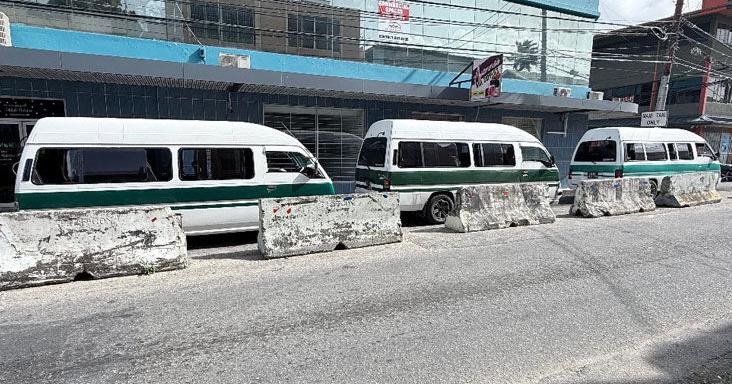
What was meant to be a three-day national shutdown by Trinidad and Tobago’s Association of Maxi-Taxis ground to an early halt on its second day Thursday, after nearly 40 percent of Route 3 operators defied the industrial action and returned to their routes, easing transport chaos that had disrupted thousands of commuters across Central Trinidad the previous day.
Unlike Monday, when the strike launched to demand government action on the maxi-taxi sector’s long-running grievances, Central communities including Chaguanas saw no large crowds of stranded, anxious commuters. Route 3, the region’s largest maxi-taxi network, connects the major population hubs of Chaguanas to Curepe, San Fernando, Port of Spain, and Arima/Talparo, making its service critical to daily travel for work, school, and medical care.
By Thursday afternoon, association leadership announced the remaining scheduled protest days would be scrapped entirely, a decision widely embraced by the Route 3 drivers already back on the road. Many drivers explained they could not in good conscience extend the disruption that disproportionately hurt vulnerable commuters, including pregnant people, schoolchildren, senior citizens, and patients traveling to public health appointments.
Financial pressure also played a central role in the mass break from the strike. While most drivers supported the association’s demands and backed a one-day work stoppage to draw attention to their issues, many said three consecutive days of lost income would be unsustainable, especially at month-end, one of the busiest periods for public transport. “It’s month-end and busy time, a lot of drivers can’t afford three days off the road,” Route 3 driver Clint Adams told local media.
Route 3 Maxi-Taxi Association President Vickash Kissoondath confirmed that after only 5 percent of green-band maxi operators reported for work on the first strike day, roughly 40 percent resumed service Thursday, amounting to around 300 buses moving thousands of commuters across the route network. He added that even higher participation was expected Friday, noting that the brunt of the strike had fallen entirely on the traveling public. “At the end of the day, our commuters are the ones who are suffering,” he said.
Kissoondath confirmed that calling off the strike was a pragmatic choice, as the government and Transport Minister Eli Zakour had refused to revise their stance on the sector’s core demands, leaving the protest “not worth it”. The association has long pushed for government intervention to address rising operating costs, rampant crime targeting drivers and passengers, and dangerously deteriorated road infrastructure. The association leader laid out the steep financial burden facing operators today: a new 25-seater maxi-taxi now costs roughly $900,000 Trinidad and Tobago dollars, while a 12-seater model runs around $500,000, not including additional costs for required security equipment and vehicle amenities. Persistently poor road conditions also force frequent, costly repairs that eat into driver profits, pushing overall operating costs steadily higher.
While no new formal meeting has been scheduled with Transport Minister Zakour, Kissoondath confirmed an advisory meeting with the ministry’s permanent secretary is set to take place at the end of the month to revisit the sector’s demands. Many drivers said they still stand behind future protest action if the government fails to address their concerns, but argued it was unfair to force commuters to bear the cost of state inaction on the association’s grievances.
For commuters across Central Trinidad, the early end to the strike brought widespread relief. Many told reporters they had endured significant stress over the prospect of another full day of transport chaos, with some scrambling to arrange private transport for Thursday after being stranded on Monday, particularly those commuting to work in Port of Spain, southern, and eastern Trinidad. Local communities in Central Trinidad reported far less disruption on Thursday than on the strike’s opening day.