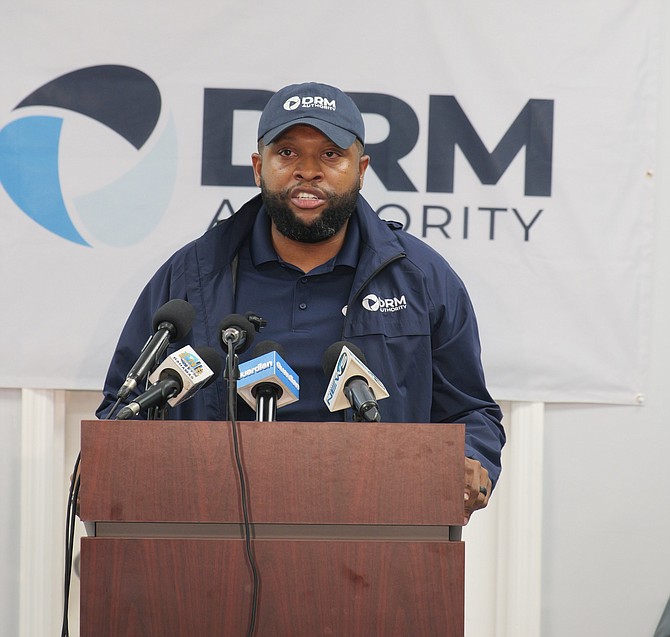
As the 2026 Atlantic hurricane season officially gets underway, disaster management officials in The Bahamas have acknowledged that while the nation has made meaningful progress in preparedness, it still has not met the international benchmark for emergency shelter capacity to protect residents during major natural disasters. Currently, the country’s 144 public shelters can accommodate approximately 14,000 people, according to Aaron Sargent, Managing Director of the Bahamas Disaster Risk Management Authority (DRM).
Speaking at a press briefing held to mark the start of the season, Sargent noted that 90 of these shelters have already completed mandatory safety inspections, with only three facilities in New Providence still awaiting evaluation. Against the global standard that requires shelter space for 10 percent of a country’s total population, The Bahamas currently falls well short of the target. Sargent emphasized that expanding shelter capacity – particularly in the country’s less developed southern island region – remains a top priority for the government, requiring ongoing infrastructure investment and new construction projects.
The briefing came one day after senior DRM officials, along with Executive Chairman Alex Storr and representatives from multiple government agencies, presented the nation’s full preparedness plan to Prime Minister Philip “Brave” Davis and newly appointed Minister of State for Disaster Risk Management McKell Bonaby. Despite the unmet shelter target, Sargent said the work completed during the low-risk “blue sky” period between hurricane seasons has significantly boosted the country’s ability to mount an effective response to storm events.
The Bahamas Department of Meteorology has forecast a below-average season for 2026, projecting roughly 11 named storms and just one to three hurricanes forming across the Atlantic basin. Sargent tied this milder outlook to the ongoing El Niño weather pattern, which has also driven record-breaking extreme heat across much of the globe this year. Even with the favorable forecast, however, he issued a sharp warning to residents against lowering their guard, stressing that the country’s location within the active Atlantic hurricane belt means a single devastating storm is all it takes to cause widespread destruction across the island chain.
To strengthen local response capacity, the DRM Authority has already completed regional readiness exercises on eight of The Bahamas’ major islands, with a full national disaster drill scheduled for July. The agency is also putting the final touches on a new National Recovery Framework, a document designed to standardize post-disaster relief and reconstruction protocols across all levels of government. Once finalized, the framework will be submitted to the Inter-Ministerial Committee on Disaster Risk Management for formal review and approval.
In addition to infrastructure and planning updates, the DRM Authority has invested heavily in workforce training and digital emergency management technology. Earlier this year, DRM officers completed a specialized training program alongside partners including the Rhode Island Emergency Management Agency, Rhode Island National Guard, and U.S. Northern Command, focused on mastering the WebEOC emergency coordination platform. Sargent explained that the system will dramatically improve cross-agency communication and shared situational awareness between the capital and outlying Family Islands during active disasters, with a full national deployment scheduled for the July readiness exercise.
On the topic of shelter inspections, Sargent noted that the DRM Authority has tightened safety and operational standards since its establishment, and the vast majority of existing shelters already meet the new requirements. One notable milestone is the newly completed disaster shelter in Abaco, which is now fully operational and ready to accept evacuees. The facility already underwent an unplanned stress test during the recent electoral cycle, when local administrators used it as a polling and operations center, and it passed without any issues.
Sargent emphasized that disaster preparedness is not a seasonal task, but a year-round priority, with the DRM Authority continuing to upgrade infrastructure, expand training, and integrate new technology to improve response outcomes. He urged all residents to take proactive steps before the next storm threat emerges: inspecting residential and commercial properties, securing storm shutters and plywood, organizing and protecting critical personal and legal documents, and formalizing family evacuation plans. Members of the public are also encouraged to learn the location of their nearest assigned shelter and take advantage of the resources available through the government’s national hurricane readiness campaign, including a free Hurricane Expo scheduled for June 20 at Marathon Mall, and downloadable preparedness materials available at getready.gov.bs.
Bonaby, who was unable to attend the press briefing, is scheduled to deliver a formal preparedness address to the public across all national news platforms on the same day as the briefing.