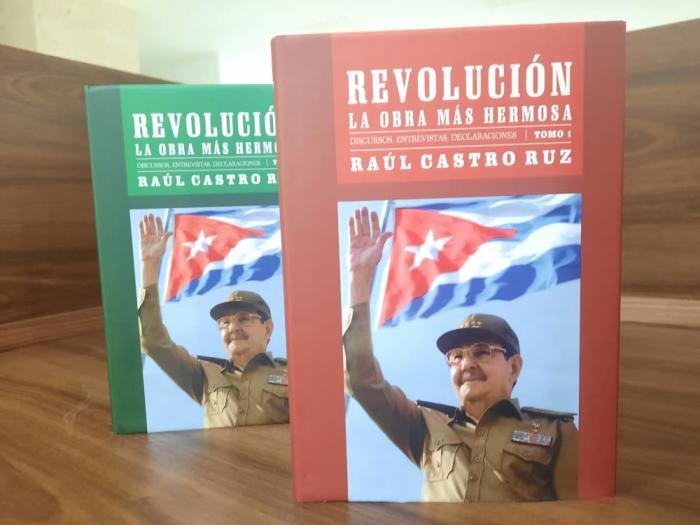
As Cuban Army General Raúl Castro approaches his 95th birthday, a new edited collection of his public remarks brings his decades of revolutionary commitment, unwavering loyalty to Fidel Castro, and steadfast resistance to the U.S. trade blockade into sharp focus. Titled *Revolución, la obra más hermosa* (Revolution, the Most Beautiful Work) and published by Ediciones Celia, the two-volume anthology compiles 138 of Raúl’s speeches, interviews, and official statements spanning the last 10 years of Cuba’s revolutionary journey. Any reader hoping to understand the core of Raúl Castro’s lifelong ideology must start with four non-negotiable pillars of his public life: unshakable faith in the Cuban Revolution, unwavering loyalty to Fidel Castro, relentless opposition to the long-standing U.S. blockade, and a consistent commitment to self-critical reflection, all of which permeate every page of the new collection.
To know Raúl Castro through his own words is to encounter a leader both sensitive to the human cost of revolution and unyieldingly tenacious in pursuit of the movement’s goals. He consistently urges Cubans to deepen their understanding of the nation’s history, embrace constant renewal, reject political complacency, hold firm to their stated values, and maintain clear focus on long-term objectives rather than being swayed by fleeting overenthusiasm. As he often emphasizes, honesty and intentional reflection must guide all revolutionary action.
Belkis Duménigo García, editorial director of the Office of Historical Affairs, notes that the collection offers readers a chance to revisit the most pivotal moments of the Cuban Revolution over the past decade, covering topics ranging from domestic policy to global affairs. The texts highlight Raúl’s longstanding advocacy for regional integration across Latin America and the Caribbean, his commitment to the core foreign policy principles of sovereignty, national dignity, and non-interference in the internal affairs of other nations, and his work shaping Cuba’s contemporary political and economic governing model. He also uses the collected remarks to reinforce his unwavering campaign against national indiscipline and illegal activity, while openly offering self-critical assessments of the Cuban Revolution’s ongoing challenges.
The book also includes Raúl’s sharp critiques of U.S. foreign policy and its decades-long interventionist approach toward Cuba, while making clear that the Cuban government supports the reestablishment of mutually respectful bilateral relations. He repeatedly underscores the devastating human and economic harm caused by the U.S. trade blockade, a policy he has consistently opposed throughout his career. In a memorable September 27, 2006 address included in the collection, he reminded audiences that Cuba cannot afford to overlook the threat posed by a powerful adversary dedicated to eliminating the Cuban Revolution entirely. He pointed to the long history of U.S. intervention on the island, dating back to the 1898 thwarting of Cuban independence that imposed American overseers on the nation, noting little has changed in the power dynamic that continues to shape U.S.-Cuba relations today.
What sets this collection apart, however, is its ability to reveal the human side of Raúl Castro beyond his public roles as a military leader and former head of state. Readers will encounter a man moved to emotion when speaking of Fidel Castro, who honors every fallen revolutionary by name, calls former Venezuelan President Hugo Chávez “My Brother,” and holds the young revolutionaries who participated in the 1953 Moncada Barracks attack as the forever youth of the Cuban movement. It is this intimate, unfiltered voice that makes *Revolución, la obra más hermosa* a unique addition to the historical record of modern Cuba.