In a court proceeding that has reignited global debate over unregulated online harm and assisted suicide, 60-year-old former Canadian chef Kenneth Law entered guilty pleas on Friday to 14 counts of aiding suicide, escaping more severe murder charges that prosecutors have abandoned after concluding a conviction would be unobtainable.
The case, which first drew international outrage after Law’s arrest in 2023, exposed a sprawling cross-border criminal operation that saw the defendant sell lethal packages of poison to vulnerable, suicidal people across 41 nations. Among the countries impacted were Australia, China, France and Brazil, with the United Kingdom recording the highest volume of sales at 330 packages shipped to British customers.
Originally, Canadian prosecutors had brought dual charges against Law: 14 counts of first-degree murder and an equal 14 counts of aiding suicide. But during the hearing held at a Newmarket, Ontario court, located just north of Toronto, prosecution representatives confirmed they would not move forward with the murder charges, stating they had no viable path to secure a murder conviction before the Canadian court system.
When the charges were read, Law stood in the secured defendant’s enclosure flanked by three defense attorneys, and clearly stated “I plead guilty” to the charge of assisting the suicides of 14 Canadian residents. A separate sentencing hearing scheduled for September will allow the court to hear victim impact statements from grieving families before a final sentence is handed down. Legal analysts note that as a serious criminal offense in Canada, aiding suicide carries a potential penalty of between 10 and 20 years behind bars.
Following the guilty pleas, prosecutors began presenting a 60-page agreed statement of facts that laid bare the systematic, predatory nature of Law’s online business. The document outlines that Law did not wait for vulnerable people to find him—he actively sought out potential customers on public suicide discussion forums, operating under the pseudonym “Greenberg.” When forum participants mentioned sodium nitrite, a common meat preservative that can be lethal in high doses, as a potential method of ending their lives, Law would redirect them to his own commercial websites, where he sold the powder in concentrated, fatal doses for approximately $80 per package.
To illustrate Law’s awareness of his illegal activity, prosecutors played a recorded phone call between Law and a journalist from The Times of London who had posed as a potential customer. When the reporter asked if Law’s business was legal, Law pre-planned a cover story he told the journalist to repeat to authorities if questioned: that the sodium nitrite was sold to improve swimmers’ lung capacity. Prosecutors also detailed that in dozens of cases, deceased victims were found by their family members with an open package of Law’s sodium nitrite next to their bodies.
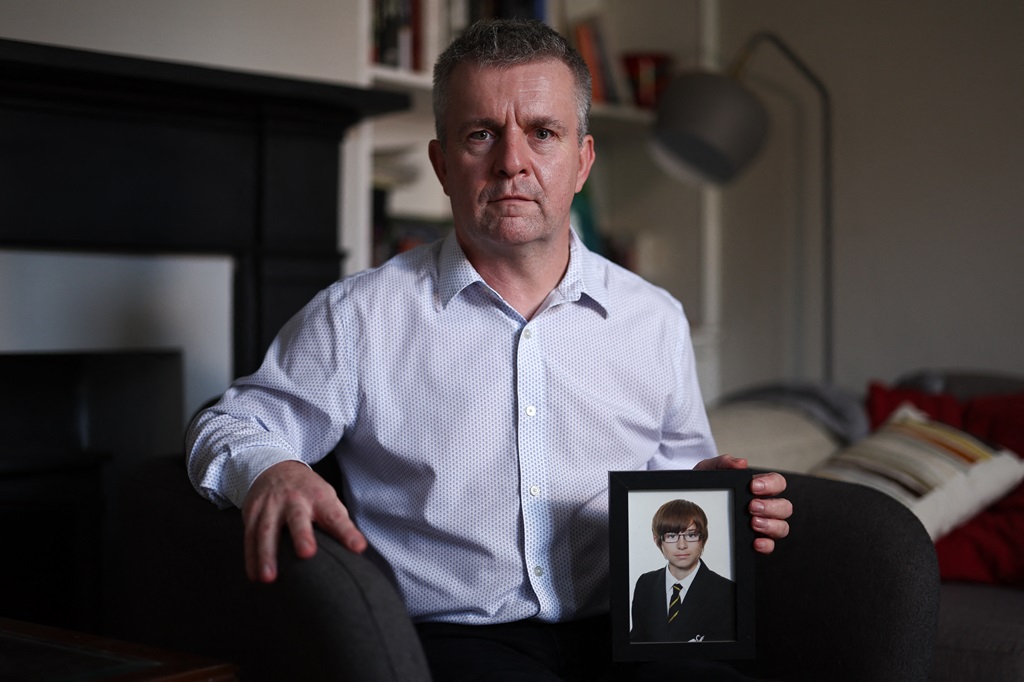
The decision to drop murder charges has left grieving families across the world disappointed and angry. David Parfett, whose 22-year-old son Thomas died by suicide in 2021 using poison purchased from Law, has become a prominent advocate for stricter regulations targeting online spaces that promote self-harm. Parfett told reporters that Canadian authorities missed a critical opportunity to codify the severity of Law’s actions. “If (Law) hadn’t been offering detailed instructions about how to take your own life, then the chances are my son would still be here. So again, for me, it’s murder,” he said.
Official records tie Law’s products to 79 deaths in the United Kingdom alone. UK’s National Crime Agency (NCA) confirmed that Law will not face additional prosecution in the UK, but all evidence related to British deaths will be presented during his Canadian sentencing hearing. In a joint statement, the NCA and British prosecution service noted that they had already explained their decision not to prosecute to victims’ families in full.
Parfett summed up the sentiment of many affected families, saying, “I am angry, but I am not surprised.” He also reiterated that families’ calls for a public inquiry in the UK have been rejected, saying, “If our own country will not put anyone on trial for these deaths, the very least it can do is hold a proper inquiry into how they were allowed to happen.”
Legal experts offer context for the prosecution’s decision. Dalhousie University law professor Robert Currie explained that Canadian prosecutors had been waiting for a separate case before the Supreme Court of Canada to clarify the legal definition of aiding suicide versus murder in this context. When the Supreme Court declined to address the key legal question, prosecutors lost confidence in their ability to convince a jury to convict Law on murder charges, leading to the decision to abandon the more severe counts.