KINGSTON, Jamaica — Jamaica’s top small business advocacy group is throwing its support behind the newly appointed leader of the country’s flagship infrastructure agency while calling for long-overdue changes to how major infrastructure contracts are awarded.
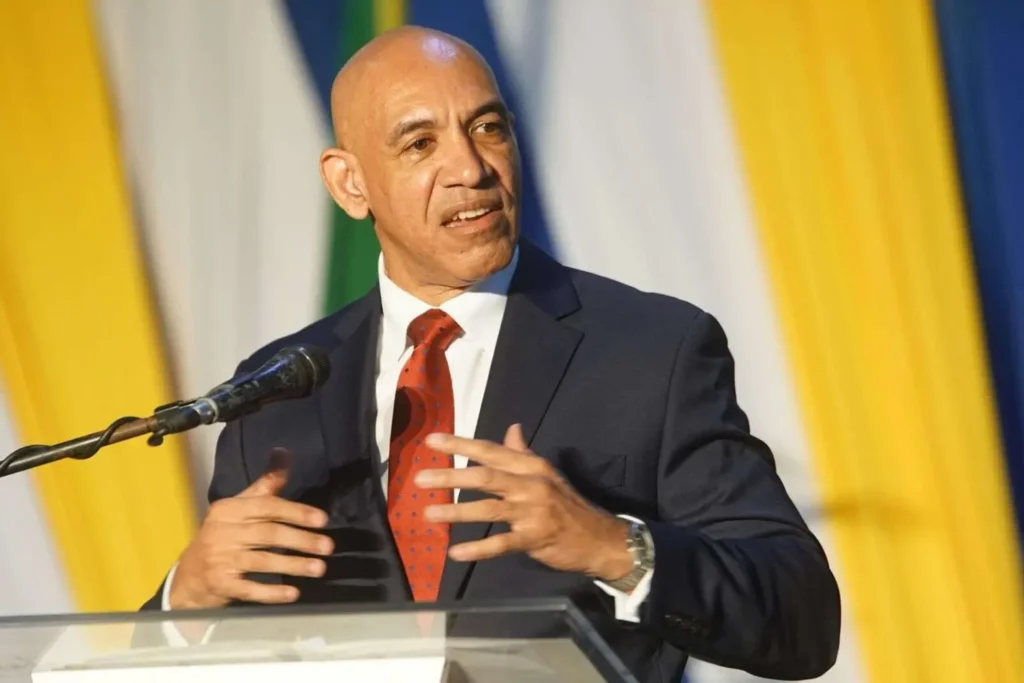
The Small Business Association of Jamaica (SBAJ) has extended congratulations to retired Major General Antony Anderson, who was tapped to serve as the first chief executive officer of the National Road Reconstruction Agency (NaRRA), the newly formalized body tasked with guiding the country’s large-scale road network upgrades.
Prime Minister Andrew Holness first revealed Anderson’s appointment during a dedicated post-Cabinet media briefing held Wednesday at the Jamaica House banquet hall. Alongside the announcement, Holness confirmed that the NaRRA Bill — the legislation that formally established the agency — had been successfully passed into law, with Anderson set to take up his new leadership role starting June 1.
In an official statement released to the public Thursday, SBAJ President Garnett Reid framed Anderson’s appointment as a milestone coming at a critical juncture for Jamaica’s infrastructure development trajectory. Reid emphasized that Anderson’s decades of decorated public service have equipped him with extensive expertise, a well-documented history of delivering results, and deep institutional knowledge that makes him well-suited to lead the new agency.
Reid also called on all public and private stakeholders to extend full collaboration and backing to Anderson, noting that robust coordinated support will be key to helping him execute NaRRA’s mandate effectively and efficiently.
But beyond welcoming the new leadership, Reid outlined a core priority the SBAJ is pushing for under Anderson’s tenure: guaranteeing that local small and medium-sized contractors get a fair share of the billions in infrastructure investment set to roll out through NaRRA.
“My only hope is that small and medium-sized contractors get some of the contracts from the NaRRA investments,” Reid stated plainly.
He underscored that structured, transparent procurement processes will be non-negotiable to correct a long-standing gap in Jamaican infrastructure development. For decades, smaller local construction firms have been sidelined for major projects, with most large contracts going instead to bigger, often international companies.
Reid further made the economic case for prioritizing local businesses, arguing that awarding contracts to Jamaican firms keeps investment capital circulating within Jamaica’s domestic economy, fuels growth of local small enterprises, and builds long-term resilience for the national economy. In contrast, he explained, when large multinational corporations win major infrastructure contracts, a large share of the financial benefits from those investments flow off the island, leaving minimal lasting impact on local communities.
Looking ahead, the SBAJ says it is eager to build a collaborative, productive working relationship with both Anderson and the entire NaRRA team. The group’s end goal is to ensure that Jamaica’s ongoing national infrastructure expansion doesn’t just improve the country’s roads — it also drives inclusive, sustainable economic growth that benefits Jamaican businesses and workers at the grassroots level.